


In a significant escalation of its pressure campaign against the government of Venezuelan President Nicolás Maduro, the White House has directed U.S. military forces to focus almost exclusively on enforcing a “quarantine” of Venezuelan oil for at least the next two months, according to a senior U.S. official who spoke to Reuters on condition of anonymity.
The directive, issued earlier this week, signals a renewed emphasis on economic coercion rather than immediate military strikes—an option President Donald Trump has repeatedly suggested remains on the table. The official said the administration believes Venezuela could face “economic calamity” by late January unless it makes substantial concessions to Washington.
A Strategic Shift Toward Economic Pressure
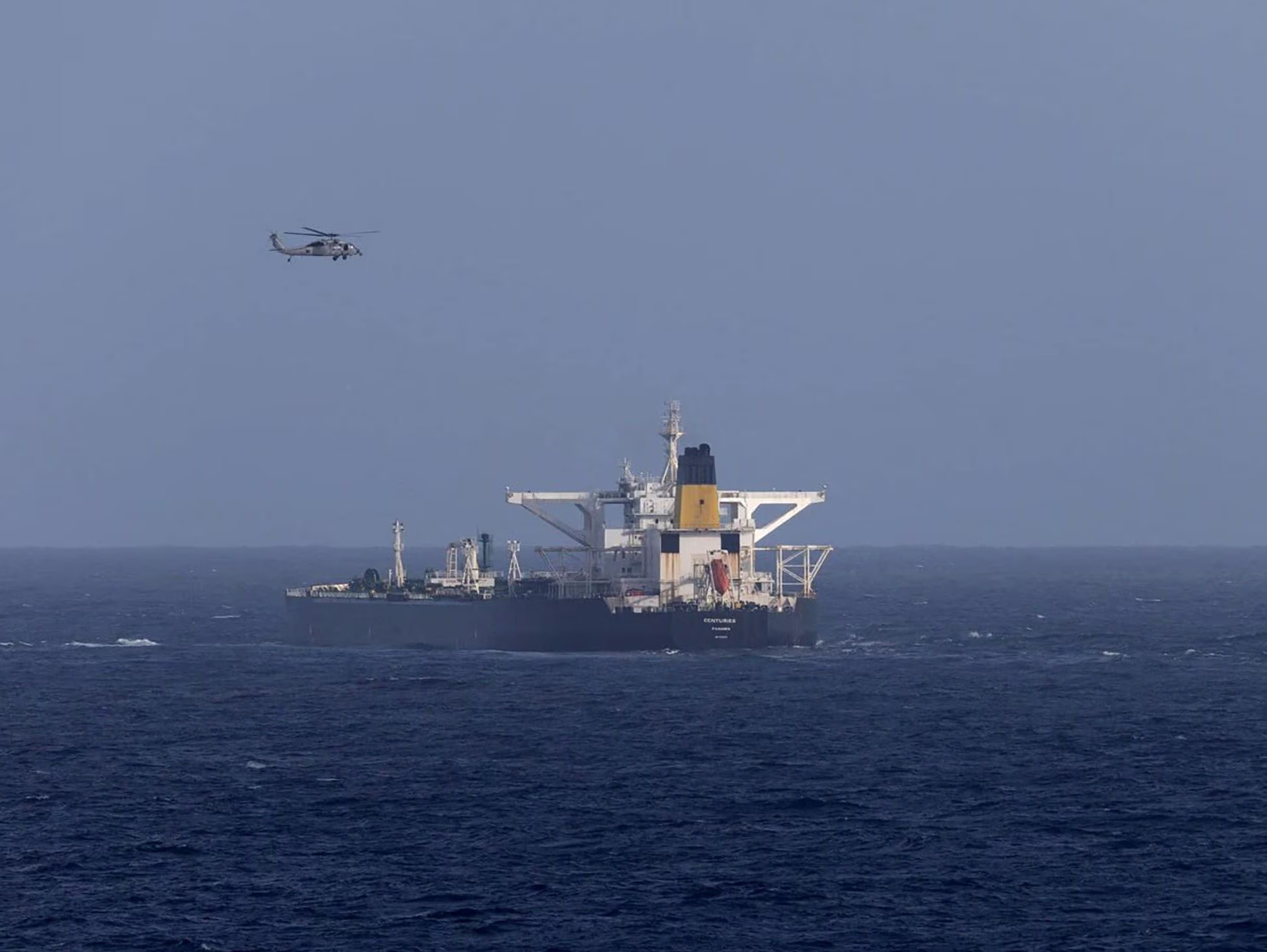
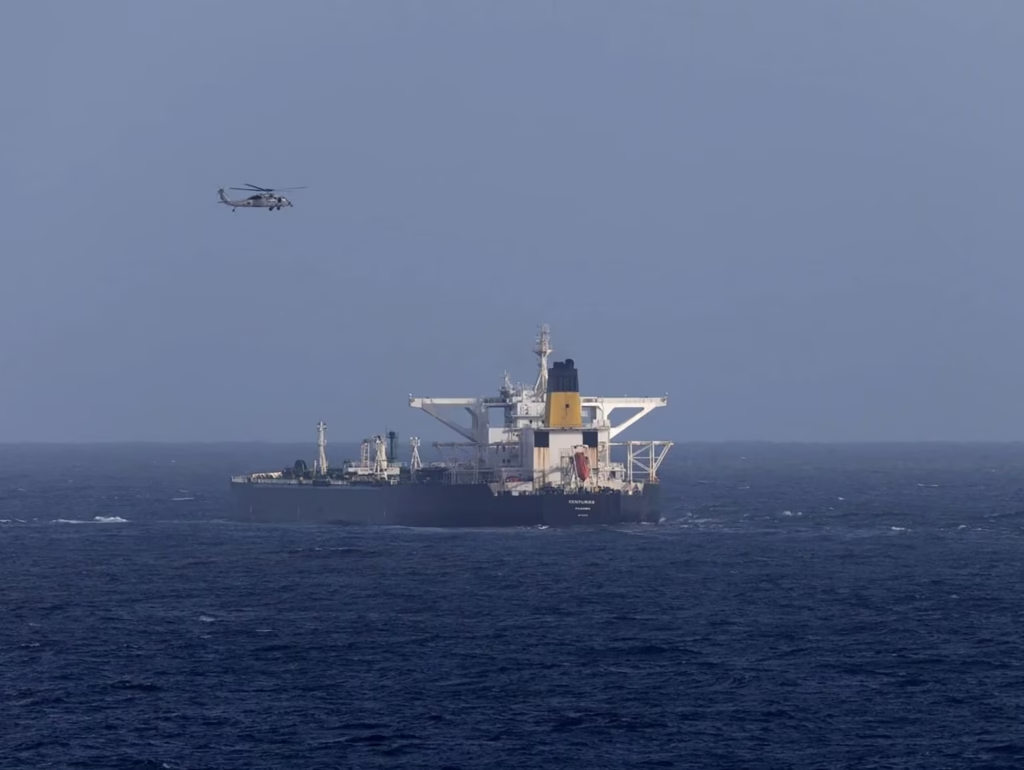
The order instructs U.S. forces to intensify maritime enforcement of existing sanctions, including intercepting or turning back oil tankers attempting to enter or leave Venezuelan ports. U.S. forces have already intercepted at least two tankers this month and are pursuing a third, according to officials familiar with the operations.
“While military options still exist, the focus is to first use economic pressure by enforcing sanctions to reach the outcome the White House is looking for,” the official said, underscoring the administration’s belief that tightening the flow of Venezuelan oil could accelerate political change in Caracas.
The term “quarantine,” while not formally defined by the administration, appears to describe a partial maritime blockade—one that stops short of a full naval embargo but still restricts the movement of oil shipments, Venezuela’s most critical source of revenue.
International Condemnation and Legal Questions
The move has drawn swift criticism from United Nations experts, who described the U.S. actions as an “illegal use of force” under international law, arguing that the partial blockade violates principles of sovereignty and free navigation.
Several Latin American governments have also expressed concern that the U.S. strategy could destabilize regional trade routes and escalate tensions in the Caribbean Sea, where U.S. Coast Guard and Navy vessels have increased patrols in recent weeks.
Maduro Government Defiant
The Maduro administration has condemned the U.S. directive as an act of “economic warfare,” accusing Washington of attempting to strangle the country’s already fragile economy. Venezuela’s oil production has plummeted in recent years due to sanctions, mismanagement, and infrastructure collapse.
Despite the mounting pressure, Maduro has shown no public indication of stepping down or offering concessions. Instead, Venezuelan officials have vowed to reroute oil shipments through alternative channels, including barter arrangements and covert tanker operations.
A High-Stakes Gamble
Analysts say the U.S. strategy represents a calculated gamble: by intensifying economic pressure without launching direct military action, Washington hopes to force political change while avoiding the risks of a broader conflict.
However, the approach carries significant uncertainties. Venezuela has weathered years of sanctions, and its leadership has repeatedly demonstrated resilience in the face of international isolation. Meanwhile, the U.S. move risks further straining relations with countries that continue to purchase Venezuelan oil, including China and India.
Looking Ahead
The White House has not publicly detailed the full scope of the “quarantine,” nor has it clarified what specific concessions it expects from Caracas. President Trump has previously stated that “all options remain on the table,” but officials now suggest the administration is prioritizing economic tools over immediate military intervention.
With the directive set to remain in effect for at least two months, the coming weeks will test whether Washington’s intensified sanctions enforcement can meaningfully shift the political landscape in Venezuela—or whether it will deepen an already volatile geopolitical standoff.
