


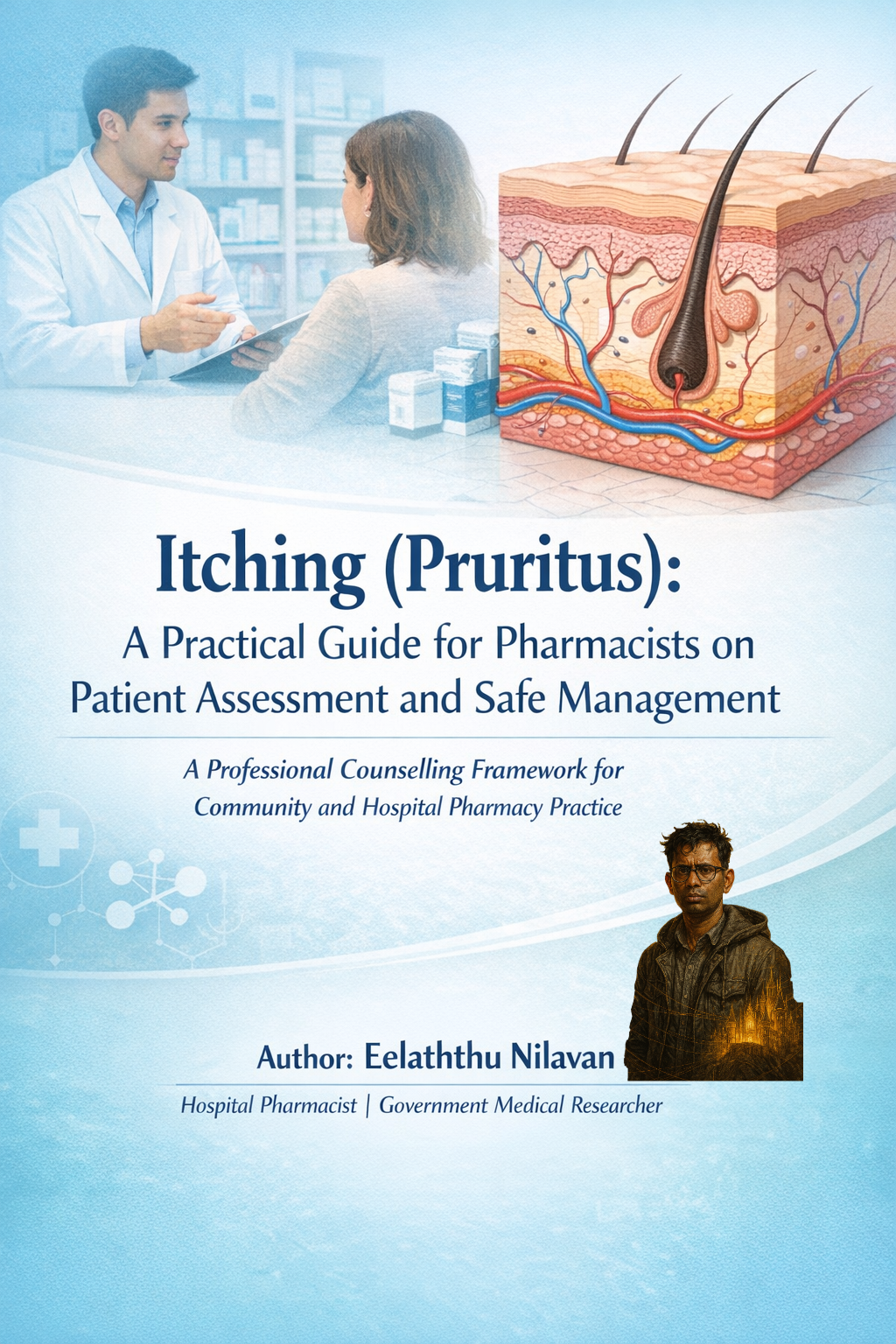
Initial Patient Assessment – Essential Questions

Before recommending any cream or medicine, a pharmacist must first assess the patient carefully by asking the following questions:

Details of the Itching
• Where is the itching located? (Hands, legs, body, face, or private areas?)
• How long has the itching been present?
• Is it persistent throughout the day or worse at night?
• Are there associated symptoms such as redness, rash, swelling, wounds, or pus?
Possible Triggering Factors
• Have you recently changed soaps, detergents, or cosmetic products?
• Do you experience excessive sweating?
• Was there any insect bite?
• Have you noticed itching after consuming certain foods?
Medical History
• Do you have diabetes?
• Any previous history of skin allergies or skin diseases?
• Have you already used any creams or medications?
• Have you used steroid creams before?

Recommending treatment without obtaining this information is professionally inappropriate and unsafe.
Common Causes of Itching & the Pharmacist’s Approach
Cause 1: Dry Skin (Xerosis)
Clinical features
• Dry, rough skin
• No severe redness, wounds, or discharge

Recommended Treatments
• Moisturizers / Emollients
• Creams containing white soft paraffin and liquid paraffin
• Urea 10% cream for severely dry skin

Patient Counselling
• Apply moisturizer immediately after bathing
• Avoid harsh soaps
Cause 2: Allergic or Irritant Dermatitis
Clinical features
• Redness with itching
• History of new soap, detergent, or chemical exposure
Recommended Treatments
• Calamine lotion
• Hydrocortisone 1% (short-term use only)
Important Warnings
• Avoid steroid use on the face, in children, and on private parts
• Do not use for more than 5–7 days
Cause 3: Fungal Infection (Dermatophytosis)
(One of the most common causes of itching)
Clinical features
• Intense itching
• Red or whitish patches, scaling
• Commonly affects groin, underarms, and spaces between toes
Antifungal Creams
• Clotrimazole
• Ketoconazole
• Luliconazole

Strictly Avoid
• Steroid combination creams
(e.g., Betnovate-N, Quadriderm)
Patient Counselling
• Apply continuously for at least 2–4 weeks
• Keep the affected area clean and dry
Cause 4: Insect Bite or Minor Skin Reaction
Clinical features
• Sudden onset of itching
• Localized swelling
Recommended Treatments
• Calamine lotion
• Antihistamine gel (short-term use)
Cause 5: Generalized Itching Without Visible Skin Changes
Possible causes
• Dry skin
• Systemic conditions (diabetes, liver disease, kidney disorders)
Pharmacist Advice
• Regular use of moisturizers
• Oral antihistamines if appropriate
• Medical referral is strongly advised
Oral Medications – Use With Caution

Antihistamines
• Cetirizine
• Loratadine
Patient Counselling
• May cause drowsiness
• Avoid alcohol
• Do not drive or operate heavy machinery if sleepy
Non-Drug and Lifestyle Advice

Soap and Cleansers
• Use mild soaps or syndets
• Avoid daily use of antiseptic soaps

Bathing Habits
• Use lukewarm water
• Avoid excessive scrubbing

Clothing
• Wear loose, cotton clothing
• Avoid tight or synthetic garments
When to Refer the Patient to a Doctor

Immediate medical referral is required if:
• Itching persists for more than 2 weeks
• There is pus, wounds, or fever
• Genital itching with discharge
• The patient is a child or pregnant woman
• Recurrent fungal infections
• History of steroid cream misuse
Professional Communication: How a Pharmacist Should Speak to the Patient
“To recommend the correct cream, we first need to understand the cause of the itching.
Please share a few details.
Using the wrong cream can make the condition worse.”
This builds trust and promotes patient safety.
Ethical Responsibilities of a Pharmacist

Do not dispense medication without a proper assessment
Do not encourage the misuse of steroid creams
Promote rational drug use
Patient safety must always come first
Summary (Practice & Examination Ready)
Assess → Identify the cause → Select appropriate treatment → Explain duration → Counsel the patient → Refer when necessary
A pharmacist is a frontline healthcare professional, not merely a medicine seller.


Author: Eelaththu Nilavan
Hospital Pharmacist | Government Medical Researcher
10/01/2026
