


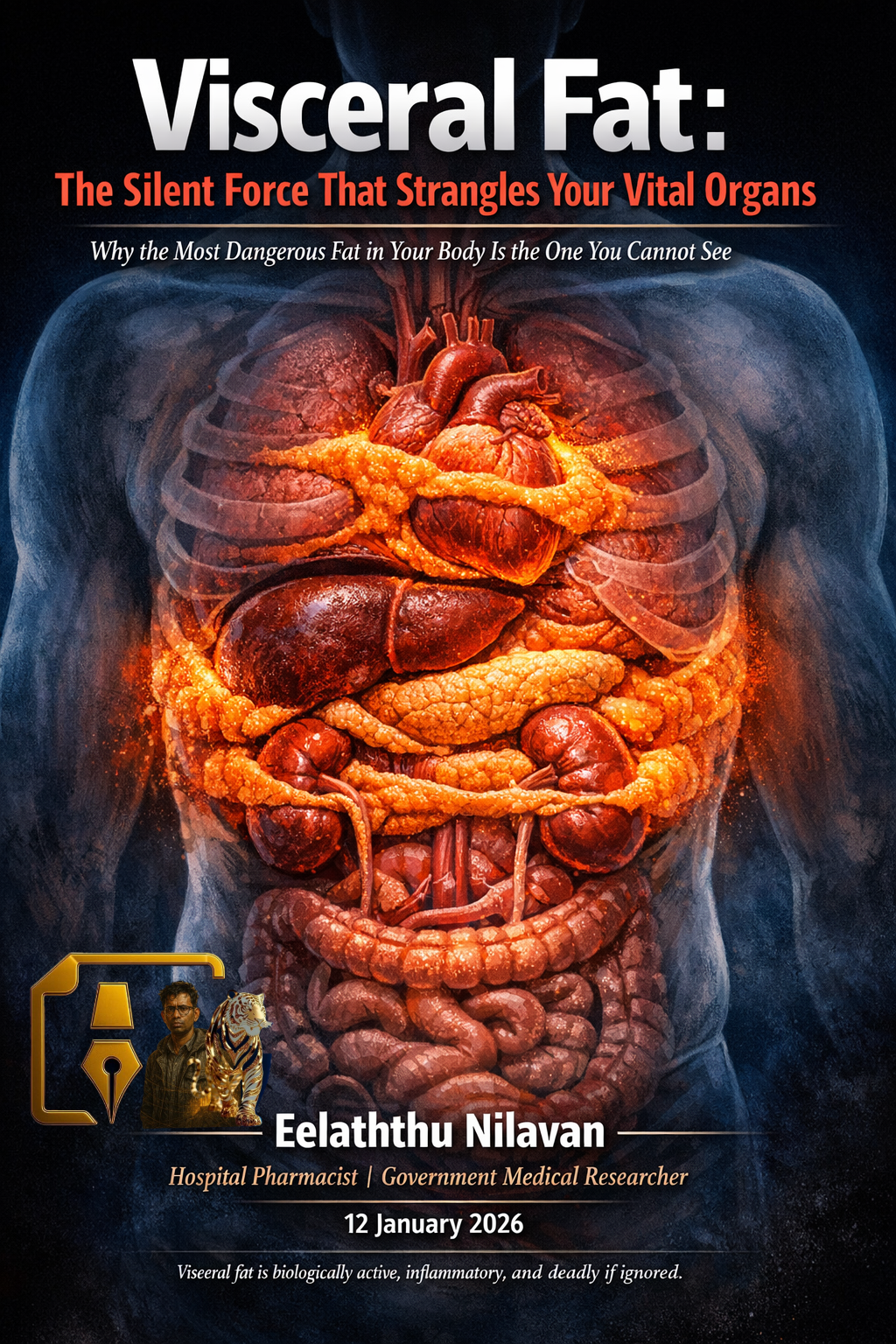
𝓦𝓱𝓮𝓷 𝓕𝓪𝓽 𝓘𝓼 𝓝𝓸𝓽 𝓙𝓾𝓼𝓽 𝓢𝓽𝓸𝓻𝓮𝓭 𝓔𝓷𝓮𝓻𝓰𝔂
Visceral fat is not passive.
It does not wait quietly beneath the skin.
It moves, spreads, communicates, and damages.
Hidden deep inside the abdominal cavity, visceral fat behaves like an active biological organ, silently reshaping the body’s internal environment long before outward signs appear. By the time symptoms surface, vital systems may already be under strain.
𝓣𝓱𝓮 𝓐𝓫𝓭𝓸𝓶𝓲𝓷𝓪𝓵 𝓘𝓷𝓿𝓪𝓼𝓲𝓸𝓷: 𝓗𝓸𝔀 𝓥𝓲𝓼𝓬𝓮𝓻𝓪𝓵 𝓕𝓪𝓽 𝓢𝓹𝓻𝓮𝓪𝓭𝓼
Unlike subcutaneous fat, visceral fat wraps itself around organs, forming a tightening internal network. It infiltrates spaces meant for flexibility, circulation, and metabolic balance.
This invasion follows a predictable yet dangerous path.
𝓛𝓲𝓿𝓮𝓻: 𝓣𝓱𝓮 𝓕𝓲𝓻𝓼𝓽 𝓣𝓪𝓻𝓰𝓮𝓽
The liver is the first organ to feel the grip.
Visceral fat coats the liver’s surface and seeps into its tissue, leading to:
• Reduced flexibility of liver cells
• Impaired toxin clearance
• Accumulation of fat inside liver cells
Over time, this results in fatty liver disease, reducing the body’s ability to detoxify blood and regulate metabolism.

𝓟𝓪𝓷𝓬𝓻𝓮𝓪𝓼: 𝓦𝓱𝓮𝓻𝓮 𝓢𝓲𝓰𝓷𝓪𝓵𝓼 𝓑𝓻𝓮𝓪𝓴 𝓓𝓸𝔀𝓷
As visceral fat surrounds the pancreas, it interferes with insulin signaling.
This leads to:
• Weak insulin response
• Rising blood glucose levels
• Gradual insulin resistance
The body begins to lose metabolic coordination, paving the way for type 2 diabetes—often without early warning symptoms.
𝓚𝓲𝓭𝓷𝓮𝔂𝓼: 𝓕𝓲𝓵𝓽𝓮𝓻𝓼 𝓤𝓷𝓭𝓮𝓻 𝓟𝓻𝓮𝓼𝓼𝓾𝓻𝓮
Visceral fat does not simply surround the kidneys—it compresses them.
This physical pressure:
• Narrows delicate blood vessels
• Reduces filtration efficiency
• Forces kidneys to work continuously harder
The result is rising blood pressure and increased long-term risk of kidney damage.
𝓗𝓮𝓪𝓻𝓽: 𝓒𝓱𝓮𝓶𝓲𝓬𝓪𝓵 𝓦𝓪𝓻𝓯𝓪𝓻𝓮 𝓕𝓻𝓸𝓶 𝓕𝓪𝓽
Visceral fat releases inflammatory chemicals directly into the bloodstream.
These substances:
• Thicken blood
• Increase arterial stiffness
• Elevate systemic inflammation
The heart must pump harder, beat after beat, slowly wearing itself down and increasing the risk of cardiovascular disease.
𝓛𝓾𝓷𝓰𝓼: 𝓦𝓱𝓮𝓷 𝓔𝓿𝓮𝓻𝔂 𝓑𝓻𝓮𝓪𝓽𝓱 𝓢𝓱𝓪𝓵𝓵𝓸𝔀𝓼
Abdominal fat pushes upward against the diaphragm.
This limits:
• Lung expansion
• Oxygen intake
• Respiratory efficiency
Even at rest, breathing becomes subtly restricted, reducing endurance and increasing fatigue.
𝓑𝓻𝓪𝓲𝓷: 𝓣𝓱𝓮 𝓘𝓷𝓿𝓲𝓼𝓲𝓫𝓵𝓮 𝓒𝓸𝓷𝓷𝓮𝓬𝓽𝓲𝓸𝓷
Through hormonal and inflammatory signals, visceral fat reaches the brain.
This disruption causes:
• Altered hunger and satiety cues
• Mental fog and reduced clarity
• Mood instability and stress sensitivity
The brain begins to misinterpret the body’s needs, reinforcing unhealthy cycles.
𝓦𝓱𝔂 𝓥𝓲𝓼𝓬𝓮𝓻𝓪𝓵 𝓕𝓪𝓽 𝓘𝓼 𝓢𝓸 𝓓𝓪𝓷𝓰𝓮𝓻𝓸𝓾𝓼
The greatest threat of visceral fat is its silence.
• It may exist even in people who appear slim
• It causes damage before pain appears
• It alters multiple organs simultaneously
By the time symptoms are obvious, the internal imbalance may already be advanced.
𝓡𝓮𝓿𝓮𝓻𝓼𝓲𝓷𝓰 𝓣𝓱𝓮 𝓢𝓲𝓵𝓮𝓷𝓽 𝓓𝓪𝓶𝓪𝓰𝓮
The encouraging truth: visceral fat is highly responsive to change.
𝓔𝓯𝓯𝓮𝓬𝓽𝓲𝓿𝓮 𝓢𝓽𝓻𝓪𝓽𝓮𝓰𝓲𝓮𝓼
• Fiber- and protein-rich nutrition to stabilize insulin
• Regular aerobic activity to target deep abdominal fat
• Stress reduction to lower cortisol-driven fat storage
Small, consistent actions can gradually loosen the grip of visceral fat and restore internal balance.


Author: Eelaththu Nilavan
Hospital Pharmacist | Government Medical Researcher
12/01/2026
