

Overview
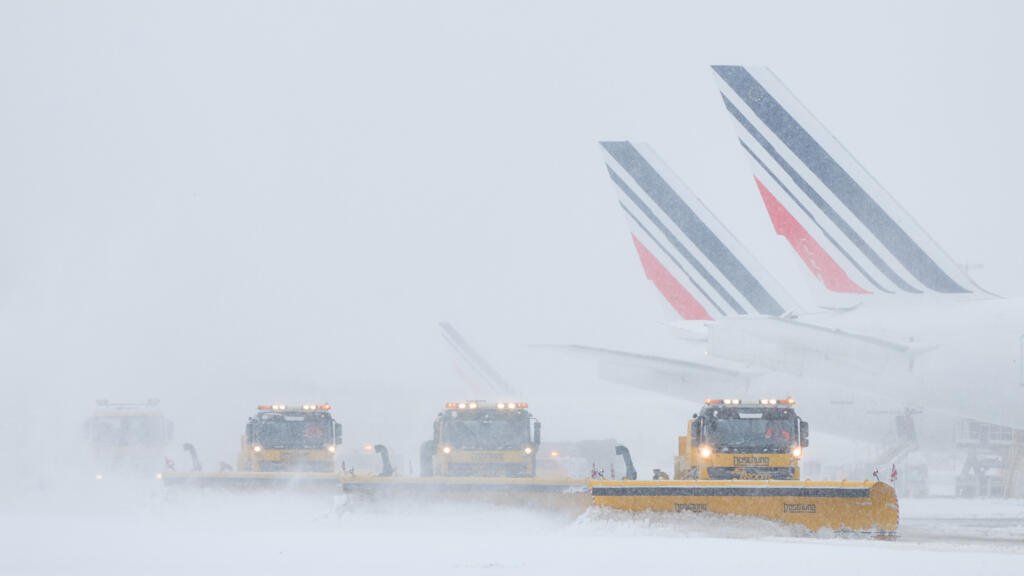
A powerful wave of freezing rain and snow swept across Central and Eastern Europe on Tuesday, forcing multiple international airports to shut down temporarily and triggering widespread travel disruption across the region. The hazardous weather created thick layers of ice on runways, halted flights, diverted aircraft, and strained road and rail networks. Authorities in several countries urged residents to avoid non‑essential travel as emergency crews worked to manage the impact.
What Happened
- Vienna International Airport (Austria) was among the hardest hit, with a thick sheet of ice repeatedly refreezing on runways despite continuous clearing efforts. All departures were halted early in the day, and incoming flights were diverted to airports in Munich, Frankfurt, Cologne, and Venice.
- Budapest Ferenc Liszt International Airport (Hungary) suspended all arrivals and departures due to “black ice and extreme icing,” with one Ethiopian Airlines cargo aircraft sliding off a taxiway and becoming stuck in the grass. No injuries were reported, and an investigation is underway.
- Bratislava Airport (Slovakia) also closed temporarily, with police warning of “extreme” ice and snow across western regions and urging the public to avoid travel.
- Prague Václav Havel Airport (Czech Republic) operated in a “very limited mode,” restricting arrivals while firefighters de‑iced runways and aircraft stands. Delays continued throughout the day, and emergency services reported around 50 weather‑related injuries in the city.
Wider Transport Disruption
The freezing rain affected far more than air travel:
- Rail networks in Austria, the Czech Republic, and Hungary experienced widespread delays and cancellations. Austria’s ÖBB railway operator asked passengers to postpone non‑urgent journeys due to severe icing on tracks.
- Road traffic slowed dramatically across the region, with several highways closed and emergency services responding to ice‑related accidents.
- River systems in Hungary, including the Danube and Tisza, saw drifting ice, prompting authorities to place icebreakers on alert.
- Lake Balaton, Hungary’s largest lake, froze over — a phenomenon that occurs only once every 10–15 years — though officials warned the ice was too thin for public use.
Weather Outlook
Meteorologists reported that the wintry system was moving across Poland, Slovakia, Hungary, and Romania, with further icy conditions expected overnight. Some improvement was forecast for Austria and the Czech Republic as temperatures rose slightly above freezing, though refreezing remained a risk.
Northern Europe, including southern Norway and Sweden, also faced heavy snowfall, while parts of Turkey and the Caucasus region braced for significant snow accumulation.
Impact on Travellers
Millions of passengers across Europe faced delays, cancellations, and re‑routing. Flights to major UK cities — including London, Manchester, and Bristol — were among those affected by diversions and schedule changes.
Authorities across the region emphasised safety, urging travellers to monitor airport updates, expect delays, and avoid unnecessary journeys until conditions improve.