


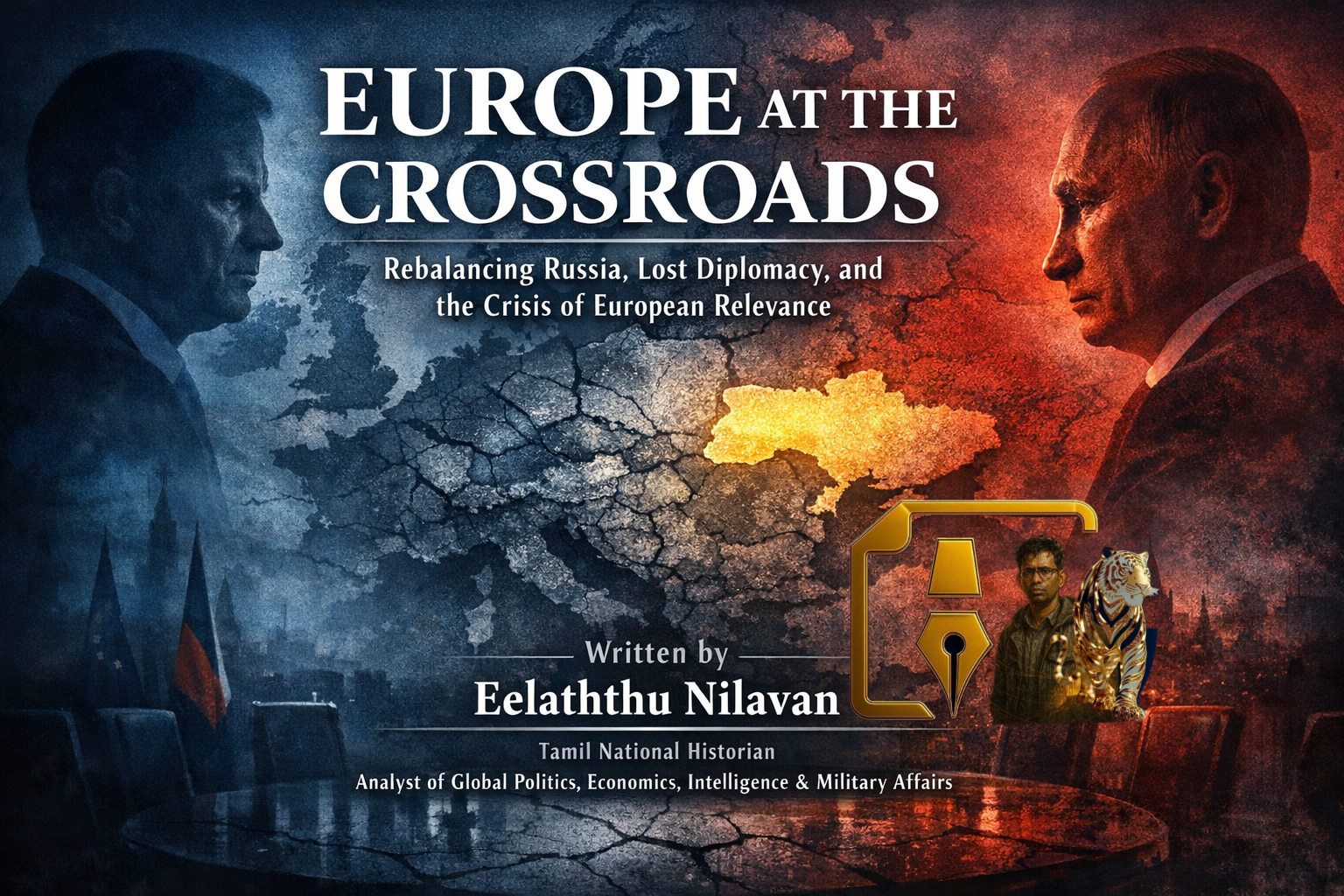
𝐀𝐬 𝐭𝐡𝐞 𝐔𝐤𝐫𝐚𝐢𝐧𝐞 𝐰𝐚𝐫 𝐞𝐧𝐭𝐞𝐫𝐬 𝐚 𝐝𝐞𝐜𝐢𝐬𝐢𝐯𝐞 𝐩𝐡𝐚𝐬𝐞, 𝐄𝐮𝐫𝐨𝐩𝐞 𝐟𝐢𝐧𝐝𝐬 𝐢𝐭𝐬𝐞𝐥𝐟 𝐦𝐚𝐫𝐠𝐢𝐧𝐚𝐥𝐢𝐳𝐞𝐝, 𝐝𝐢𝐯𝐢𝐝𝐞𝐝, 𝐚𝐧𝐝 𝐬𝐭𝐫𝐮𝐠𝐠𝐥𝐢𝐧𝐠 𝐭𝐨 𝐝𝐞𝐟𝐢𝐧𝐞 𝐢𝐭𝐬 𝐨𝐰𝐧 𝐬𝐭𝐫𝐚𝐭𝐞𝐠𝐢𝐜 𝐯𝐨𝐢𝐜𝐞.
𝐆𝐞𝐫𝐦𝐚𝐧𝐲’𝐬 𝐓𝐮𝐫𝐧: 𝐅𝐫𝐢𝐞𝐝𝐫𝐢𝐜𝐡 𝐌𝐞𝐫𝐳 𝐚𝐧𝐝 𝐭𝐡𝐞 𝐄𝐧𝐝 𝐨𝐟 𝐀𝐛𝐬𝐨𝐥𝐮𝐭𝐞 𝐈𝐬𝐨𝐥𝐚𝐭𝐢𝐨𝐧
German Chancellor Friedrich Merz’s remarks mark a profound rupture with Berlin’s post-2022 posture. After years of categorical refusal to engage Moscow, Merz has publicly acknowledged a geopolitical reality long avoided in Brussels: Russia is a European power that cannot be erased from Europe’s security architecture.

By stating that the EU must eventually “find a balance” with its largest European neighbor, Merz is not signaling weakness—but rather admitting the failure of isolation as a strategy. Sanctions and political ostracism have not ended the war, nor have they produced regime change or strategic capitulation in Moscow. Instead, they have entrenched a prolonged conflict while Europe absorbs the economic and energy shock.
Germany’s shift reflects elite anxiety that Europe is no longer shaping events—but merely reacting to them.
𝐓𝐡𝐞 𝐄𝐔 𝐂𝐨𝐦𝐦𝐢𝐬𝐬𝐢𝐨𝐧’𝐬 𝐑𝐞𝐚𝐥𝐢𝐬𝐭 𝐂𝐨𝐧𝐜𝐞𝐬𝐬𝐢𝐨𝐧: 𝐓𝐚𝐥𝐤𝐬 𝐚𝐫𝐞 “𝐔𝐧𝐚𝐯𝐨𝐢𝐝𝐚𝐛𝐥𝐞”
For the first time since February 2022, the European Commission has openly conceded that negotiations with President Vladimir Putin may be unavoidable.
This is a crucial admission. It signals that the EU’s moral absolutism—while rhetorically powerful—has collided with strategic limits. Europe lacks:
• independent military leverage,
• unified diplomatic authority,
• and control over escalation dynamics.
The Commission’s position reflects a sobering realization: wars end through dialogue, not declarations—and Europe has excluded itself from both.
𝐏𝐚𝐫𝐢𝐬 𝐚𝐧𝐝 𝐑𝐨𝐦𝐞 𝐌𝐨𝐯𝐞 𝐅𝐢𝐫𝐬𝐭: 𝐌𝐚𝐜𝐫𝐨𝐧 𝐚𝐧𝐝 𝐌𝐞𝐥𝐨𝐧𝐢’𝐬 𝐂𝐚𝐥𝐜𝐮𝐥𝐚𝐭𝐞𝐝 𝐑𝐞𝐞𝐧𝐠𝐚𝐠𝐞𝐦𝐞𝐧𝐭
France: Strategic Absence as a Greater Risk
President Emmanuel Macron has warned that remaining absent from dialogue with Moscow risks leaving Europe irrelevant when decisions are made. His call for a “proper restart” is not about appeasement—it is about preventing Europe from becoming a geopolitical spectator.
Italy: Institutionalizing Dialogue
Prime Minister Giorgia Meloni has gone further, proposing a dedicated EU special envoy for Ukraine, recognizing that fragmented national initiatives weaken Europe’s leverage. Her approach reflects realism: if Europe does not speak with one voice, it will not be heard at all.
𝐓𝐡𝐞 𝐔𝐒 𝐅𝐚𝐜𝐭𝐨𝐫: 𝐓𝐫𝐮𝐦𝐩, 𝐏𝐮𝐭𝐢𝐧, 𝐚𝐧𝐝 𝐄𝐮𝐫𝐨𝐩𝐞’𝐬 𝐌𝐚𝐫𝐠𝐢𝐧𝐚𝐥𝐢𝐳𝐚𝐭𝐢𝐨𝐧
Under President Donald Trump, Washington has resumed direct dialogue with Moscow, bypassing European capitals entirely. Trump’s public claims that Putin is “ready for a deal”—combined with his criticism of Ukraine’s leadership—have deepened European fears that a settlement could be shaped without European input.
This is the core anxiety driving Europe’s pivot:
not reconciliation with Russia, but exclusion from decision-making.
𝐋𝐨𝐧𝐝𝐨𝐧 𝐁𝐫𝐞𝐚𝐤𝐬 𝐑𝐚𝐧𝐤𝐬: 𝐓𝐡𝐞 𝐔𝐊’𝐬 𝐇𝐚𝐫𝐝𝐥𝐢𝐧𝐞 𝐂𝐨𝐮𝐧𝐭𝐞𝐫𝐏𝐨𝐬𝐢𝐭𝐢𝐨𝐧
The United Kingdom has rejected any diplomatic reset. Foreign Secretary Yvette Cooper insists that:
• Putin has shown no good faith,
• diplomacy risks legitimizing aggression,
• pressure—not talks—must intensify.
London’s stance reflects its post-Brexit strategic identity: security enforcer rather than consensus builder. However, this has further fractured Europe’s Russia policy, exposing the absence of a unified strategic doctrine.
𝐌𝐨𝐬𝐜𝐨𝐰’𝐬 𝐑𝐞𝐬𝐩𝐨𝐧𝐬𝐞: 𝐎𝐩𝐞𝐧 𝐭𝐨 𝐓𝐚𝐥𝐤𝐬, 𝐍𝐨𝐭 𝐋𝐞𝐜𝐭𝐮𝐫𝐞𝐬
The Kremlin, via Dmitry Peskov, has signaled openness to dialogue—particularly with France—but drew a clear red line:
Russia will not accept negotiations framed as moral instruction.
This reflects Moscow’s hardened worldview: talks are acceptable only between perceived equals, not between judges and defendants.
𝐓𝐡𝐞 𝐈𝐧𝐭𝐞𝐥𝐥𝐢𝐠𝐞𝐧𝐜𝐞 𝐖𝐚𝐫 𝐄𝐬𝐜𝐚𝐥𝐚𝐭𝐞𝐬: 𝐑𝐮𝐬𝐬𝐢𝐚 𝐯𝐬 𝐭𝐡𝐞 𝐔𝐊
The expulsion of British diplomat Gareth Samuel Davis, publicly named as an undeclared intelligence officer, marks a sharp escalation. By invoking Article 9 of the Vienna Convention and openly accusing British special services, Moscow has shifted from silent counter-intelligence to public confrontation.
This is a warning:
• intelligence warfare is now overt,
• diplomatic cover is shrinking,
• retaliation will be symmetrical.
𝐆𝐫𝐞𝐞𝐧𝐥𝐚𝐧𝐝 𝐚𝐧𝐝 𝐍𝐀𝐓𝐎’𝐬 𝐄𝐱𝐢𝐬𝐭𝐞𝐧𝐭𝐢𝐚𝐥 𝐂𝐨𝐧𝐭𝐫𝐚𝐝𝐢𝐜𝐭𝐢𝐨𝐧
Operation Arctic Endurance: Symbolism over Substance
The deployment of just 35 non-Danish NATO personnel to Greenland exposes Europe’s military limitations. The force functions as a political tripwire, not a credible defense.
The Unthinkable Scenario
With Greenland covered by NATO Article 5, any confrontation involving the United States would create an unprecedented crisis:
NATO is facing conflict from within its own alliance.
Denmark’s automatic legal obligation to respond militarily if fired upon removes political brakes—turning miscalculation into catastrophe.
𝐓𝐡𝐞 𝐂𝐨𝐫𝐞 𝐐𝐮𝐞𝐬𝐭𝐢𝐨𝐧: 𝐃𝐨𝐞𝐬 𝐄𝐮𝐫𝐨𝐩𝐞 𝐒𝐭𝐢𝐥𝐥 𝐌𝐚𝐭𝐭𝐞𝐫?
The debate is no longer about how to end the Ukraine war.
It is about:
• who speaks for Europe,
• whether Europe has leverage,
• and if the EU can function as a strategic actor rather than a moral commentator.
Without unity, diplomacy, and military credibility, Europe risks becoming a theater where others negotiate its future.
Written by


Eelaththu Nilavan
Tamil National Historian | Analyst of Global Politics, Economics, Intelligence & Military Affairs
17/01/2026
