


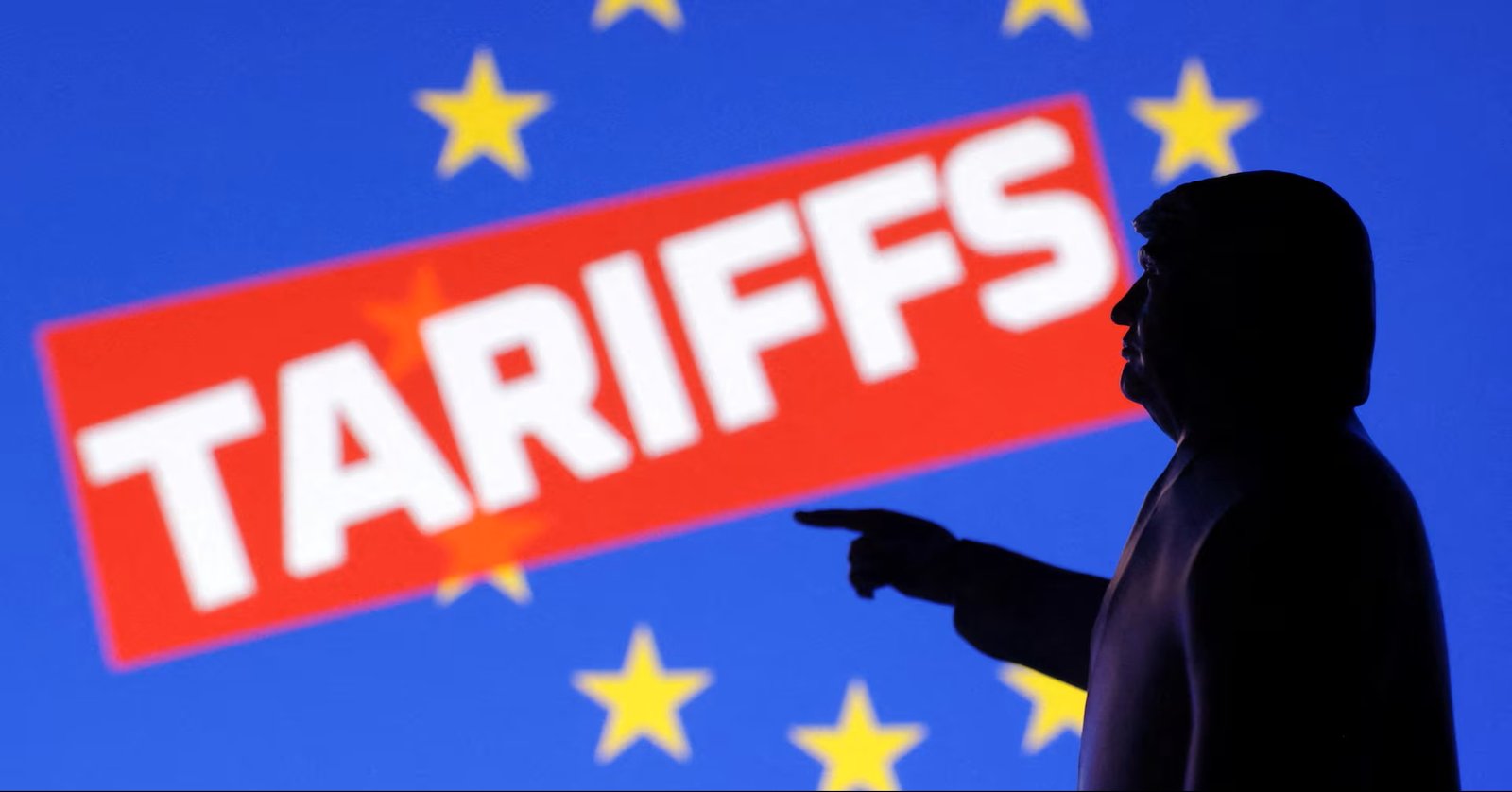
The European Union is preparing a sweeping package of retaliatory trade measures worth €93 billion, escalating what officials describe as one of the most serious transatlantic crises in decades. The move comes after U.S. President Donald Trump threatened new tariffs on several European countries unless they supported his push to assert control over Greenland, an autonomous territory within the Kingdom of Denmark.

This report is based on verified information from multiple reputable outlets, including the Financial Times, BBC, Politico, and Business Standard, all of which confirm the scale of the EU’s preparations and the gravity of the diplomatic standoff.
A Crisis Triggered by an Unprecedented Demand
President Trump announced that the United States would impose a 10% tariff on goods from eight European countries starting 1 February, rising to 25% by June, unless Europe agreed to negotiate the “purchase” or transfer of Greenland — a demand European leaders have condemned as coercive and destabilising.
The targeted countries include Denmark, Sweden, France, Germany, the Netherlands, Finland, the United Kingdom, and Norway. European officials say the threat amounts to “economic blackmail” and undermines decades of transatlantic cooperation.
EU’s Retaliatory Options: Tariffs and the ‘Trade Bazooka’
EU ambassadors met for three hours in Brussels on Sunday to discuss a coordinated response. According to diplomats cited by the Financial Times and Politico, the bloc is preparing two major instruments:
1. Reactivation of €93bn Tariff List
- Originally drafted last year and suspended to avoid a trade war.
- Targets U.S. industrial goods, including aircraft, automobiles, and bourbon whiskey.
- Could be implemented “very quickly,” officials say.
2. Anti-Coercion Instrument (ACI)
- A powerful mechanism adopted in 2023 but never used.
- Allows the EU to restrict U.S. companies’ access to the single market, limit investment, or block service exports — measures that would hit major American tech firms especially hard.
- France is pushing strongly for its activation; other member states prefer exhausting diplomatic channels first.
European Commission President Ursula von der Leyen stated that Europe “will stand firm in our commitment to uphold the sovereignty of Greenland and the Kingdom of Denmark”.
Diplomacy First — But With Teeth
Despite the severity of the situation, most EU member states favour a “carrot and stick” approach:
- Engage in dialogue at the World Economic Forum in Davos this week.
- Prepare retaliation if talks fail.
- Maintain unity behind Denmark and Greenland.
European Council President António Costa said the bloc is “ready to defend ourselves against any form of coercion” while still seeking a peaceful resolution.
Danish Foreign Minister Lars Løkke Rasmussen emphasised that diplomacy remains the priority, noting that “the U.S. is also more than the U.S. president” — a reference to institutional checks and balances in Washington.
A Dangerous Spiral for NATO and Global Markets
European leaders warn that Trump’s tariff threats risk fracturing NATO, already strained by disputes over defence spending and Arctic strategy. Several newspapers describe the situation as the “biggest crisis” to hit the alliance in decades.
Financial markets are also bracing for turbulence:
- European equities, which have recently outperformed U.S. markets, could face a sharp reversal.
- Industries such as aviation, automotive manufacturing, and digital services are particularly exposed to retaliatory measures.
Greenland at the Centre of a Geopolitical Storm
Trump has repeatedly argued that Greenland is vital for U.S. national security, citing its strategic Arctic location and proximity to Russian and Chinese activity. European leaders, however, insist that Greenland’s sovereignty is non-negotiable and that territorial pressure tactics are unacceptable in modern diplomacy.
What Happens Next
EU leaders will convene an emergency summit in Brussels later this week to finalise their response. The outcome of discussions in Davos — where Trump is scheduled to deliver a keynote address — may determine whether the crisis escalates into a full-scale trade war.
For now, Europe is signalling unity, resolve, and readiness to defend its economic and political sovereignty.
