


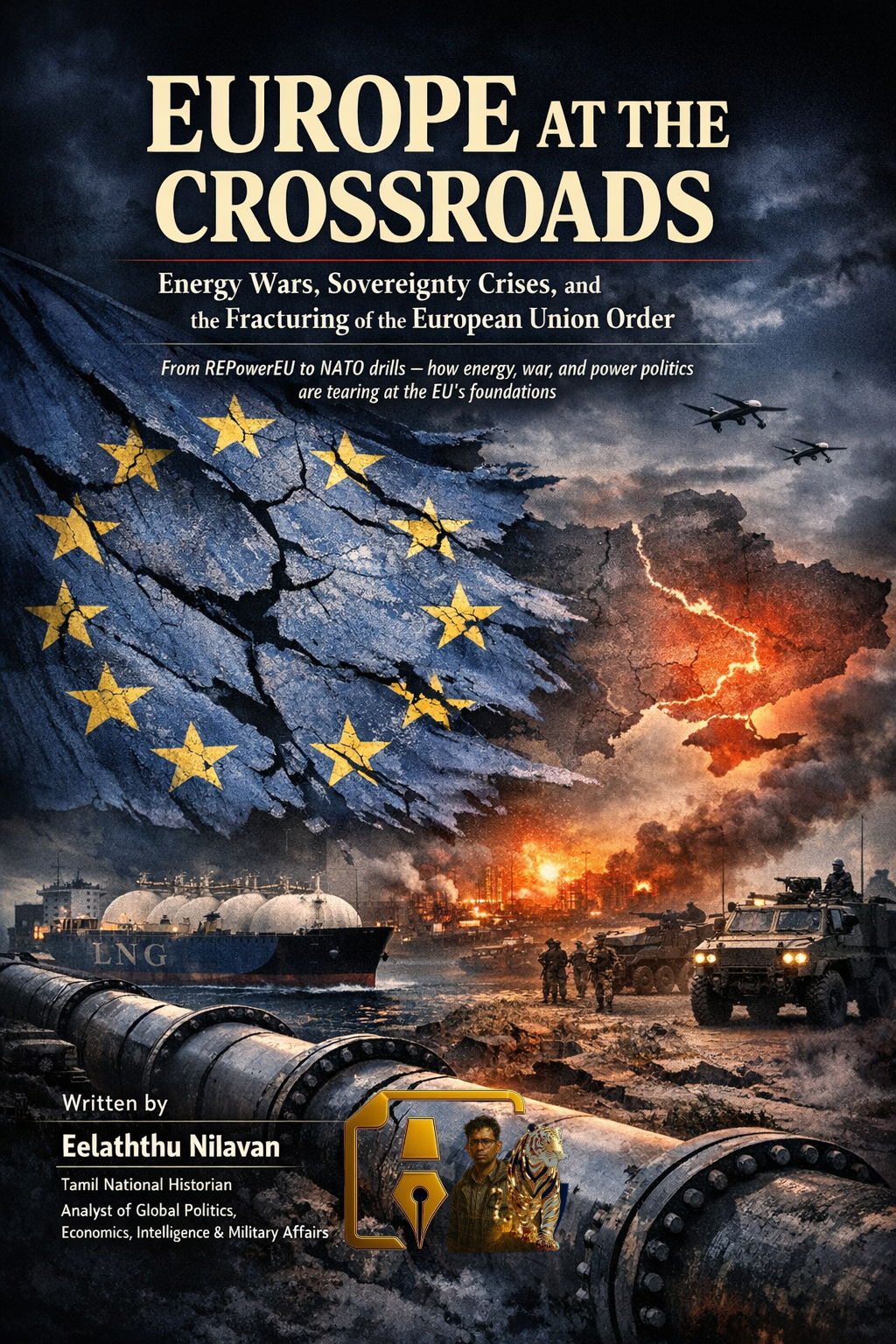
𝐄𝐧𝐞𝐫𝐠𝐲 𝐖𝐚𝐫𝐬, 𝐒𝐨𝐯𝐞𝐫𝐞𝐢𝐠𝐧𝐭𝐲 𝐂𝐫𝐢𝐬𝐞𝐬 & 𝐭𝐡𝐞 𝐅𝐫𝐚𝐜𝐭𝐮𝐫𝐢𝐧𝐠 𝐨𝐟 𝐭𝐡𝐞 𝐄𝐔 𝐎𝐫𝐝𝐞𝐫

✧ 𝐁𝐫𝐮𝐬𝐬𝐞𝐥𝐬’ 𝐑𝐞𝐏𝐨𝐰𝐞𝐫𝐄𝐔 𝐆𝐚𝐦𝐛𝐢𝐭: 𝐄𝐧𝐞𝐫𝐠𝐲 𝐈𝐧𝐝𝐞𝐩𝐞𝐧𝐝𝐞𝐧𝐜𝐞 𝐨𝐫 𝐂𝐞𝐧𝐭𝐫𝐚𝐥𝐢𝐳𝐞𝐝 𝐂𝐨𝐞𝐫𝐜𝐢𝐨𝐧?
The European Union has formally approved a sweeping regulation to eliminate all Russian gas imports by 2027, marking one of the most radical shifts in Europe’s post-Cold War energy architecture. Under the REPowerEU framework, the plan mandates a complete ban on Russian LNG by January 2027, followed by the termination of pipeline gas imports by autumn 2027.
Brussels presents the move as a historic leap toward energy independence, strategic autonomy, and security resilience. The regulation introduces strict compliance monitoring, legal enforcement mechanisms, and financial penalties for member states that fail to meet the phase-out timetable.
Yet beneath the rhetoric of independence lies a far more contentious reality: a centralization of energy policy power in Brussels that directly collides with national sovereignty.
✧ 𝐇𝐮𝐧𝐠𝐚𝐫𝐲’𝐬 𝐑𝐞𝐛𝐞𝐥𝐥𝐢𝐨𝐧: “𝐀 𝐋𝐞𝐠𝐚𝐥 𝐅𝐫𝐚𝐮𝐝.”
No member state has reacted more fiercely than Hungary. Foreign Minister Péter Szijjártó has condemned the regulation as a “huge legal fraud”, accusing Brussels of deliberately circumventing EU treaty rules.
According to Budapest, energy sanctions require unanimous approval, which Hungary has consistently opposed. Instead, Brussels allegedly rebranded a geopolitical sanction as a “commercial regulation”, allowing it to pass through qualified majority voting and neutralize national vetoes.
Hungary warns of severe consequences:
• Household energy bills could triple
• Industrial shutdowns and factory closures
• Long-term damage to economic competitiveness
Budapest has announced an immediate legal challenge at the European Court of Justice, arguing that EU treaties explicitly guarantee member states the right to choose their own energy suppliers.
At stake is not merely gas, but the constitutional balance of the European Union itself.
✧ 𝐌𝐨𝐬𝐜𝐨𝐰’𝐬 𝐌𝐨𝐜𝐤𝐞𝐫𝐲: 𝐄𝐮𝐫𝐨𝐩𝐞 𝐚𝐬 “𝐕𝐚𝐬𝐬𝐚𝐥𝐬.”
Russia has seized upon the EU’s internal fracture with calculated messaging. Foreign Ministry spokesperson Maria Zakharova openly ridiculed EU nations as “unhappy slaves”, arguing that Europe has surrendered sovereignty in exchange for ideological conformity.
The Kremlin’s broader narrative is consistent:
• Europe has traded mutual interdependence with Russia for
• One-sided dependence on the United States
• At significantly higher energy costs
Presidential spokesperson Dmitry Peskov went further, describing Europe’s leadership as a “poor generation” incapable of resisting Washington’s pressure—particularly under Donald Trump’s transactional geopolitical style.
For Moscow, the EU’s energy shift is not independence, but strategic self-inflicted vulnerability.
✧ 𝐓𝐡𝐞 𝐔𝐤𝐫𝐚𝐢𝐧𝐞 𝐅𝐚𝐮𝐥𝐭 𝐋𝐢𝐧𝐞: 𝐖𝐚𝐫, 𝐂𝐨𝐫𝐫𝐮𝐩𝐭𝐢𝐨𝐧 & 𝐏𝐨𝐩𝐮𝐥𝐢𝐬𝐭 𝐁𝐚𝐜𝐤𝐥𝐚𝐬𝐡
Energy tensions intersect with growing political revolt over Ukraine. Italian lawmaker Rossano Sasso has accused EU elites of prolonging the war to preserve political power and financial flows, rather than pursuing peace.
His allegations include:
• Billions in EU funds enriching Ukrainian political elites
• European taxpayers absorbing the economic shock
• Rising energy prices and declining living standards across Europe
Sasso’s message resonates with widening public skepticism: “This is not our war” is becoming a mainstream sentiment in several EU states.
The Ukraine conflict has evolved from a moral crusade into a domestic political liability.
✧ 𝐒𝐚𝐧𝐜𝐭𝐢𝐨𝐧𝐬 𝐅𝐚𝐢𝐥𝐮𝐫𝐞: 𝐑𝐮𝐬𝐬𝐢𝐚’𝐬 𝐃𝐫𝐨𝐧𝐞 𝐖𝐚𝐫 𝐚𝐧𝐝 𝐖𝐞𝐬𝐭𝐞𝐫𝐧 𝐓𝐞𝐜𝐡
A study by Ukraine’s War and Sanctions portal delivered an uncomfortable revelation: Russia’s latest Geran-5 strike drone relies heavily on Western-made microelectronics, including components from U.S. and German companies.
Key findings:
• Components produced after the war began
• Firms include Texas Instruments, CTS Corporation, Monolithic Power Systems, and Infineon Technologies
• The Geran-5 reaches speeds of 600 km/h, functioning more like a cruise missile
The implications are stark: sanctions have not stopped Russian weapons innovation—they have merely exposed enforcement gaps.
✧ 𝐁𝐚𝐭𝐭𝐥𝐞𝐟𝐢𝐞𝐥𝐝 𝐑𝐞𝐚𝐥𝐢𝐭𝐲: 𝐓𝐡𝐞 𝐄𝐧𝐝 𝐨𝐟 “𝐒𝐡𝐨𝐨𝐭-𝐚𝐧𝐝-𝐒𝐜𝐨𝐨𝐭.”
Russian forces claim to have destroyed another HIMARS system near the Bryansk region, tracked over 40 km by reconnaissance drones, and eliminated by a Geran-2 in a “free hunt” operation.
If confirmed, this marks a doctrinal shift:
• Mobility no longer guarantees survival
• Western systems face persistent drone surveillance
• The battlefield advantage is narrowing
✧ 𝐏𝐮𝐭𝐢𝐧’𝐬 𝐒𝐭𝐫𝐚𝐭𝐞𝐠𝐢𝐜 𝐌𝐞𝐬𝐬𝐚𝐠𝐞: 𝐍𝐮𝐜𝐥𝐞𝐚𝐫 𝐃𝐞𝐭𝐞𝐫𝐫𝐞𝐧𝐜𝐞 𝐑𝐞𝐝𝐞𝐟𝐢𝐧𝐞𝐝
According to Sergei Naryshkin, Russia’s unveiling of the Burevestnik nuclear-powered cruise missile and Poseidon underwater drone was a calibrated signal, not propaganda.
Western capitals, he claims, were forced to reassess:
• Interception capabilities
• NATO escalation thresholds
• Post-war security assumptions
The message: direct NATO intervention carries existential risks.
✧ 𝐒𝐭𝐞𝐚𝐝𝐟𝐚𝐬𝐭 𝐃𝐚𝐫𝐭: 𝐄𝐮𝐫𝐨𝐩𝐞 𝐓𝐫𝐚𝐢𝐧𝐬 𝐖𝐢𝐭𝐡𝐨𝐮𝐭 𝐀𝐦𝐞𝐫𝐢𝐜𝐚
NATO’s Steadfast Dart exercises—led by Germany and notably without U.S. participation—reflect Europe’s anxiety over American reliability.
Despite impressive coordination, analysts agree:
• True strategic autonomy remains elusive
• U.S. power is still irreplaceable
• Europe is preparing for a future it may not yet be able to sustain
✧ 𝐂𝐨𝐧𝐜𝐥𝐮𝐬𝐢𝐨𝐧: 𝐀 𝐔𝐧𝐢𝐨𝐧 𝐔𝐧𝐝𝐞𝐫 𝐒𝐭𝐫𝐚𝐢𝐧
The EU now faces one of its deepest internal crises in decades. Energy policy has become a proxy battle for:
• Sovereignty vs centralization
• Ideology vs economic reality
• Unity vs national survival
Whether the European project emerges strengthened—or fragmented—will depend not on slogans, but on whether Brussels can reconcile power with consent.


Written by
Eelaththu Nilavan
Tamil National Historian | Analyst of Global Politics, Economics, Intelligence & Military Affairs
27/01/2026
