


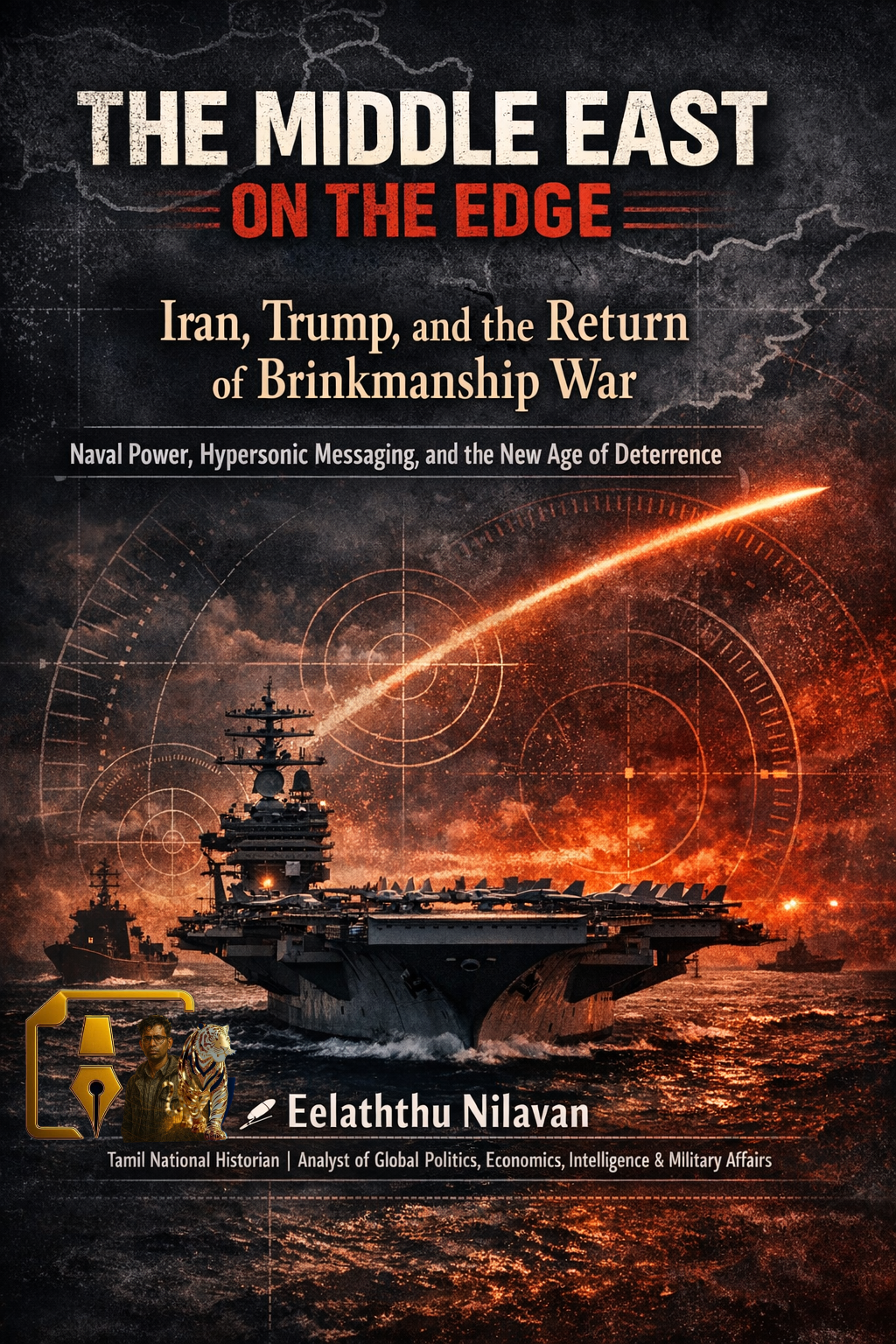
𝐈𝐫𝐚𝐧, 𝐓𝐫𝐮𝐦𝐩, 𝐚𝐧𝐝 𝐭𝐡𝐞 𝐑𝐞𝐭𝐮𝐫𝐧 𝐨𝐟 𝐁𝐫𝐢𝐧𝐤𝐦𝐚𝐧𝐬𝐡𝐢𝐩 𝐖𝐚𝐫

✦ 𝐀 𝐕𝐈𝐃𝐄𝐎 𝐀𝐒 𝐀 𝐖𝐄𝐀𝐏𝐎𝐍
𝐈𝐫𝐚𝐧’𝐬 𝐏𝐬𝐲𝐜𝐡𝐨𝐥𝐨𝐠𝐢𝐜𝐚𝐥 𝐒𝐭𝐫𝐢𝐤𝐞 𝐚𝐠𝐚𝐢𝐧𝐬𝐭 𝐔.𝐒. 𝐍𝐚𝐯𝐚𝐥 𝐏𝐨𝐰𝐞𝐫
Iran’s state-run Islamic Ideology Dissemination Organization released a carefully choreographed simulation depicting the USS Abraham Lincoln being struck and split apart by a Fatih ballistic missile. While visually dramatic, the clip is best understood not as a battle plan, but as a strategic communication weapon.
The timing is crucial. The video coincided with the arrival of a U.S. carrier strike group in the Middle East, sending a clear message to Washington:
American naval dominance is no longer psychologically unchallenged.
Military analysts overwhelmingly agree that:
• A single conventional missile cannot sink a Nimitz-class aircraft carrier
• Carrier strike groups operate under layered air, missile, and electronic defenses
• Striking a fast-moving target at sea remains one of the most complex military tasks
Yet Iran’s objective was never physical destruction.
It was deterrence through perception, aimed at:
• Domestic audiences
• Regional allies and militias
• Global observers watching U.S.–Iran escalation dynamics
✦ 𝐓𝐇𝐄 𝐅𝐀𝐓𝐓𝐀𝐇 𝐌𝐈𝐒𝐒𝐈𝐋𝐄
𝐂𝐚𝐩𝐚𝐛𝐢𝐥𝐢𝐭𝐲, 𝐂𝐥𝐚𝐢𝐦𝐬, 𝐚𝐧𝐝 𝐂𝐚𝐥𝐜𝐮𝐥𝐚𝐭𝐞𝐝 𝐀𝐦𝐛𝐢𝐠𝐮𝐢𝐭𝐲
Iranian media describes the Fattah missile as a hypersonic weapon capable of maneuvering during flight to evade defenses. While independent verification remains limited, the narrative serves three purposes:
• To challenge U.S. technological superiority
• To complicate American military planning
• To elevate Iran’s deterrence posture without firing a shot
Even a limited “mission kill”—such as damage to a carrier’s flight deck—could temporarily disable air operations. This possibility, however remote, is enough to force adversaries to calculate risk more cautiously, which is precisely Iran’s intent.
✦ 𝐓𝐇𝐄 𝐑𝐄𝐃 𝐒𝐄𝐀 𝐅𝐋𝐀𝐒𝐇𝐏𝐎𝐈𝐍𝐓
𝐇𝐨𝐮𝐭𝐡𝐢 𝐒𝐢𝐠𝐧𝐚𝐥𝐬 𝐚𝐧𝐝 𝐭𝐡𝐞 𝐑𝐞𝐭𝐮𝐫𝐧 𝐨𝐟 𝐀𝐬𝐲𝐦𝐦𝐞𝐭𝐫𝐢𝐜 𝐖𝐚𝐫
Yemen’s Iran-aligned Houthi movement escalated tensions with a minimalistic but ominous video containing a single word: “Soon.”
This follows:
• Over 100 previous attacks on Red Sea shipping
• Demonstrated ability to disrupt one of the world’s most critical maritime trade corridors
The message is unmistakable:
If Iran is pressured militarily, regional proxies will activate, transforming a bilateral crisis into a multi-theatre conflict.
✦ 𝐌𝐈𝐋𝐈𝐓𝐈𝐀𝐒 𝐌𝐎𝐁𝐈𝐋𝐈𝐙𝐄
𝐈𝐫𝐚𝐪’𝐬 𝐖𝐚𝐫𝐧𝐢𝐧𝐠 𝐨𝐟 𝐚 “𝐂𝐨𝐦𝐩𝐫𝐞𝐡𝐞𝐧𝐬𝐢𝐯𝐞 𝐖𝐚𝐫”
The statement issued by Katayib Hezbollah reads less like rhetoric and more like a pre-mobilization order. By framing Iran as a “fortress for the Muslim world,” the group positions any attack on Tehran as a civilizational confrontation, not a regional dispute.
Such language signals:
• Willingness to strike U.S. interests across Iraq and beyond
• Expansion of conflict zones if deterrence collapses
• The risk of uncontrollable escalation through proxy warfare
✦ 𝐓𝐄𝐇𝐑𝐀𝐍 𝐔𝐍𝐃𝐄𝐑𝐆𝐑𝐎𝐔𝐍𝐃
𝐊𝐡𝐚𝐦𝐞𝐧𝐞𝐢, 𝐑𝐞𝐦𝐨𝐭𝐞 𝐆𝐨𝐯𝐞𝐫𝐧𝐚𝐧𝐜𝐞, 𝐚𝐧𝐝 𝐑𝐞𝐠𝐢𝐦𝐞 𝐒𝐮𝐫𝐯𝐢𝐯𝐚𝐥
Reports that Ayatollah Ali Khamenei has moved into a fortified underground bunker—while officially denied—fit a familiar pattern of regime continuity planning.
Key signals:
• Day-to-day operations reportedly shifted to his son
• Acknowledgement of remote governance
• IRGC commanders declaring maximum readiness
This is not panic.
It is institutional survival doctrine.
✦ 𝐓𝐑𝐔𝐌𝐏’𝐒 𝐑𝐄𝐓𝐔𝐑𝐍 𝐓𝐎 𝐌𝐀𝐗𝐈𝐌𝐔𝐌 𝐏𝐑𝐄𝐒𝐒𝐔𝐑𝐄
𝐀𝐫𝐦𝐚𝐝𝐚𝐬, 𝐓𝐡𝐫𝐞𝐚𝐭𝐬, 𝐚𝐧𝐝 𝐀𝐧𝐧𝐢𝐡𝐢𝐥𝐚𝐭𝐢𝐨𝐧-𝐋𝐞𝐯𝐞𝐥 𝐃𝐞𝐭𝐞𝐫𝐫𝐞𝐧𝐜𝐞
Speaking aboard Air Force One, Donald Trump announced that a U.S. “armada” is moving toward Iran “just in case.” His rhetoric—warning that Iran would be wiped “off the face of the earth” if any assassination attempt succeeded—marks a return to high-stakes brinkmanship diplomacy.
This strategy blends:
• Military visibility
• Psychological intimidation
• Fusion of nuclear, internal, and intelligence threats
The goal is not immediate war—but paralysis through fear of escalation.
✦ 𝐓𝐇𝐄 𝐆𝐋𝐎𝐁𝐀𝐋 𝐂𝐎𝐍𝐓𝐄𝐗𝐓
𝐖𝐡𝐲 𝐓𝐡𝐢𝐬 𝐂𝐫𝐢𝐬𝐢𝐬 𝐌𝐚𝐭𝐭𝐞𝐫𝐬 𝐁𝐞𝐲𝐨𝐧𝐝 𝐭𝐡𝐞 𝐌𝐢𝐝𝐝𝐥𝐞 𝐄𝐚𝐬𝐭
This confrontation unfolds against:
• Ongoing Russia–Ukraine war
• Strained NATO resources
• Fragile global energy and shipping networks
Any miscalculation could:
• Disrupt global trade
• Spike energy prices
• Trigger simultaneous crises across multiple regions
✦ 𝐂𝐎𝐍𝐂𝐋𝐔𝐒𝐈𝐎𝐍:
𝐀 𝐖𝐀𝐑 𝐎𝐅 𝐒𝐈𝐆𝐍𝐀𝐋𝐒, 𝐍𝐎𝐓 𝐌𝐈𝐒𝐒𝐈𝐋𝐄𝐒—𝐅𝐎𝐑 𝐍𝐎𝐖
What the world is witnessing is not yet war, but something equally dangerous:
a synchronized escalation of threats, symbols, and strategic messaging.
Videos replace missiles.
Words replace declarations.
Proxies replace armies.
Whether this remains a controlled confrontation—or collapses into open conflict—will depend not on power, but on restraint.
For now, the Middle East holds its breath.


Eelaththu Nilavan
Tamil National Historian | Analyst of Global Politics, Economics, Intelligence & Military Affairs
28/01/2026
