


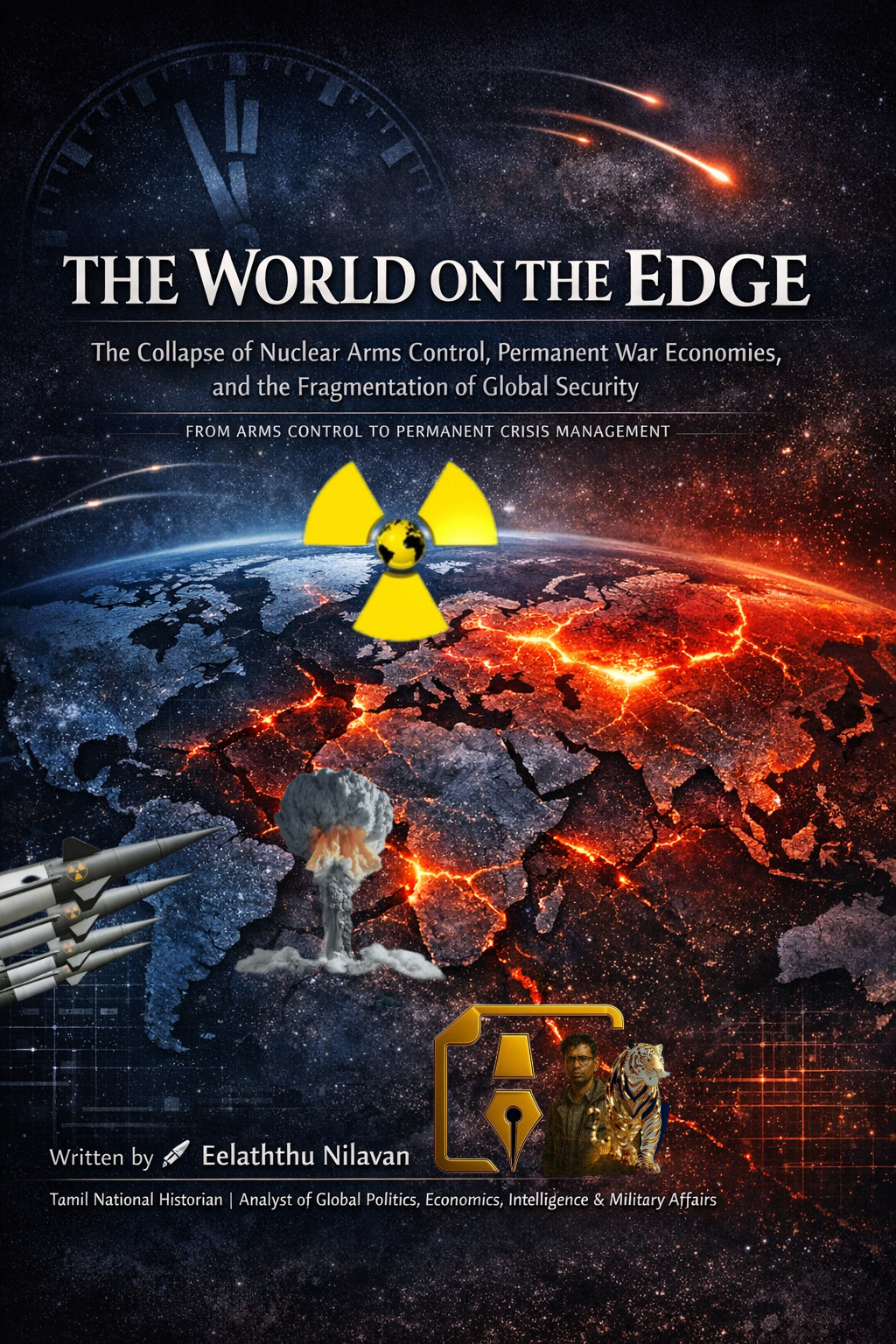
𝐍𝐞𝐰 𝐒𝐓𝐀𝐑𝐓 𝐄𝐱𝐩𝐢𝐫𝐲: 𝐓𝐡𝐞 𝐄𝐧𝐝 𝐨𝐟 𝐍𝐮𝐜𝐥𝐞𝐚𝐫 𝐑𝐞𝐬𝐭𝐫𝐚𝐢𝐧𝐭

The impending expiration of the New START treaty marks a historic rupture in the global nuclear order. As the last remaining arms control framework limiting U.S. and Russian strategic nuclear arsenals, its collapse signals not merely a diplomatic failure, but the unravelling of institutional trust built over five decades.
Dmitry Medvedev’s warning that the symbolic Doomsday Clock may accelerate is not rhetorical theatre. Arms control treaties do not eliminate weapons; they slow decision-making, stabilize expectations, and prevent miscalculation. Without verification mechanisms, nuclear signalling becomes opaque, reaction times shorten, and worst-case assumptions dominate strategic planning.
The United States’ willingness to let New START lapse, combined with China’s refusal to enter multilateral arms talks, creates a three-power nuclear environment with no guardrails—a first in modern history.
✦.𝐓𝐫𝐮𝐬𝐭 𝐄𝐱𝐡𝐚𝐮𝐬𝐭𝐞𝐝: 𝐅𝐫𝐨𝐦 𝐀𝐫𝐦𝐬 𝐂𝐨𝐧𝐭𝐫𝐨𝐥 𝐭𝐨 𝐀𝐫𝐦𝐬 𝐂𝐨𝐦𝐩𝐞𝐭𝐢𝐭𝐢𝐨𝐧
Medvedev’s statement that trust is “exhausted” reflects a deeper truth: arms control has shifted from cooperation to competition. Nuclear arsenals are no longer just deterrents; they are bargaining chips in a fractured international system where treaties are seen as vulnerabilities rather than stabilizers.
This erosion of trust extends beyond nuclear weapons into cyber, space, AI-enabled warfare, and hypersonic delivery systems, none of which are currently regulated. The result is a strategic environment defined by permanent readiness, not crisis management.
✦. 𝐑𝐮𝐬𝐬𝐢𝐚’𝐬 𝐖𝐚𝐫 𝐄𝐜𝐨𝐧𝐨𝐦𝐲: 𝐀 𝐒𝐭𝐚𝐭𝐞 𝐑𝐞𝐛𝐮𝐢𝐥𝐭 𝐟𝐨𝐫 𝐂𝐨𝐧𝐭𝐢𝐧𝐮𝐨𝐮𝐬 𝐂𝐨𝐧𝐟𝐥𝐢𝐜𝐭
Russia’s industrial transformation since the Ukraine war began is not temporary—it is structural.
With 24/7 factory output, early-access credit for defence firms, and multi-year contracts extending into 2027, Moscow is engineering a self-sustaining military economy capable of prolonged high-intensity warfare. January 2026 deliveries alone—over 10,000 weapons and nearly two million munitions—demonstrate a production tempo comparable to Cold War mobilization levels.
Crucially, foreign arms exports exceeding $15 billion are being recycled directly into domestic production, insulating Russia from sanctions and embedding war into its economic planning.
This is not escalation—it is normalisation of war.
✦. 𝐓𝐞𝐜𝐡𝐧𝐨𝐥𝐨𝐠𝐲 𝐚𝐬 𝐒𝐮𝐫𝐯𝐢𝐯𝐚𝐥: 𝐀𝐈, 𝐐𝐮𝐚𝐧𝐭𝐮𝐦, 𝐚𝐧𝐝 𝐒𝐲𝐧𝐭𝐡𝐞𝐭𝐢𝐜 𝐁𝐢𝐨𝐥𝐨𝐠𝐲
Medvedev’s emphasis on generative AI, quantum computing, and synthetic biology reveals where modern warfare is headed. These domains will determine:
• Autonomous targeting and decision cycles
• Cryptographic dominance and communications security
• Bio-engineering resilience and dual-use threats
Russia’s leadership views technological lag after the Soviet collapse as an existential failure—one it is determined not to repeat. This mirrors Western assessments: future wars will be won before shots are fired, through algorithms, data, and industrial depth.
✦. 𝐄𝐮𝐫𝐨𝐩𝐞’𝐬 𝐑𝐞𝐚𝐰𝐚𝐤𝐞𝐧𝐢𝐧𝐠: 𝐓𝐡𝐞 𝐄𝐧𝐝 𝐨𝐟 𝐏𝐨𝐬𝐭-𝐂𝐨𝐥𝐝 𝐖𝐚𝐫 𝐈𝐥𝐥𝐮𝐬𝐢𝐨𝐧𝐬
Germany’s Defence Minister Boris Pistorius has declared the “peace era” over—and policy now reflects that reality. Espionage, sabotage, cyberattacks, and disinformation are no longer abstract threats; they are daily operational conditions.
Berlin’s expansion of military service, with compulsory measures openly considered, signals a psychological shift as much as a military one. Europe is relearning deterrence under pressure, yet remains divided on execution.
EU foreign policy chief Kaja Kallas’ rejection of a standalone European army underscores the dilemma: strategic ambition without unified command risks paralysis. NATO remains the only credible framework—but one increasingly strained by unequal burden-sharing.
✦. 𝐍𝐀𝐓𝐎, 𝐔𝐤𝐫𝐚𝐢𝐧𝐞, 𝐚𝐧𝐝 𝐭𝐡𝐞 𝐏𝐞𝐚𝐜𝐞 𝐓𝐫𝐚𝐩
NATO Secretary General Mark Rutte’s acknowledgment that a peace settlement will require “difficult decisions” exposes the uncomfortable truth: security guarantees without U.S. backing remain politically fragile.
While billions in air-defence systems flow through mechanisms like PEARL, alliance cohesion is uneven. Zelensky’s defiant refusal to surrender territory contrasts sharply with alliance fatigue and domestic pressures across Europe.
Any post-war troop deployment by a “coalition of the willing” risks becoming a tripwire for wider confrontation, especially as Moscow frames such moves as direct intervention.
✦. 𝐍𝐨𝐫𝐭𝐡𝐞𝐫𝐧 𝐅𝐫𝐨𝐧𝐭𝐬: 𝐀𝐫𝐜𝐭𝐢𝐜 𝐚𝐧𝐝 𝐁𝐚𝐥𝐭𝐢𝐜 𝐄𝐬𝐜𝐚𝐥𝐚𝐭𝐢𝐨𝐧
Russia’s restoration of Soviet-era garrisons in Karelia, the formation of the 44th Army Corps, and the creation of the Leningrad Military District reflect a direct response to Finland’s NATO accession.
Simultaneously, intensified NATO surveillance near Kaliningrad reinforces a classic security dilemma: actions framed as defensive by one side are perceived as encirclement by the other.
In the Arctic, Canada’s firm defence of Greenland’s self-determination adds a diplomatic counterweight to renewed great-power interest, reinforcing that polar regions are no longer peripheral—they are strategic cores.
✦. 𝐈𝐧𝐝𝐨-𝐏𝐚𝐜𝐢𝐟𝐢𝐜 𝐅𝐥𝐚𝐬𝐡𝐩𝐨𝐢𝐧𝐭𝐬: 𝐀 𝐌𝐮𝐥𝐭𝐢𝐩𝐨𝐥𝐚𝐫 𝐂𝐨𝐧𝐟𝐫𝐨𝐧𝐭𝐚𝐭𝐢𝐨𝐧
China and Russia’s coordinated warnings against Japan’s military expansion reflect a broader contest between U.S.-led alliance systems and multipolar security frameworks.
Beijing’s intensified air and naval patrols in the South China Sea—particularly following U.S.-Philippines drills—demonstrate how regional flashpoints are increasingly linked to European theatres, creating a single, interdependent global confrontation space.
✦. 𝐂𝐨𝐧𝐜𝐥𝐮𝐬𝐢𝐨𝐧: 𝐀 𝐖𝐨𝐫𝐥𝐝 𝐒𝐡𝐢𝐟𝐭𝐢𝐧𝐠 𝐅𝐫𝐨𝐦 𝐏𝐞𝐚𝐜𝐞 𝐌𝐚𝐧𝐚𝐠𝐞𝐦𝐞𝐧𝐭 𝐭𝐨 𝐂𝐫𝐢𝐬𝐢𝐬 𝐏𝐞𝐫𝐦𝐚𝐧𝐞𝐧𝐜𝐞
The expiration of New START is not an isolated event—it is a symbolic end to an era. Arms control, post-war optimism, and assumptions of rational restraint are being replaced by industrialized militarization, technological acceleration, and permanent strategic tension.
The world is no longer managing peace; it is managing the risk of collapse.
Without renewed arms control dialogue—adapted to modern technologies and multipolar realities—the future will be defined not by treaties, but by how close humanity is willing to live to the edge.
Written by


Eelaththu Nilavan
Tamil National Historian | Analyst of Global Politics, Economics, Intelligence & Military Affairs
05/02/2026
