


𝘽𝙖𝙡𝙩𝙞𝙘 𝙏𝙚𝙣𝙨𝙞𝙤𝙣𝙨, 𝘼𝙧𝙘𝙩𝙞𝙘 𝘾𝙖𝙡𝙘𝙪𝙡𝙪𝙨, 𝙀𝙐 𝘿𝙞𝙫𝙞𝙨𝙞𝙤𝙣𝙨, 𝙖𝙣𝙙 𝙩𝙝𝙚 𝙀𝙣𝙙 𝙤𝙛 𝙋𝙤𝙨𝙩-𝘾𝙤𝙡𝙙 𝙒𝙖𝙧 𝙄𝙡𝙡𝙪𝙨𝙞𝙤𝙣𝙨
✦. 𝑮𝒐𝒕𝒍𝒂𝒏𝒅: 𝑻𝒉𝒆 “𝑼𝒏𝒔𝒊𝒏𝒌𝒂𝒃𝒍𝒆 𝑨𝒊𝒓𝒄𝒓𝒂𝒇𝒕 𝑪𝒂𝒓𝒓𝒊𝒆𝒓” 𝒐𝒇 𝒕𝒉𝒆 𝑩𝒂𝒍𝒕𝒊𝒄
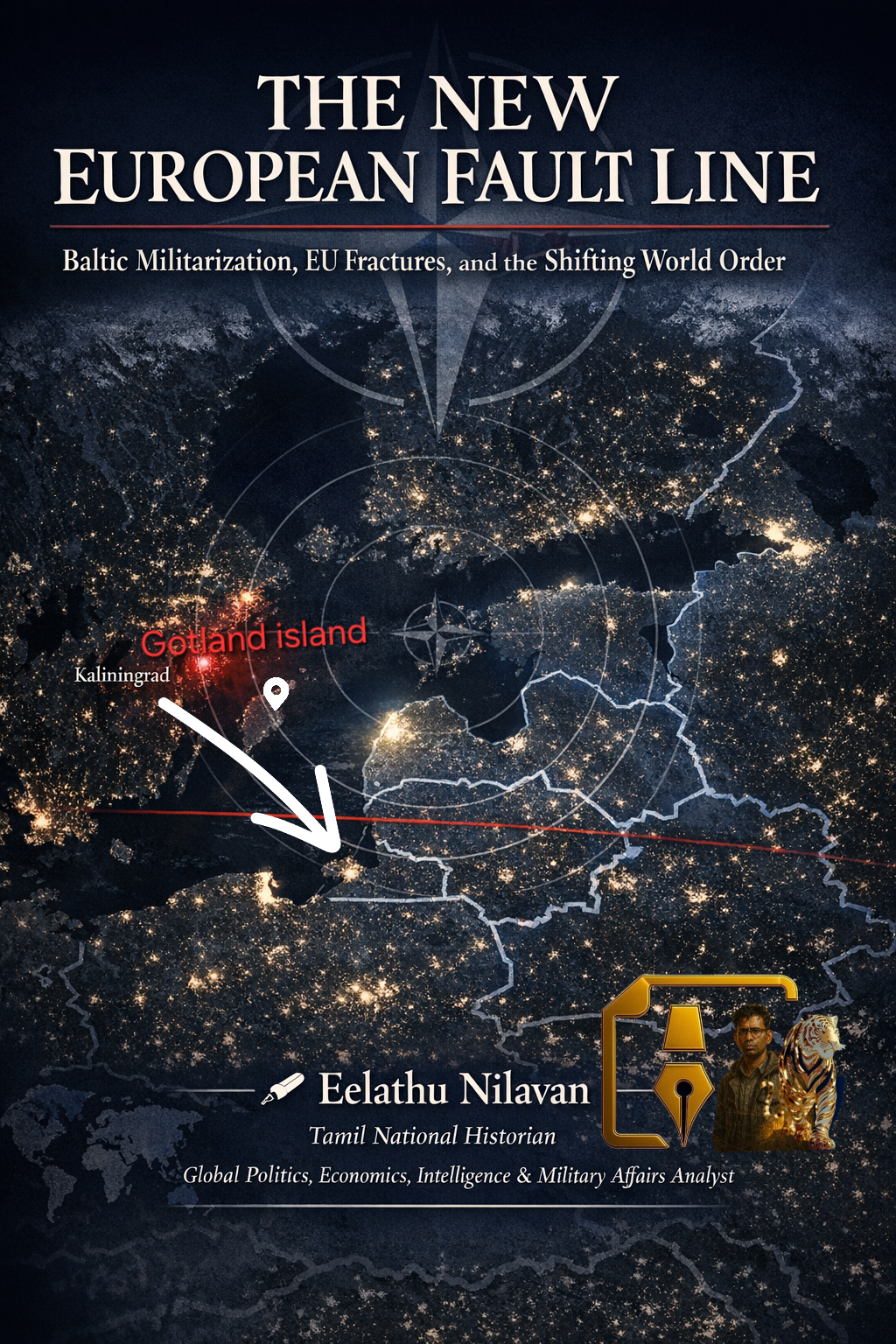
Roughly 300 kilometers from Russia’s heavily militarized Kaliningrad exclave lies Sweden’s Gotland island. This territory has rapidly transformed from a quiet Baltic outpost into a central node of NATO’s northern defense architecture.
Military planners increasingly describe Gotland as a “decisive pivot point.” The logic is straightforward:
• Whoever controls Gotland can project air and missile power across the northern Baltic Sea.
• Surface-to-air systems positioned there could restrict air corridors.
• Anti-ship missiles could threaten naval movements between mainland Europe and the Baltic states.
If Russia were hypothetically to seize the island, NATO’s reinforcement routes to Estonia, Latvia, and Lithuania could be severely disrupted. The Baltic Sea would effectively become a contested anti-access/area denial (A2/AD) zone — dramatically altering the regional balance of power.
Yet strategic reality tempers alarmism. There is no confirmed Russian invasion plan, and any amphibious operation against Gotland would be extraordinarily complex. Russia’s recent military campaigns have shown limited success in large-scale amphibious assaults. Moreover, NATO’s regional posture — strengthened by Sweden and Finland’s accession — creates a dense defensive network across Scandinavia and the Baltic rim.
Today, Gotland represents not an imminent battlefield, but a symbol of deterrence and signaling.
✦. 𝑻𝒉𝒆 𝑩𝒂𝒍𝒕𝒊𝒄 𝑺𝒕𝒓𝒂𝒕𝒆𝒈𝒊𝒄 𝑻𝒓𝒊𝒂𝒏𝒈𝒍𝒆: 𝑲𝒂𝒍𝒊𝒏𝒊𝒏𝒈𝒓𝒂𝒅 – 𝑮𝒐𝒕𝒍𝒂𝒏𝒅 – 𝑮𝒅𝒚𝒏𝒊𝒂
The Baltic Sea is increasingly defined by three strategic anchors:
• Kaliningrad – Russia’s forward-deployed missile fortress.
• Gotland – NATO’s central observation and missile platform.
• Gdynia (Poland) – A rapidly expanding NATO naval hub.
Polish Prime Minister Donald Tusk has openly declared Poland’s ambition to “dominate the Baltic.” The Miecznik frigate program — Wicher, Burza, and Huragan — represents a significant modernization effort aimed at maritime deterrence.
Meanwhile, Sweden is stationing thousands of troops on Gotland, deploying advanced air defense systems and armored units. NATO drills now simulate invasion scenarios on the island, signaling preparedness.
This triangular dynamic has created a tightly wound military ecosystem — where miscalculation, not intention, may pose the greatest danger.
✦. 𝑨𝒓𝒄𝒕𝒊𝒄 𝑭𝒓𝒐𝒏𝒕𝒊𝒆𝒓: 𝑵𝒐𝒓𝒘𝒂𝒚’𝒔 𝑫𝒖𝒂𝒍 𝑺𝒕𝒓𝒂𝒕𝒆𝒈𝒚
In the High North, Norway is navigating a delicate balance.
General Eirik Kristoffersen has warned that Russia could theoretically attempt a limited land grab to secure its strategic nuclear assets on the Kola Peninsula. Yet Oslo simultaneously proposes establishing a direct military hotline with Moscow to avoid accidental escalation.
Norway’s strategy is clear:
• Deterrence through military readiness.
• Dialogue to prevent unintended war.
This dual approach reflects a broader Scandinavian philosophy: strengthen defenses, but avoid rhetorical escalation.
✦. 𝑳𝒂𝒗𝒓𝒐𝒗’𝒔 𝑪𝒐𝒏𝒇𝒓𝒐𝒏𝒕𝒂𝒕𝒊𝒐𝒏𝒂𝒍 𝑴𝒆𝒔𝒔𝒂𝒈𝒆: 𝑨 𝑵𝒆𝒘 𝑮𝒍𝒐𝒃𝒂𝒍 𝑶𝒓𝒅𝒆𝒓?
Russian Foreign Minister Sergey Lavrov’s recent address to the State Duma signals Moscow’s hardened worldview.
He frames the current era as a struggle between:
• The “old leaders” of the West.
• Emerging “centers of development” representing the Global Majority.
Key themes include:
• Accusations of Western “neo-colonialism.”
• Praise for Russia-China partnership.
• Support from North Korea.
• Deepened ties with India.
• Expansion of BRICS financial platforms independent of Western sanctions.
Lavrov also warned that Russia’s nuclear restraint could end if the United States expands its strategic arsenal — a statement designed as both deterrence and leverage.
The speech underscores that Moscow no longer sees itself negotiating within the Western-led order — but against it.
✦. 𝑬𝑼 𝑭𝒓𝒂𝒄𝒕𝒖𝒓𝒆𝒔: 𝑺𝒐𝒗𝒆𝒓𝒆𝒊𝒈𝒏𝒕𝒚 𝒗𝒔 𝑭𝒆𝒅𝒆𝒓𝒂𝒍𝒊𝒔𝒎
While external pressures mount, Europe faces internal fragmentation.
Hungary and Slovakia openly accuse Brussels of:
• Undermining peace initiatives.
• Pursuing economically damaging sanctions.
• Sacrificing competitiveness through climate policies.
Slovak Prime Minister Robert Fico has described the EU as a “herd of sheep without a shepherd.” Hungary is legally challenging the EU’s maritime sanctions on Russian energy exports.
Simultaneously, the European Parliament is divided over:
• The creation of a European Army.
• Continued reliance on NATO.
• Defense spending inefficiencies.
• Sovereignty versus federalist integration.
Some argue Europe must build independent military capacity. Others warn that duplicating NATO structures weakens deterrence.
This debate reveals a structural question: Is Europe a strategic actor — or a geopolitical arena?
✦. 𝑺𝒂𝒏𝒄𝒕𝒊𝒐𝒏𝒔, 𝑬𝒏𝒆𝒓𝒈𝒚, 𝒂𝒏𝒅 𝑬𝒄𝒐𝒏𝒐𝒎𝒊𝒄 𝑺𝒕𝒓𝒂𝒊𝒏
The EU’s 20th sanctions package marks a turning point.
Moving beyond the oil price cap, Brussels now proposes:
• A full maritime services ban.
• Blacklisting additional “shadow fleet” vessels.
• Targeting Arctic LNG logistics.
• Closing technological loopholes via third countries.
The Commission cites a 24% drop in Russian energy tax revenues in 2025 as proof that sanctions are working.
However, critics warn:
• Energy price volatility could rebound on Europe.
• Industrial competitiveness remains fragile.
• Enforcement depends entirely on member states.
The European energy crisis has already forced industries to close and reshaped supply chains toward U.S. LNG — introducing new dependencies and strategic recalculations.
✦. 𝑼𝒌𝒓𝒂𝒊𝒏𝒆: 𝑼𝒏𝒊𝒕𝒚 𝒖𝒏𝒅𝒆𝒓 𝑺𝒕𝒓𝒂𝒊𝒏
Kyiv Mayor Vitali Klitschko’s revelation that he has not spoken directly with President Zelenskyy for nearly four years exposes internal political friction.
As Ukraine faces:
• A 70% energy deficit.
• -20°C winter conditions.
• Ongoing infrastructure strikes.
The public airing of leadership tensions raises concerns about wartime cohesion.
Klitschko warns that internal political games risk serving “Putin’s agenda.” With U.S.-brokered peace talks approaching critical deadlines, unity becomes not merely symbolic — but strategic.
✦. 𝑻𝒉𝒆 𝑮𝒓𝒆𝒂𝒕𝒆𝒓 𝑷𝒂𝒕𝒕𝒆𝒓𝒏: 𝑭𝒓𝒐𝒎 𝑼𝒏𝒊𝒑𝒐𝒍𝒂𝒓𝒊𝒕𝒚 𝒕𝒐 𝑭𝒓𝒂𝒄𝒕𝒖𝒓𝒆𝒅 𝑴𝒖𝒍𝒕𝒊𝒑𝒐𝒍𝒂𝒓𝒊𝒕𝒚
Across these developments, several macro-trends emerge:
• Militarization of strategic chokepoints (Baltic, Arctic).
• Economic weaponization (sanctions, energy leverage).
• Institutional fragmentation within the EU.
• Reinforcement of alternative global blocs (BRICS, Eurasian partnerships).
• Deterrence without direct war — yet rising escalation rhetoric.
Europe stands at a crossroads. It must reconcile:
• Strategic autonomy vs. NATO reliance.
• Climate ambition vs. industrial survival.
• Unity vs. sovereignty.
• Deterrence vs. diplomacy.
✦. 𝑪𝒐𝒏𝒄𝒍𝒖𝒔𝒊𝒐𝒏: 𝑫𝒆𝒕𝒆𝒓𝒓𝒆𝒏𝒄𝒆, 𝑫𝒊𝒗𝒊𝒔𝒊𝒐𝒏, 𝒂𝒏𝒅 𝑻𝒉𝒆 𝑼𝒏𝒔𝒆𝒕𝒕𝒍𝒆𝒅 𝑪𝒐𝒏𝒕𝒊𝒏𝒆𝒏𝒕
Gotland may not be under immediate threat. The Arctic may not be on the brink of war. The EU may not collapse tomorrow.
But the architecture that defined post-Cold War Europe — predictable alliances, stable energy flows, unquestioned U.S. leadership — has fundamentally shifted.
The Baltic Sea is no longer a quiet European lake.
It is a testing ground for 21st-century power politics.
And Europe must now decide whether it will shape the emerging order — or merely adapt to it.

Eelaththu Nilavan
Tamil National Historian | Analyst of Global Politics, Economics, Intelligence & Military Affairs
12/02/2026
