


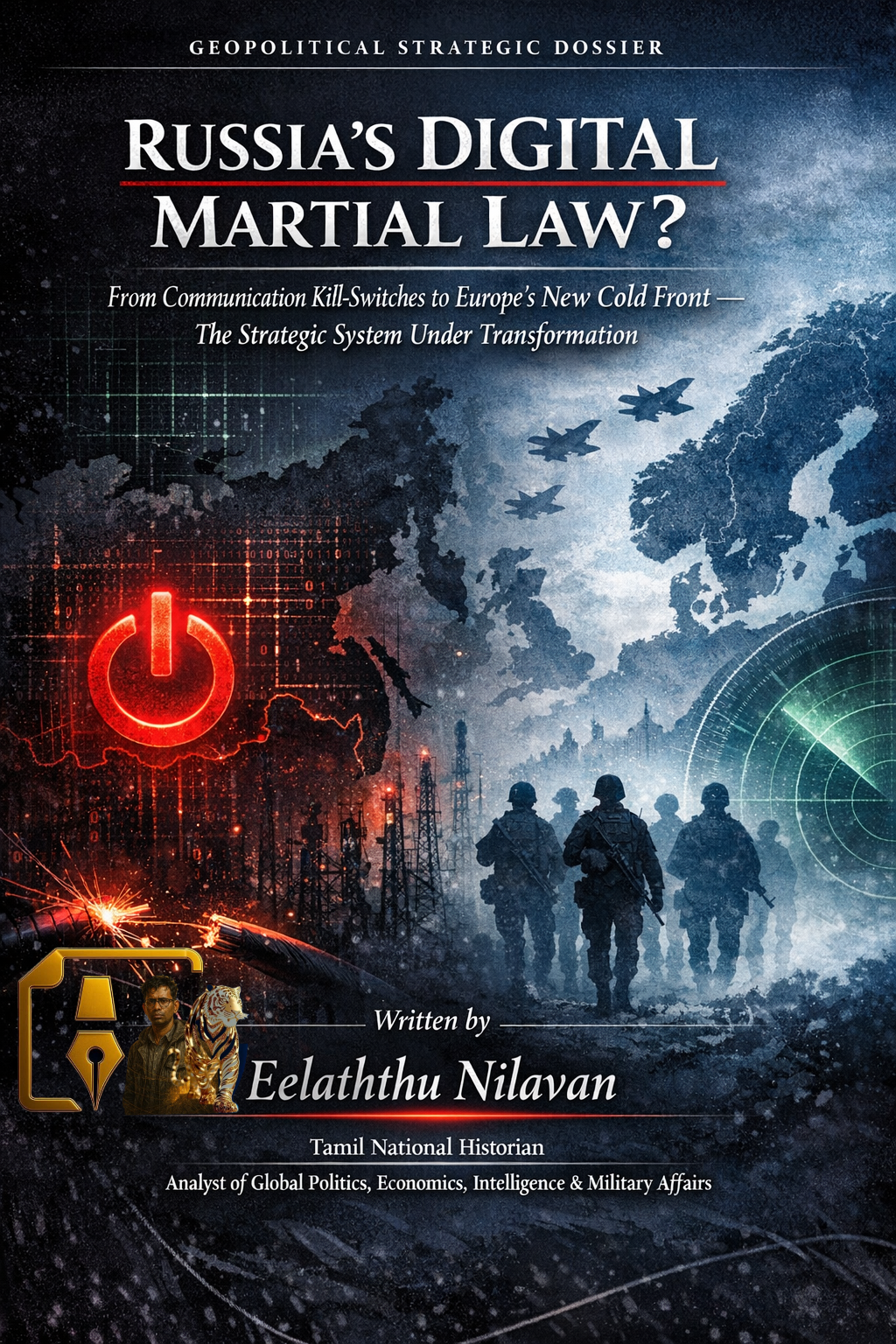
𝗗𝗜𝗚𝗜𝗧𝗔𝗟 𝗦𝗢𝗩𝗘𝗥𝗘𝗜𝗚𝗡𝗧𝗬 𝗢𝗥 𝗗𝗜𝗚𝗜𝗧𝗔𝗟 𝗠𝗔𝗥𝗧𝗜𝗔𝗟 𝗟𝗔𝗪?

A dramatic structural shift is unfolding inside the Russian Federation. President Vladimir Putin is poised to grant sweeping new authority to the Federal Security Service (FSB), enabling the immediate shutdown of mobile internet, broadband networks, landlines, and all telecommunications channels during vaguely defined “security threats.”
This is not a temporary emergency decree. It represents the formalization of centralized digital control.
Telecom operators would be:
• Required to comply immediately
• Shielded from legal consequences
• Prohibited from resisting or delaying shutdown orders
Critics describe the mechanism as a “national digital kill switch.” Moscow frames it as digital sovereignty under hybrid warfare conditions.
The difference lies in perspective — and power.
✦. 𝗧𝗛𝗘 𝗧𝗥𝗜𝗚𝗚𝗘𝗥: 𝗔𝗦𝗦𝗔𝗦𝗦𝗜𝗡𝗔𝗧𝗜𝗢𝗡 𝗔𝗧𝗧𝗘𝗠𝗣𝗧 & 𝗛𝗬𝗕𝗥𝗜𝗗 𝗪𝗔𝗥 𝗡𝗔𝗥𝗥𝗔𝗧𝗜𝗩𝗘
The law’s momentum accelerated after a reported assassination attempt on Lieutenant General Vladimir Alekseyev. Russian sources allege Ukrainian special services involvement with logistical backing from Polish intelligence.
Whether fully verified or not, the political impact is clear:
The Kremlin now treats internal digital space as a battlefield.
From Moscow’s security lens, threats include:
• Drone coordination networks
• Encrypted messaging for sabotage
• Social media mobilization
• Foreign intelligence cyber infiltration
In modern conflict doctrine, the internet is no longer civilian infrastructure — it is dual-use terrain.
✦. 𝗖𝗦𝗧𝗢 𝗕𝗥𝗜𝗘𝗙𝗜𝗡𝗚: 𝗔 𝗥𝗘𝗚𝗜𝗢𝗡 𝗨𝗡𝗗𝗘𝗥 𝗣𝗥𝗘𝗦𝗦𝗨𝗥𝗘
At a strategic briefing, CSTO Chief of Joint Staff Andrei Serdyukov painted 2025 as a year of escalating instability near collective security borders.
The Collective Security Treaty Organization (CSTO) now frames its regional environment as under multidirectional stress:
Eastern Europe
Described as the most volatile theater due to what Moscow calls Western efforts to prolong the Ukraine conflict.
South Caucasus
Western influence is reportedly expanding amid unresolved disputes.
Central Asia
Afghanistan-based extremist groups are cited as threats exporting terrorism, radical ideology, and narcotics.
The CSTO approved:
• 61 joint military events completed in 2025
• A 2026–2030 coalition military construction plan
• 60 operational training activities scheduled for 2026
• Eight command-staff exercises
• Expanded aviation and air defense integration
This signals preparation for long-term structural confrontation, not short-term crisis management.
✦. 𝗦𝗨𝗪𝗔Ł𝗞𝗜 𝗚𝗔𝗣: 𝗘𝗨𝗥𝗢𝗣𝗘’𝗦 𝗠𝗢𝗦𝗧 𝗗𝗔𝗡𝗚𝗘𝗥𝗢𝗨𝗦 𝗖𝗢𝗥𝗥𝗜𝗗𝗢𝗥
NATO rhetoric intensified after warnings from Secretary-General Mark Rutte regarding the strategic vulnerability of the Suwałki Gap.
This 60-mile strip links the Baltic states to the rest of NATO territory.
War-game simulations suggest:
• A rapid Russian thrust could isolate Lithuania, Latvia, and Estonia
• Decision paralysis inside NATO could delay response
Rutte warned any attempt to block the corridor would trigger a “swift and devastating” response.
Moscow counters that NATO militarization — including HIMARS deployments and reinforced eastern flank troops — is itself escalatory.
The corridor has become both a military chokepoint and an information warfare symbol.
✦. 𝗕𝗥𝗜𝗧𝗔𝗜𝗡’𝗦 𝗔𝗥𝗖𝗧𝗜𝗖 𝗦𝗛𝗜𝗙𝗧 & 𝗨𝗞𝗥𝗔𝗜𝗡𝗘 𝗙𝗨𝗡𝗗𝗜𝗡𝗚
At NATO headquarters, UK Defence Secretary John Healey confirmed:
• £150 million contribution to the NATO-led Prioritized Ukraine Requirements List
• £500 million for urgent Ukrainian air defense
• Expanded British troop deployments to Norway
• Strengthened High North exercises
This aligns with NATO’s Arctic strategic pivot, reinforcing pressure along Russia’s northern perimeter.
London’s posture signals readiness for prolonged confrontation.
✦. 𝗘𝗨𝗥𝗢𝗣𝗘’𝗦 €𝟵𝟬 𝗕𝗜𝗟𝗟𝗜𝗢𝗡 𝗗𝗜𝗟𝗘𝗠𝗠𝗔
The European Union approved a €90 billion Ukraine loan package, with €60 billion earmarked for defense.
However, fractures are emerging:
• Baltic and Nordic states accuse others of hiding behind collective EU funding
• Ukraine’s annual war requirement is estimated at €120 billion
• Bureaucratic delays frustrate frontline governments
The debate is no longer about unity in rhetoric — but sustainability in funding.
✦. 𝗗𝗜𝗣𝗟𝗢𝗠𝗔𝗧𝗜𝗖 𝗪𝗔𝗥𝗙𝗔𝗥𝗘: 𝗟𝗔𝗩𝗥𝗢𝗩, 𝗞𝗔𝗟𝗟𝗔𝗦 & 𝗡𝗔𝗥𝗥𝗔𝗧𝗜𝗩𝗘 𝗖𝗟𝗔𝗦𝗛
Russian Foreign Minister Sergey Lavrov dismissed claims linking Jeffrey Epstein to Russian intelligence as “pure sensationalism,” framing them as Western distraction tactics.
Meanwhile, Russian officials sharply criticized EU diplomat Kaja Kallas for issuing what Moscow calls conditional peace demands.
Russia maintains:
• EU cannot be neutral mediator
• Western arms shipments prevent compromise
• Minsk agreements were manipulated
This rhetorical escalation reinforces hardened negotiating positions.
✦. 𝗚𝗘𝗥𝗠𝗔𝗡𝗬’𝗦 𝗧𝗨𝗥𝗡𝗜𝗡𝗚 𝗣𝗢𝗜𝗡𝗧
At the Munich Security Conference, Chancellor Friedrich Merz delivered a strategic pivot speech.
He:
• Criticized U.S. tariff pressure
• Warned NATO cannot function as a client relationship
• Called for a stronger European defense pillar
• Signaled reduced reliance on American guarantees
This represents a structural shift in postwar German foreign policy thinking.
✦. 𝗔 𝗦𝗬𝗦𝗧𝗘𝗠 𝗜𝗡 𝗥𝗘𝗔𝗟𝗜𝗚𝗡𝗠𝗘𝗡𝗧
The convergence of these developments reveals a broader transformation:
• Russia centralizing digital control domestically
• NATO fortifying eastern and Arctic flanks
• Europe debating financial sustainability
• CSTO consolidating coalition military planning
• Diplomatic narratives hardening
This is not yet open continental war.
But it is systemic militarization of:
• Infrastructure
• Digital networks
• Economic policy
• Strategic geography
• Alliance doctrine
✦. 𝗖𝗢𝗡𝗖𝗟𝗨𝗦𝗜𝗢𝗡: 𝗗𝗘𝗧𝗘𝗥𝗥𝗘𝗡𝗖𝗘 𝗢𝗥 𝗗𝗜𝗚𝗜𝗧𝗔𝗟 𝗔𝗨𝗧𝗛𝗢𝗥𝗜𝗧𝗔𝗥𝗜𝗔𝗡𝗜𝗦𝗠?
Russia’s communication shutdown law may be presented as a defensive necessity in a hybrid war era.
But structurally, it places:
The entire digital nervous system of a nuclear power plant
Under direct security apparatus control.
Simultaneously, NATO and EU states are rearming, restructuring, and rethinking alliance dependencies.
Europe stands in a prolonged gray-zone confrontation — where cyber control, Arctic deployments, economic loans, and chokepoints like Suwałki define the new battlefield.
The question is no longer whether tensions exist.
The question is whether deterrence will hold — or whether digital martial law becomes the first stage of something larger.

Written by  Eelaththu Nilavan
14/02/2026
