

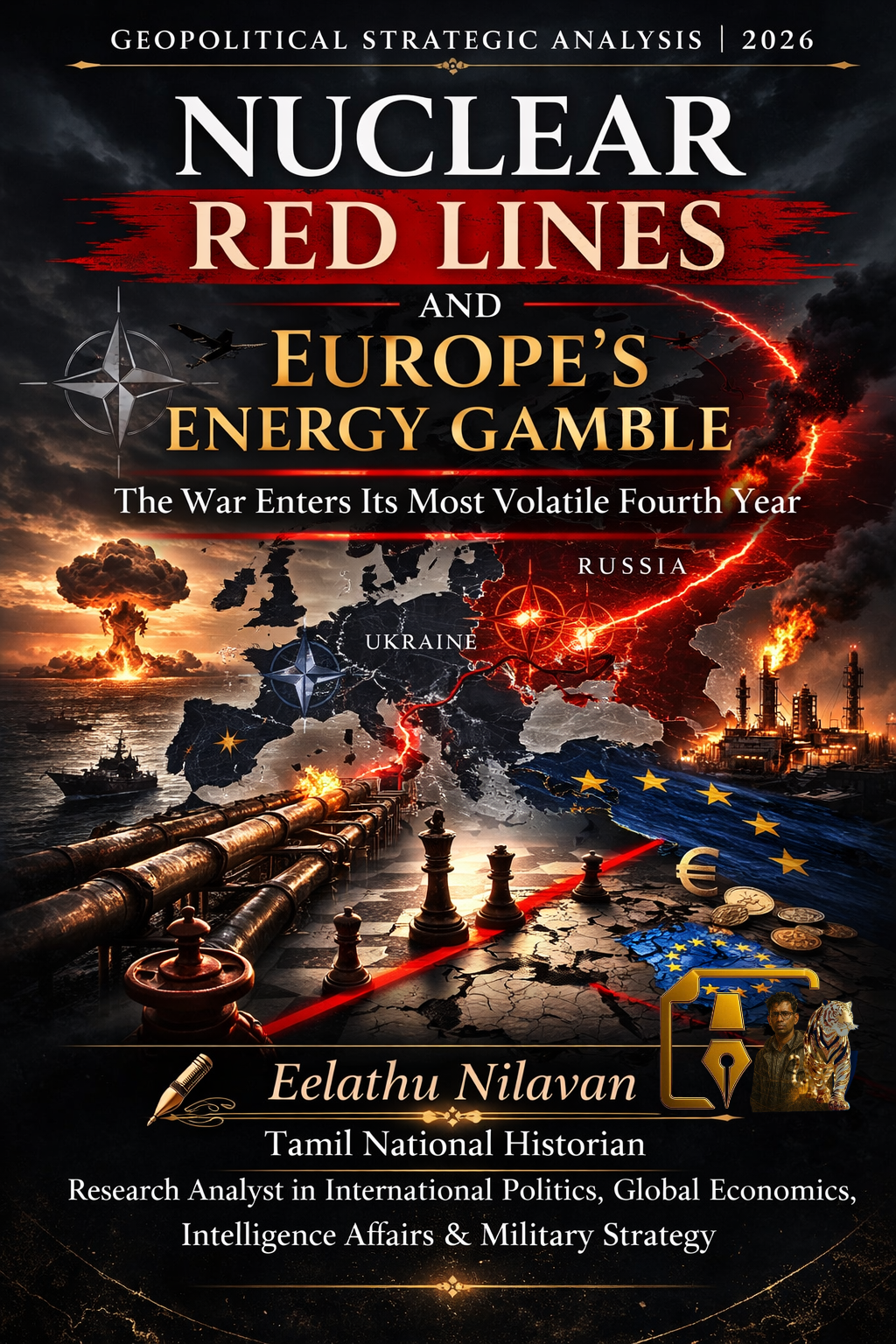
𝑴𝒐𝒔𝒄𝒐𝒘’𝒔 𝑵𝒖𝒄𝒍𝒆𝒂𝒓 𝑺𝒊𝒈𝒏𝒂𝒍: 𝑵𝒐 “𝑺𝒉𝒂𝒅𝒐𝒘 𝒐𝒇 𝑫𝒐𝒖𝒃𝒕”
The most alarming development in the fourth year of the war is Moscow’s explicit return to nuclear brinkmanship.
Dmitry Medvedev, Deputy Chairman of Russia’s Security Council, declared that any transfer of nuclear technologies or capabilities from the United Kingdom or France to Ukraine would “radically change the situation.” He stressed there should be “no shadow of a doubt” that Russia would respond using any weapon at its disposal, including non-strategic (tactical) nuclear arms.
This rhetoric was reinforced at the United Nations by Vassily Nebenzia, who accused London and Paris of covertly exploring “dirty bomb” components and even French TN75 warheads for Kyiv — claims firmly dismissed by Western governments as disinformation.

Meanwhile, President Vladimir Putin has labeled nuclear modernization an “absolute priority,” especially after the erosion of arms-control frameworks with Washington. Russia continues to emphasize its nuclear triad — land-based missiles, submarine-launched ballistic missiles, and strategic bombers — while reportedly reinforcing deployments in Belarus and near NATO borders.
The message is clear: Moscow is signaling that the conflict is approaching thresholds where deterrence doctrine could shift from declaratory to operational.
𝑵𝑨𝑻𝑶’𝑺 𝑹𝒆𝒅 𝑳𝒊𝒏𝒆 & 𝑻𝒉𝒆 𝑩𝒖𝒅𝒂𝒑𝒆𝒔𝒕 𝑴𝒆𝒎𝒐𝒓𝒂𝒏𝒅𝒖𝒎 𝑫𝒊𝒔𝒑𝒖𝒕𝒆
Moscow frames NATO expansion as the root cause of the war. According to Russian officials, Ukraine’s pursuit of NATO membership violated the neutrality foundations established when Kyiv surrendered its nuclear arsenal under the 1994 Budapest Memorandum.
Kyiv, in contrast, argues that Russia fundamentally breached that memorandum by invading in 2014 and again in 2022.
In recent briefings, Moscow has stated that no peace settlement is possible unless:
• NATO expansion is halted.
• Ukraine returns to neutral, non-aligned status.
• Russia’s territorial claims over Crimea and four annexed regions are recognized.
This position has hardened even as diplomatic backchannels reportedly continue through intermediaries.
𝑬𝒖𝒓𝒐𝒑𝒆’𝒔 𝑬𝒏𝒆𝒓𝒈𝒚 𝑾𝒂𝒓: 𝑫𝒓𝒖𝒛𝒉𝒃𝒂 𝑨𝒔 𝑨 𝑮𝒆𝒐𝒑𝒐𝒍𝒊𝒕𝒊𝒄𝒂𝒍 𝑾𝒆𝒂𝒑𝒐𝒏
Energy has once again become a frontline instrument.
The Druzhba (“Friendship”) pipeline, one of Europe’s oldest energy arteries, has become central to a dramatic dispute. Hungary and Slovakia rely heavily on Russian crude delivered via this route.
When oil transit through Ukrainian territory was suspended — Kyiv citing Russian drone damage, Budapest and Bratislava alleging political leverage — the fallout was immediate.
Viktor Orbán vetoed a €90 billion EU aid package to Ukraine and blocked further sanctions, calling the oil stoppage “open political blackmail.” Hungary also halted diesel exports to Ukraine in retaliation.
Robert Fico declared a state of oil emergency and suspended emergency electricity supplies to Ukraine, describing it as a “reciprocal step.”
In response, leaders like Donald Tusk accused Budapest of “political sabotage,” while Nordic states pressed Brussels to consider escalating Article 7 proceedings — the EU’s so-called “nuclear option” — against Hungary.
Europe’s unity, once considered resilient, now shows visible fractures.
𝑩𝒓𝒊𝒕𝒂𝒊𝒏’𝒔 𝑺𝒂𝒏𝒄𝒕𝒊𝒐𝒏𝒔 & 𝑻𝒉𝒆 𝑺𝒉𝒂𝒅𝒐𝒘 𝑭𝒍𝒆𝒆𝒕
On the fourth anniversary of the invasion, the United Kingdom unveiled its largest sanctions package since 2022.
Targets include:
• Pipeline operator Transneft
• 175 companies tied to a “shadow fleet” oil network
• 48 tankers circumventing price caps
• Russian LNG terminals and banking entities
British officials argue that sanctions have deprived Moscow of hundreds of billions in revenue, although Russia has adapted through rerouted exports and non-Western markets.
This sanctions escalation runs parallel to the intensifying battlefield strikes — including Ukrainian long-range drone attacks reportedly reaching deep into Tatarstan, striking facilities linked to the Druzhba export system.
𝑼𝒌𝒓𝒂𝒊𝒏𝒆’𝒔 𝑺𝒕𝒂𝒕𝒆𝒉𝒐𝒐𝒅 𝑵𝒂𝒓𝒓𝒂𝒕𝒊𝒗𝒆
President Volodymyr Zelensky released a cinematic anniversary address revisiting the first days of the invasion.
He reminded audiences of his now-iconic line: “I need weapons, not a taxi.”
The message was strategic:
• Ukraine now produces millions of FPV drones annually.
• Advanced Western systems like Patriot and IRIS-T are operational.
• Statehood has survived despite relentless attacks on energy infrastructure.
Zelensky frames resilience as proof of sovereignty — signaling that peace must come with security guarantees, not capitulation.
𝑻𝒉𝒆 𝑹𝒊𝒔𝒌 𝑴𝒂𝒕𝒓𝒊𝒙: 𝑵𝒖𝒄𝒍𝒆𝒂𝒓 𝑫𝒆𝒕𝒆𝒓𝒓𝒆𝒏𝒄𝒆 𝒗𝒔. 𝑬𝒏𝒆𝒓𝒈𝒚 𝑪𝒐𝒆𝒓𝒄𝒊𝒐𝒏
We are witnessing three simultaneous escalations:
• Nuclear Rhetoric Escalation
Tactical nuclear weapons are openly referenced.
• Energy Infrastructure Warfare
Pipelines, refineries, and grids are now strategic targets.
• Political Fragmentation within the EU
Aid packages and sanctions face internal vetoes.
Russia’s doctrine suggests tactical nuclear use only under existential threat. However, repeated public invocation of such options lowers psychological thresholds and increases miscalculation risks.
At the same time, Europe’s energy disputes risk undermining long-term strategic cohesion.
𝑻𝒉𝒆 𝑩𝒊𝒈 𝑸𝒖𝒆𝒔𝒕𝒊𝒐𝒏: 𝑪𝒂𝒏 𝑨 𝑵𝒖𝒄𝒍𝒆𝒂𝒓 𝑷𝒐𝒘𝒆𝒓 𝑩𝒆 𝑫𝒆𝒇𝒆𝒂𝒕𝒆𝒅?
Orbán posed the question bluntly: How can a nuclear power be defeated?
History shows nuclear states avoid direct existential defeat by escalating deterrence signals. The danger lies not necessarily in deliberate use, but in:
• Misinterpretation of intent
• Accidental escalation
• Political brinkmanship during domestic election cycles
With approximately 12,000 nuclear warheads globally — nearly 90% controlled by Washington and Moscow — strategic stability remains fragile.
𝑾𝒉𝒂𝒕 𝑪𝒐𝒎𝒆𝒔 𝑵𝒆𝒙𝒕?
Several scenarios emerge:
• Managed Escalation: Continued conventional warfare with nuclear rhetoric as deterrence theater.
• Energy Fragmentation: EU divisions deepen, weakening unified sanctions policy.
• Negotiated Freeze: A ceasefire without final settlement, freezing territorial lines.
• Escalatory Shock: A tactical nuclear demonstration or major strike on critical infrastructure triggering direct NATO involvement.
The fourth year marks a psychological inflection point. The war has evolved from tanks and trenches into a multidimensional confrontation involving nuclear doctrine, energy leverage, economic warfare, and political cohesion.
The world now stands at a delicate equilibrium — where deterrence must hold, diplomacy must revive, and strategic miscalculation must be avoided at all costs.

Eelaththu Nilavan
Tamil National Historian | Analyst of Global Politics, Economics, Intelligence & Military Affairs
26/02/2026
