

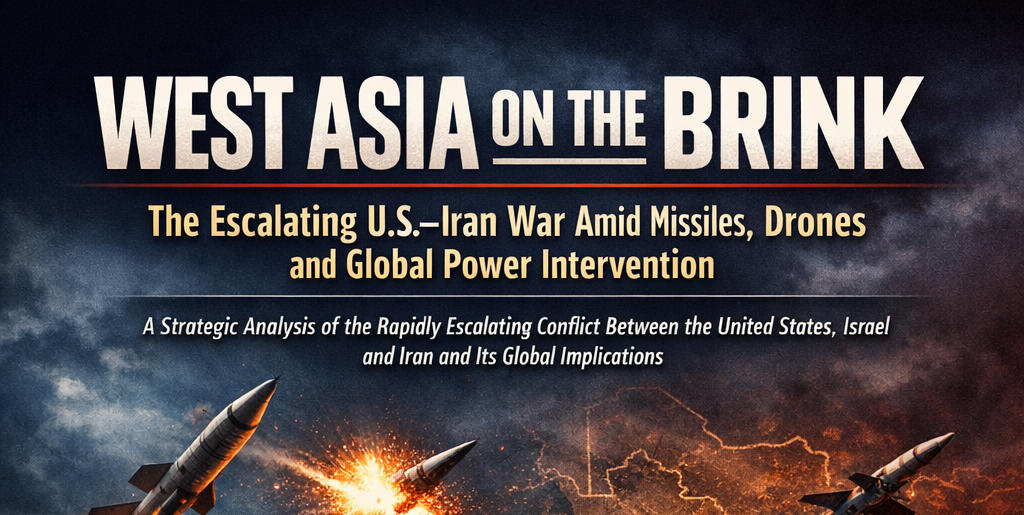
A rapidly intensifying confrontation between the United States, Israel, and Iran is pushing the Middle East toward one of the most dangerous geopolitical crises of the 21st century. Missile strikes, drone warfare, proxy battles, and global diplomatic tensions now define a conflict that threatens to expand far beyond the region.
𝙄𝙍𝘼𝙉 𝘾𝙇𝘼𝙄𝙈𝙎 𝙈𝙄𝙎𝙎𝙄𝙇𝙀 𝘼𝙏𝙏𝘼𝘾𝙆 𝙊𝙉 𝙐𝙎 𝘼𝙄𝙍𝘾𝙍𝘼𝙁𝙏 𝘾𝘼𝙍𝙍𝙄𝙀𝙍
Iranian state-linked media reported that anti-ship missiles and naval drones were launched toward the U.S. aircraft carrier USS Abraham Lincoln (CVN-72) operating in the Gulf of Oman.
According to Iranian sources, the strike was part of the Islamic Revolutionary Guard Corps (IRGC) military campaign known as “Operation True Promise 4.”

Iran claims that:
• Anti-ship missiles targeted the carrier strike group.
• The American naval formation withdrew over 1,000 km from the area following the attack.
• Naval drones were deployed alongside missile systems.
If confirmed, this would mark one of the rare direct missile engagements targeting a U.S. aircraft carrier, a move that dramatically raises the risk of open naval war in the Persian Gulf and Arabian Sea.

𝙈𝘼𝙎𝙎𝙄𝙑𝙀 𝘿𝙍𝙊𝙉𝙀 𝘼𝙉𝘿 𝙈𝙄𝙎𝙎𝙄𝙇𝙀 𝘽𝘼𝙍𝙍𝘼𝙂𝙀
Iranian military officials claim that the current operation has already involved a massive volume of weapons:
• Over 2,000 drones launched
• More than 600 missiles fired
• Ballistic missiles including Khorramshahr-4, Kheibar, and Fattah systems
Some of these missiles reportedly carry one-ton warheads, capable of causing significant destruction to hardened infrastructure.
Targets reportedly included:
• U.S. bases in Kuwait, Bahrain, Qatar, and the UAE
• Israeli military installations
• Strategic infrastructure near Tel Aviv
Iran claims its missiles struck Ben Gurion Airport and several Israeli air force facilities.
𝘼𝙀𝙍𝙄𝘼𝙇 𝘾𝙊𝙈𝘽𝘼𝙏: 𝘿𝙍𝙊𝙉𝙀𝙎 𝘼𝙉𝘿 𝙅𝙀𝙏𝙎 𝙎𝙃𝙊𝙏 𝘿𝙊𝙒𝙉
Iranian air defenses claim several successful interceptions during the conflict.
Reported incidents include:
• Destruction of two Israeli Heron reconnaissance drones over Isfahan.
• Downing of an Israeli Hermes-900 UAV over Khorramabad.
• Iran claims that a U.S. F-15E Strike Eagle was shot down near its southwestern border.
These claims remain unconfirmed by Western military sources, but they highlight the increasingly contested nature of regional airspace.
Iran’s integrated air defense network, coordinated by the IRGC and regular armed forces, appears to be actively engaged against both drones and manned aircraft.
𝙐𝙎 𝘼𝙍𝙈𝙎 𝙎𝙐𝙍𝙂𝙀 𝙏𝙊 𝙄𝙎𝙍𝘼𝙀𝙇
As the conflict escalates, Washington has accelerated military support for Israel.
The U.S. State Department approved an emergency $151.8 million arms package, including:
• 12,000 BLU-110 1,000-pound bomb bodies
• Logistics and engineering support
• Rapid delivery authorization bypassing normal congressional review
The BLU-110 bombs form the core payload of precision-guided munitions when paired with guidance kits.
Analysts believe the large order indicates that Israel is preparing for sustained air operations against Iranian targets.
𝙏𝙍𝙐𝙈𝙋 𝘿𝙀𝙈𝘼𝙉𝘿𝙎 “𝙐𝙉𝘾𝙊𝙉𝘿𝙄𝙏𝙄𝙊𝙉𝘼𝙇 𝙎𝙐𝙍𝙍𝙀𝙉𝘿𝙀𝙍.”
The political dimension of the war intensified after U.S. President Donald Trump issued a message demanding “unconditional surrender” from Tehran.
Trump stated that:
• No negotiations would occur without full Iranian compliance.
• A new leadership structure would be required in Iran.
• The United States would rebuild Iran’s economy afterward under the slogan “Make Iran Great Again (MIGA).”
Iranian President Masoud Pezeshkian rejected the demand outright, declaring that surrender is a “dream that should be taken to the grave.”
𝙍𝙀𝙂𝙄𝙊𝙉𝘼𝙇 𝙒𝘼𝙍 𝙀𝙓𝙋𝘼𝙉𝘿𝙄𝙉𝙂
The conflict is no longer limited to Iran and Israel.
New battlefronts are emerging across the region:
Iraq
Iran launched drone and missile strikes against Kurdish militant groups near Erbil and Sulaimaniyah.
Gulf States
Iranian missiles reportedly targeted U.S. bases in:
• Kuwait
• Bahrain
• Qatar
• Saudi Arabia
• UAE
Yemen
The Iran-aligned Houthis announced readiness to join the conflict against U.S. and Israeli forces.
Lebanon
Iran-backed militias linked to Hezbollah are reportedly increasing military readiness.
This growing network of allied militias could transform the conflict into a multi-front regional war.
𝙂𝙇𝙊𝘽𝘼𝙇 𝙋𝙊𝙒𝙀𝙍𝙎 𝙀𝙉𝙏𝙀𝙍 𝙏𝙃𝙀 𝙋𝙊𝙇𝙄𝙏𝙄𝘾𝘼𝙇 𝘽𝘼𝙏𝙏𝙇𝙀
The crisis has also triggered strong reactions from major global powers.
Russia
Russian President Vladimir Putin condemned U.S.–Israeli attacks on Iran as “vile aggression.”
Former Russian President Dmitry Medvedev warned Gulf states that hosting U.S. military bases could turn them into prime targets in wartime.
China
China has called for an immediate ceasefire and warned that escalating war could destabilize global markets and threaten the Strait of Hormuz, one of the world’s most critical oil shipping routes.
Beijing has also begun evacuating Chinese citizens from the region.
𝙐𝙎 𝙈𝙄𝙇𝙄𝙏𝘼𝙍𝙔 𝙍𝙀𝙎𝙊𝙐𝙍𝘾𝙀𝙎 𝙐𝙉𝘿𝙀𝙍 𝙎𝙏𝙍𝘼𝙄𝙉
The war is rapidly consuming American military resources.
According to an analysis by the Center for Strategic and International Studies (CSIS):
• The first 100 hours of combat cost $3.7 billion
• Nearly $900 million is being spent daily
• Over 2,000 precision munitions have already been used
To reinforce Middle East defenses, Washington is reportedly considering redeploying Patriot missile defense systems from South Korea.
Such a move highlights the strain on U.S. global military assets.
𝙃𝙐𝙈𝘼𝙉𝙄𝙏𝘼𝙍𝙄𝘼𝙉 𝘾𝙍𝙄𝙎𝙄𝙎 𝙂𝙍𝙊𝙒𝙄𝙉𝙂
The United Nations warns that the conflict is already producing severe humanitarian consequences.
Reported impacts include:
• Over 1,300 deaths in Iran
• Nearly 200 children killed
• 100,000 people displaced within Iran
• Major displacement in Lebanon and Gaza
The UN also warned that disruptions to shipping in the Strait of Hormuz could trigger global energy price shocks and food supply disruptions.
𝙄𝙍𝘼𝙉 𝙒𝘼𝙍𝙉𝙎 𝙊𝙁 𝘿𝙄𝙎𝘼𝙎𝙏𝙍 𝙄𝙁 𝙐𝙎 𝙂𝙍𝙊𝙐𝙉𝘿 𝙄𝙉𝙑𝘼𝙎𝙄𝙊𝙉 𝙊𝘾𝘾𝙐𝙍𝙎
Iranian leaders have issued a clear warning regarding a potential American ground invasion.
Foreign Minister Abbas Araghchi stated:
• Iran’s military is fully prepared for a ground war
• Any invasion would become a “big disaster” for U.S. forces
• Iran has strengthened its missile and air defense networks
Meanwhile, the Pentagon claims U.S. operations have already:
• Destroyed over 30 Iranian naval vessels
• Severely degraded Iranian missile production capabilities.
𝘼 𝙒𝘼𝙍 𝙏𝙃𝘼𝙏 𝘾𝙊𝙐𝙇𝘿 𝙍𝙀𝙎𝙃𝘼𝙋𝙀 𝙏𝙃𝙀 𝙒𝙊𝙍𝙇𝘿
The current confrontation represents one of the most dangerous geopolitical flashpoints in decades.
Several factors make the crisis extremely volatile:
• confrontation between major military powers
• The involvement of nuclear-armed states in diplomacy
• Strategic maritime chokepoints like the Strait of Hormuz
• Expanding proxy warfare across the Middle East
If escalation continues unchecked, analysts warn that the conflict could evolve into a large-scale regional war with global economic consequences.
For now, the world watches as the Middle East stands dangerously close to a historic turning point.

Written by Eelaththu Nilavan
Tamil National Historian | Analyst of Global Politics, Economics, Intelligence & Military Affairs
08/03/2026
The views expressed in this article are the author’s own and do not necessarily reflect Amizhthu’s editorial stance.

