


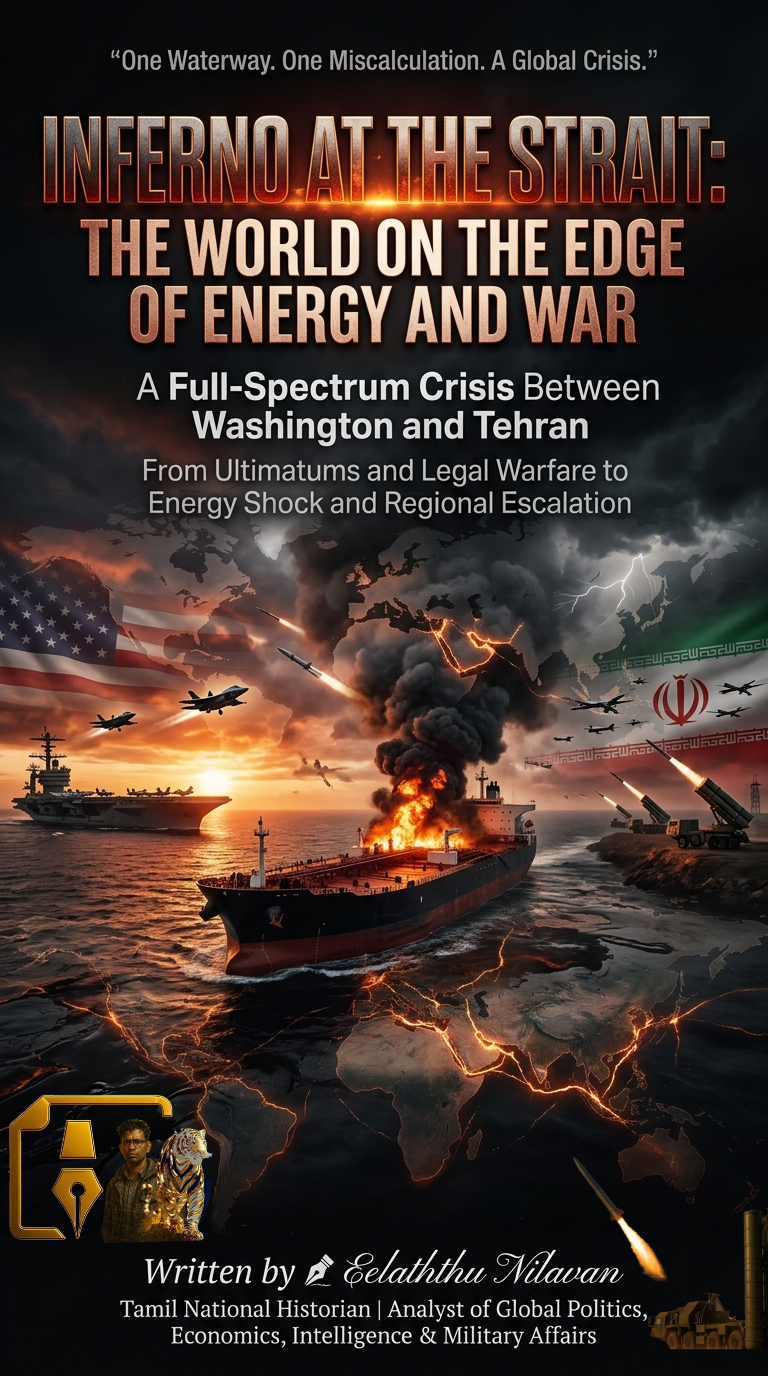
𝑨 𝑭𝒖𝒍𝒍-𝑺𝒑𝒆𝒄𝒕𝒓𝒖𝒎 𝑪𝒓𝒊𝒔𝒊𝒔 𝑩𝒆𝒕𝒘𝒆𝒆𝒏 𝑾𝒂𝒔𝒉𝒊𝒏𝒈𝒕𝒐𝒏 𝒂𝒏𝒅 𝑻𝒆𝒉𝒓𝒂𝒏
𝑻𝒉𝒆 𝑼𝒍𝒕𝒊𝒎𝒂𝒕𝒖𝒎 𝑻𝒉𝒂𝒕 𝑰𝒈𝒏𝒊𝒕𝒆𝒅 𝒂 𝑭𝒍𝒂𝒔𝒉𝒑𝒐𝒊𝒏𝒕
Tensions between the United States and Iran have escalated to one of the most dangerous levels in recent history following a direct ultimatum issued by U.S. President Donald Trump. The warning was explicit and unprecedented: reopen the Strait of Hormuz or face targeted strikes on critical Iranian infrastructure, including power plants and bridges.
The announcement of a potential “Power Plant Day” marked a significant shift in strategic signaling. It suggested a move beyond conventional military targets toward infrastructure essential for civilian life—an approach that has triggered global alarm.
Iran responded with immediate condemnation. Senior officials described the threats as violations of international law, warning that any such actions would be treated as acts of war. The rhetoric on both sides has intensified rapidly, transforming a regional standoff into a potential global crisis.
𝑳𝒆𝒈𝒂𝒍 𝑾𝒂𝒓𝒇𝒂𝒓𝒆: 𝑻𝒉𝒆 𝑩𝒂𝒕𝒕𝒍𝒆 𝑩𝒆𝒚𝒐𝒏𝒅 𝑴𝒊𝒔𝒔𝒊𝒍𝒆𝒔
Iran has framed the confrontation not only in military terms but also through the lens of international law. Officials argue that targeting civilian infrastructure would constitute war crimes under multiple legal frameworks, including the United Nations Charter, the Rome Statute, and the Geneva Conventions.
Invoking the right to self-defense, Iran has warned of a “decisive, immediate, and regretful” response to any attack. This legal positioning serves two purposes: it justifies potential retaliation while also attempting to shape global opinion against Washington’s stance.
The escalation is no longer confined to physical conflict. It is now equally a battle of narratives, legitimacy, and international perception.
𝑻𝒉𝒆 𝑺𝒕𝒓𝒂𝒊𝒕 𝒐𝒇 𝑯𝒐𝒓𝒎𝒖𝒛: 𝑻𝒉𝒆 𝑾𝒐𝒓𝒍𝒅’𝒔 𝑴𝒐𝒔𝒕 𝑫𝒂𝒏𝒈𝒆𝒓𝒐𝒖𝒔 𝑪𝒉𝒐𝒌𝒆𝒑𝒐𝒊𝒏𝒕
At the heart of the crisis lies the Strait of Hormuz, one of the most strategically vital waterways on Earth. A significant portion of global oil supply passes through this narrow corridor, making it indispensable to international energy markets.
Iran has now moved to fundamentally reshape control over the strait. New measures reportedly include:
• Restrictions on U.S. and Israeli-linked vessels
• Mandatory transit approvals and surveillance
• Introduction of toll payments in Iran’s national currency
• Rerouting of shipping lanes under Iranian oversight
Tehran has declared that the strait will “never return to its former state,” signaling a long-term shift rather than a temporary measure. These actions represent a direct challenge to the existing global maritime order.
𝑪𝒆𝒂𝒔𝒆𝒇𝒊𝒓𝒆 𝑫𝒊𝒑𝒍𝒐𝒎𝒂𝒄𝒚 𝑪𝒐𝒍𝒍𝒂𝒑𝒔𝒆𝒔
Efforts to de-escalate the crisis through diplomacy have so far failed. A ceasefire proposal, reportedly facilitated through Pakistan, was rejected by Iran.
Tehran’s position is clear: it will not accept a temporary halt in hostilities without binding guarantees against future attacks. Iranian officials have described current proposals as unreasonable and contrary to national security interests.
Meanwhile, the United States continues to push for immediate de-escalation on its own terms, while maintaining military pressure. This deadlock has created a high-stakes diplomatic impasse with diminishing chances of short-term resolution.
𝑶𝒑𝒆𝒓𝒂𝒕𝒊𝒐𝒏 𝑻𝒓𝒖𝒆 𝑷𝒓𝒐𝒎𝒊𝒔𝒆 4: 𝑻𝒉𝒆 𝑾𝒂𝒓 𝑬𝒙𝒑𝒂𝒏𝒅𝒔
The conflict has moved beyond threats into active military engagement. Under what it calls “Operation True Promise 4,” Iran has launched a series of coordinated strikes across the region.
Reported actions include:
• Missile and drone strikes on energy infrastructure in the Gulf
• Attacks on military installations linked to U.S. forces
• Strikes on Israeli urban and industrial areas
• Maritime attacks on vessels associated with opposing forces
Iran has also claimed to have targeted a U.S. amphibious assault ship, asserting that it was forced to withdraw. While such claims remain unverified, they highlight the scale and ambition of the operation.
At the same time, the United States has conducted high-risk rescue missions and continues to demonstrate military reach, reinforcing its presence in the region.
𝑻𝒉𝒆 𝑮𝒖𝒍𝒇 𝑰𝒈𝒏𝒊𝒕𝒆𝒔: 𝑨 𝑾𝒊𝒅𝒆𝒏𝒊𝒏𝒈 𝑾𝒂𝒓 𝑴𝒂𝒑
The conflict is no longer confined to a single theater. It has expanded across multiple countries in the Gulf region.
Key developments include:
• Strikes on energy and petrochemical facilities in several Gulf states
• Drone attacks targeting critical government and oil infrastructure
• Escalating missile exchanges affecting major cities
• Increasing involvement of regional actors and proxy forces
The targeting of decision-making and command centers, rather than just production facilities, marks a strategic evolution. It suggests an effort to disrupt governance systems and strategic coordination, not merely economic output.
𝑰𝒏𝒇𝒐𝒓𝒎𝒂𝒕𝒊𝒐𝒏 𝑾𝒂𝒓𝒇𝒂𝒓𝒆 𝒂𝒏𝒅 𝑷𝒆𝒓𝒄𝒆𝒑𝒕𝒊𝒐𝒏
Alongside military operations, a parallel information war is unfolding. Competing narratives dominate media coverage on both sides.
Iranian outlets have circulated images of damaged equipment and claimed victories to undermine perceptions of U.S. military superiority. In response, U.S. leadership has emphasized operational success and strategic dominance.
This battle for perception is critical. It shapes international opinion, influences allies, and impacts the political legitimacy of ongoing actions.
𝑮𝒍𝒐𝒃𝒂𝒍 𝑬𝒏𝒆𝒓𝒈𝒚 𝑺𝒉𝒐𝒄𝒌: 𝑻𝒉𝒆 𝑯𝒊𝒈𝒉 𝑺𝒕𝒂𝒌𝒆𝒔
The implications of this crisis extend far beyond the Middle East. Any prolonged disruption in the Strait of Hormuz could trigger immediate and severe consequences for global energy markets.
Potential impacts include:
• Sudden spikes in oil prices
• Disruptions to international shipping routes
• Economic instability in energy-dependent regions
• Increased risk of global recession
The strait is not just a regional asset—it is a cornerstone of the global economy. Its instability introduces uncertainty at a systemic level.
𝑨 𝑾𝒐𝒓𝒍𝒅 𝑶𝒏 𝒕𝒉𝒆 𝑩𝒓𝒊𝒏𝒌
The current situation represents more than a bilateral conflict. It is a convergence of military escalation, legal confrontation, economic vulnerability, and geopolitical rivalry.
With diplomacy faltering and military actions intensifying, the risk of a broader regional war is no longer theoretical. Each new development increases the likelihood of miscalculation, drawing more actors into the conflict.
The Strait of Hormuz has become both a symbol and a trigger—a narrow passage through which not only oil flows, but also the fragile balance of global stability.
𝑪𝒐𝒏𝒄𝒍𝒖𝒔𝒊𝒐𝒏: 𝑻𝒉𝒆 𝑷𝒐𝒊𝒏𝒕 𝒐𝒇 𝑵𝒐 𝑹𝒆𝒕𝒖𝒓𝒏?
The confrontation between Washington and Tehran has entered a phase where rhetoric, law, and military force are deeply intertwined. What began as strategic pressure has evolved into a multi-dimensional crisis with global consequences.
If current trajectories continue, the world may be approaching a point where containment is no longer possible, and escalation becomes inevitable.
The coming days will determine whether this crisis stabilizes—or transforms into a defining conflict of the modern era.

Written by 𝔈𝔢𝔩𝔞𝔱𝔥𝔱𝔥𝔲 𝔑𝔦𝔩𝔞𝔳𝔞𝔫
Tamil National Historian | Analyst of Global Politics, Economics, Intelligence & Military Affairs
06/04/2026
The views expressed in this article are the author’s own and do not necessarily reflect Amizhthu’s editorial stance.
