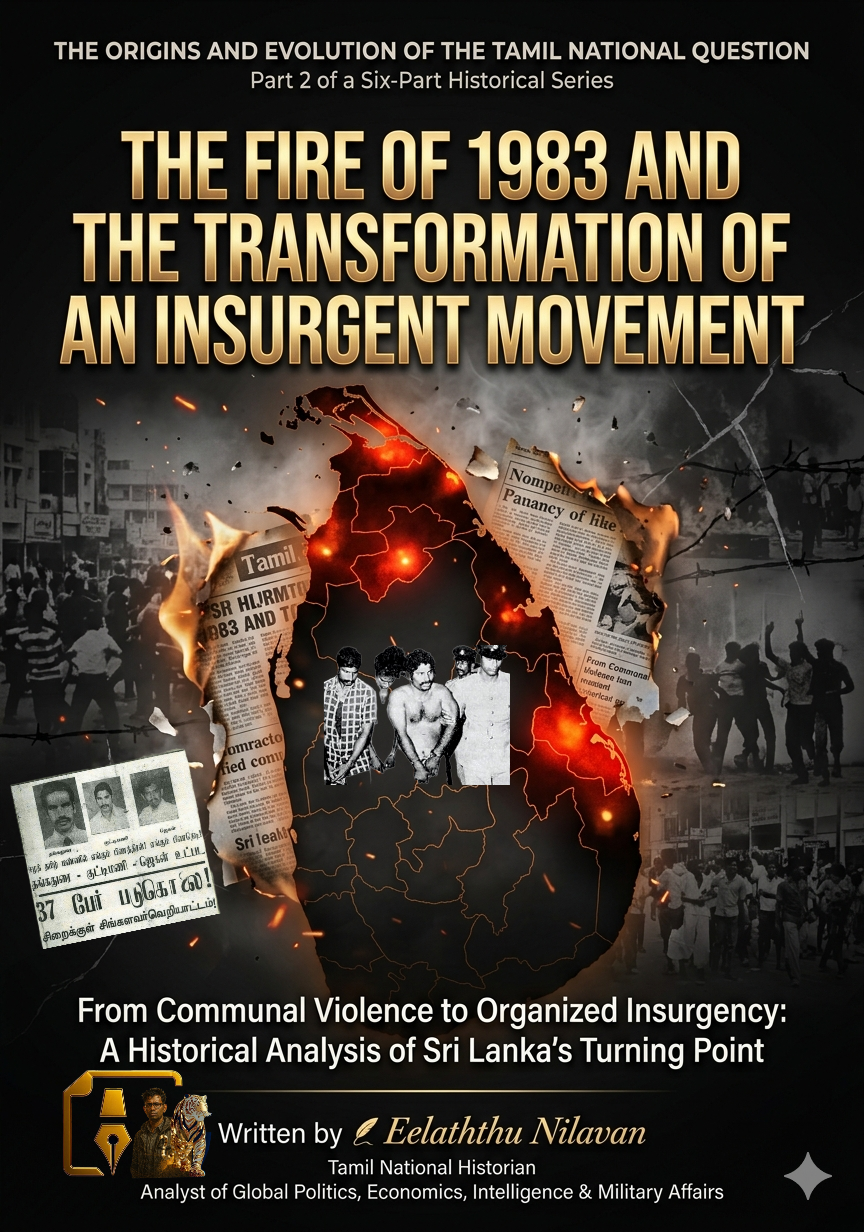
𝑻𝒉𝒆 𝑷𝒓𝒆𝒍𝒖𝒅𝒆 (1977–1983): 𝑨 𝑺𝒐𝒄𝒊𝒆𝒕𝒚 𝑼𝒏𝒅𝒆𝒓 𝑷𝒓𝒆𝒔𝒔𝒖𝒓𝒆
The period between 1977 and 1983 marked a decisive escalation in ethnic and political tensions across Sri Lanka. Following the 1977 general elections, the Tamil United Liberation Front (TULF) secured a sweeping mandate in Tamil-majority regions, reflecting a growing demand for political autonomy and structural reform.
However, this electoral outcome did not translate into sustained political dialogue. Instead, the years that followed were marked by recurring cycles of unrest, insecurity, and communal violence. Incidents in 1977 and 1981 contributed to a deepening sense of vulnerability among Tamil communities and reinforced the perception that constitutional avenues were increasingly ineffective.
One of the most symbolically significant events of this period was the Burning of the Jaffna Public Library (1981). This institution housed tens of thousands of rare manuscripts, historical records, and cultural archives. Its destruction was widely perceived as a profound cultural loss, representing not only the burning of books, but the erasure of collective memory and intellectual heritage.
𝑱𝒖𝒍𝒚 1983: 𝑨 𝑵𝒂𝒕𝒊𝒐𝒏 𝑨𝒕 𝑨 𝑻𝒖𝒓𝒏𝒊𝒏𝒈 𝑷𝒐𝒊𝒏𝒕
In July 1983, Sri Lanka experienced one of the most pivotal and traumatic episodes in its post-independence history, commonly referred to as Black July.
Triggered by the killing of soldiers in an ambush, widespread anti-Tamil violence erupted across several parts of the country. The scale of the violence resulted in significant loss of life, the destruction of homes and businesses, and the displacement of large numbers of civilians.
This period also marked the beginning of a major outward migration, leading to the formation of a global Tamil diaspora. Communities relocated to countries across Europe, North America, and beyond, carrying with them both the memory of violence and the political aspirations tied to their homeland.
For many analysts, July 1983 represented a decisive rupture. It marked the point at which the conflict shifted from political contestation within a state framework to a prolonged and deeply entrenched armed confrontation.
𝑶𝒓𝒈𝒂𝒏𝒊𝒔𝒂𝒕𝒊𝒐𝒏𝒂𝒍 𝑬𝒗𝒐𝒍𝒖𝒕𝒊𝒐𝒏 𝒂𝒏𝒅 𝑪𝒆𝒏𝒕𝒓𝒂𝒍𝒊𝒔𝒂𝒕𝒊𝒐𝒏
During the early to mid-1980s, militant groups operating in the Northern and Eastern regions underwent significant transformation. Among them, the Liberation Tigers of Tamil Eelam emerged as one of the most structured and centralized movements.
Under the leadership of Velupillai Prabhakaran, the organization developed a hierarchical structure that integrated political coordination with military operations.
Key elements of this transformation included:
• A centralized leadership coordinating long-term strategy
• Expansion of military capabilities with increasingly specialized units
• The development of a political wing engaging with civilian populations and external actors
This phase reflected a broader shift from fragmented militancy toward a more institutionalized and disciplined insurgent framework.
𝑭𝒓𝒐𝒎 𝑮𝒖𝒆𝒓𝒓𝒊𝒍𝒍𝒂 𝑾𝒂𝒓𝒇𝒂𝒓𝒆 𝒕𝒐 𝑻𝒆𝒓𝒓𝒊𝒕𝒐𝒓𝒊𝒂𝒍 𝑺𝒕𝒓𝒂𝒕𝒆𝒈𝒚
A defining feature of this period was the shift in operational strategy. Rather than relying exclusively on small-scale guerrilla tactics, militant movements increasingly sought to establish control over territory.
This transition required:
• Structured training programs and organized bases
• Strong internal discipline and regulation
• Coordination of operations across multiple regions
The evolution from hit-and-run tactics to territorial strategy marked a significant change in the nature and scale of the conflict.
𝑻𝒉𝒆 𝑬𝒂𝒔𝒕𝒆𝒓𝒏 𝑷𝒓𝒐𝒗𝒊𝒏𝒄𝒆: 𝑨 𝑪𝒐𝒏𝒕𝒆𝒔𝒕𝒆𝒅 𝑺𝒑𝒂𝒄𝒆
The Eastern Province—comprising Trincomalee, Batticaloa, and Ampara—emerged as a critical zone of strategic and political importance.
Its demographic diversity and geographic position made it a focal point of competing claims and heightened tensions. Control over the region was viewed as essential by multiple actors, contributing to intensified conflict dynamics.
The East thus became a complex arena where questions of identity, territory, and governance intersected, often in volatile ways.
𝑻𝒉𝒆 𝑰𝒏𝒕𝒆𝒓𝒏𝒂𝒕𝒊𝒐𝒏𝒂𝒍𝒊𝒔𝒂𝒕𝒊𝒐𝒏 𝒐𝒇 𝒕𝒉𝒆 𝑪𝒐𝒏𝒇𝒍𝒊𝒄𝒕
By the mid-1980s, the conflict had begun to attract increasing international attention. The emergence of diaspora communities played a significant role in shaping global awareness and discourse surrounding the issue.
Political advocacy, fundraising networks, and media engagement contributed to the internationalization of the conflict, transforming it from a domestic issue into one with global dimensions.
𝑪𝒐𝒏𝒄𝒍𝒖𝒔𝒊𝒐𝒏: 𝑨 𝑻𝒓𝒂𝒏𝒔𝒇𝒐𝒓𝒎𝒆𝒅 𝑪𝒐𝒏𝒇𝒍𝒊𝒄𝒕
The period between 1977 and the mid-1980s represents a fundamental transformation in Sri Lanka’s political landscape.
The convergence of communal violence, political breakdown, and the rise of organized militant movements reshaped the Tamil national question. What had once been framed primarily within constitutional debate evolved into a sustained and complex conflict involving questions of identity, territory, and state power.
This phase laid the structural foundations for the prolonged conflict that would unfold over the following decades.
END OF PART 2
Next: Part 3 – The Indo-Sri Lanka Accord, the role of the IPKF, and the emergence of parallel governance structures

Written by 𝐄𝐞𝐥𝐚𝐭𝐡𝐭𝐡𝐮 𝐍𝐢𝐥𝐚𝐯𝐚𝐧
Tamil National Historian | Analyst of Global Politics, Economics, Intelligence & Military Affairs
13/04/2026
The views expressed in this article are the author’s own and do not necessarily reflect Amizhthu’s editorial stance.