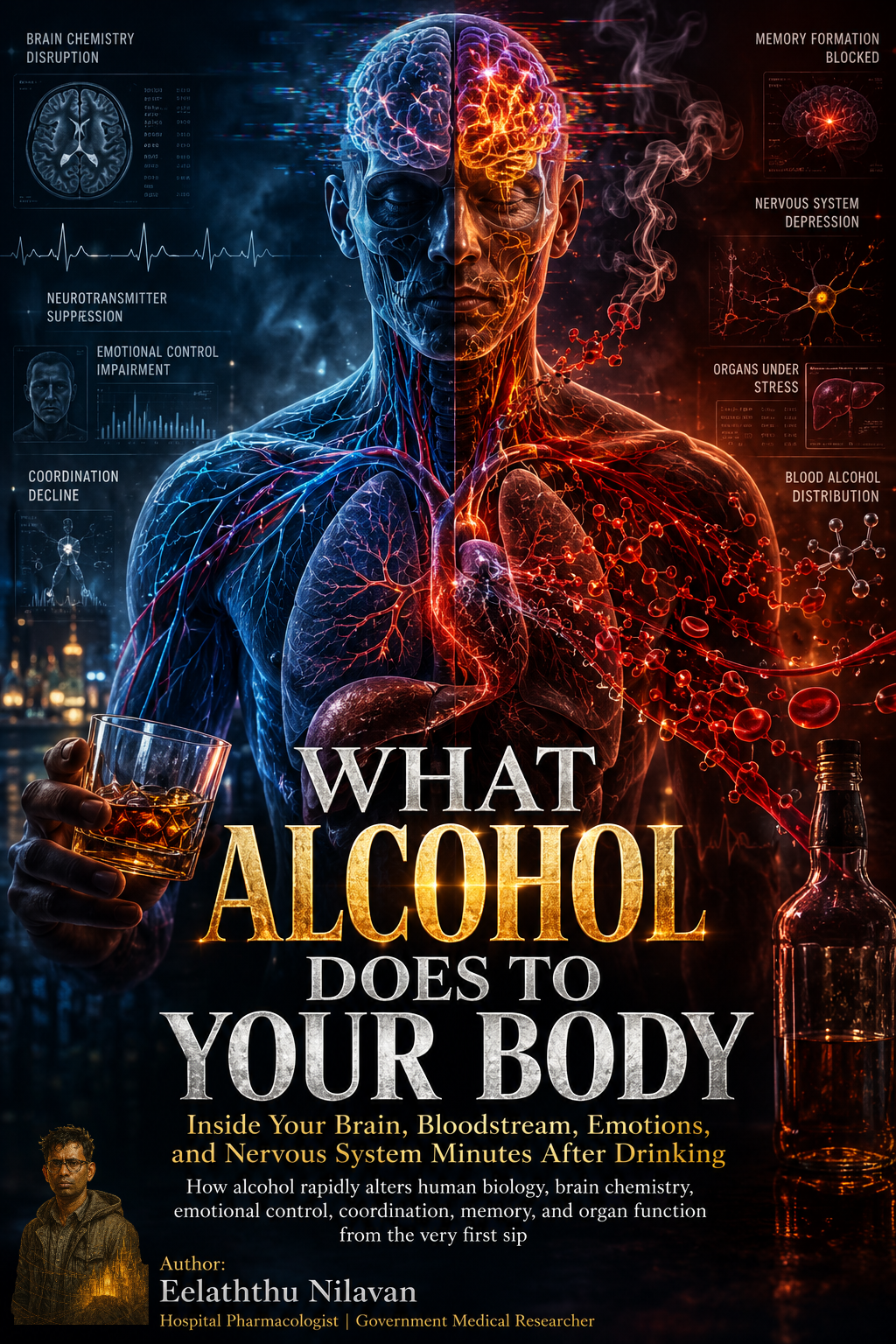

𝑰𝑵𝑻𝑹𝑶𝑫𝑼𝑪𝑻𝑰𝑶𝑵 — 𝑻𝑯𝑬 𝑭𝑰𝑹𝑺𝑻 𝑺𝑰𝑷 𝑻𝑯𝑨𝑻 𝑨𝑳𝑻𝑬𝑹𝑺 𝑻𝑯𝑬 𝑯𝑼𝑴𝑨𝑵 𝑺𝒀𝑺𝑻𝑬𝑴
Alcohol is one of the most widely consumed psychoactive substances in human civilization. It appears in celebrations, social gatherings, business meetings, nightlife culture, and even personal coping mechanisms for stress and emotional pain. Yet beneath the temporary sensation of pleasure or relaxation lies a powerful chemical compound capable of altering nearly every organ system inside the human body within minutes.
The human body does not treat alcohol as food or nutrition. From a biological perspective, alcohol is recognized as a toxic foreign substance that must be broken down and eliminated. Unlike carbohydrates or proteins, alcohol requires no digestion before entering the bloodstream. It rapidly crosses biological membranes, travels throughout the circulatory system, and reaches the brain with remarkable speed.
What makes alcohol particularly dangerous is not merely long-term addiction, but the speed at which it changes perception, judgment, emotional control, reflexes, and neurological function. Many people fail to realize that significant impairment begins long before visible drunkenness appears. The brain starts changing chemically after only a few drinks, often while the individual still believes they are functioning normally.
Behind every sensation of warmth, confidence, emotional release, dizziness, or loss of coordination is a series of biochemical disruptions occurring across the nervous system, liver, heart, digestive tract, and bloodstream. Understanding these changes is essential not only for medical science, but for public awareness and personal responsibility.
𝑻𝑯𝑬 𝑭𝑰𝑹𝑺𝑻 5 𝑴𝑰𝑵𝑼𝑻𝑬𝑺 — 𝑯𝑶𝑾 𝑨𝑳𝑪𝑶𝑯𝑶𝑳 𝑬𝑵𝑻𝑬𝑹𝑺 𝑻𝑯𝑬 𝑩𝑶𝑫𝒀
The moment alcohol is swallowed, absorption begins almost immediately. Approximately twenty percent of alcohol enters directly through the stomach lining, while the remaining majority passes into the small intestine, where absorption becomes even faster due to the organ’s large surface area and dense blood supply.
Because alcohol molecules are small and water-soluble, they move rapidly into blood vessels without needing complex digestion. Within minutes, alcohol circulates throughout the body and begins reaching major organs including the brain, liver, lungs, and heart.
The rate of alcohol absorption varies depending on numerous biological and environmental factors. Drinking on an empty stomach dramatically accelerates intoxication because food normally slows the movement of alcohol into the small intestine. Body weight, sex, age, hydration status, genetics, metabolic efficiency, medication use, and alcohol concentration all influence how rapidly blood alcohol concentration rises.
As blood alcohol concentration increases, the body begins responding almost immediately. Blood vessels widen slightly, heart rate may change, and the brain starts experiencing measurable chemical disruption before the person even feels fully intoxicated.
𝑻𝑯𝑬 𝑩𝑹𝑨𝑰𝑵 𝑼𝑵𝑫𝑬𝑹 𝑨𝑳𝑪𝑶𝑯𝑶𝑳 — 𝑾𝑯𝒀 𝑻𝑯𝑰𝑵𝑲𝑰𝑵𝑮 𝑪𝑯𝑨𝑵𝑮𝑬𝑺 𝑺𝑶 𝑭𝑨𝑺𝑻
Alcohol is classified medically as a central nervous system depressant. This means it slows communication between neurons throughout the brain and spinal cord. Although people often associate alcohol with excitement or stimulation, the substance actually suppresses higher brain functions while weakening self-control mechanisms.
One of alcohol’s earliest neurological effects involves gamma-aminobutyric acid, commonly known as GABA. GABA is an inhibitory neurotransmitter responsible for calming neural activity. Alcohol enhances GABA’s effects, producing feelings of relaxation, reduced anxiety, lowered social inhibition, and emotional looseness.
At the same time, alcohol suppresses glutamate, a neurotransmitter involved in alertness, concentration, memory formation, and learning. As glutamate activity decreases, mental clarity weakens. Thought processing slows, judgment deteriorates, and memory formation becomes impaired.
The frontal lobe is among the first brain regions affected by alcohol exposure. This region controls decision-making, reasoning, emotional regulation, impulse suppression, and risk assessment. As alcohol weakens frontal lobe activity, individuals often become louder, more impulsive, emotionally unstable, or overconfident.
Many people interpret this altered behavior as confidence or emotional freedom. In reality, it is evidence that the brain’s control systems are losing stability. The neurological filters that normally regulate social behavior begin shutting down.
Alcohol also stimulates dopamine release within the brain’s reward circuitry. Dopamine creates sensations of pleasure and reinforcement, encouraging repeated drinking behavior. Over time, this reward stimulation plays a major role in alcohol dependency and addiction.
𝑾𝑯𝒀 𝑪𝑶𝑶𝑹𝑫𝑰𝑵𝑨𝑻𝑰𝑶𝑵 𝑨𝑵𝑫 𝑹𝑬𝑭𝑳𝑬𝑿𝑬𝑺 𝑩𝑬𝑮𝑰𝑵 𝑻𝑶 𝑭𝑨𝑰𝑳
As alcohol concentration rises inside the bloodstream, the cerebellum becomes increasingly impaired. The cerebellum is the region of the brain responsible for balance, posture, movement precision, and coordination.
Neural communication between the brain and muscles slows dramatically. Fine motor control weakens, hand-eye coordination deteriorates, and reflexes become delayed. This explains why intoxicated individuals begin stumbling, dropping objects, swaying while standing, or reacting slowly to sudden dangers.
Speech impairment occurs because alcohol disrupts the neurological coordination of facial muscles, tongue movement, breathing rhythm, and vocal control. Slurred speech is therefore not simply a social symptom of intoxication—it is direct evidence of impaired neural function.
Reaction time becomes particularly dangerous during activities such as driving. Even moderate alcohol consumption significantly reduces the brain’s ability to process visual information and respond rapidly to unexpected situations. A delay of mere fractions of a second can become fatal on the road.
This neurological slowing is one reason alcohol-related accidents remain a major global public health issue.
𝑬𝑴𝑶𝑻𝑰𝑶𝑵𝑺 𝑼𝑵𝑫𝑬𝑹 𝑻𝑯𝑬 𝑰𝑵𝑭𝑳𝑼𝑬𝑵𝑪𝑬 — 𝑾𝑯𝒀 𝑨𝑳𝑪𝑶𝑯𝑶𝑳 𝑪𝑨𝑵 𝑪𝑯𝑨𝑵𝑮𝑬 𝑷𝑬𝑹𝑺𝑶𝑵𝑨𝑳𝑰𝑻𝒀
Alcohol profoundly affects emotional regulation because it weakens the brain’s ability to control impulses and stabilize emotional responses. Feelings that might normally remain moderate can suddenly intensify under intoxication.
Some individuals become unusually cheerful or affectionate, while others become aggressive, reckless, or emotionally unstable. Small frustrations may escalate rapidly into arguments or violence because the brain’s inhibitory systems are no longer functioning effectively.
Alcohol can amplify sadness, anger, loneliness, or emotional trauma. While many people consume alcohol to escape psychological stress, the substance often worsens anxiety and depression after intoxication fades. The temporary emotional numbness created by alcohol is frequently followed by neurological rebound effects that intensify emotional instability.
This is why alcohol is strongly associated with domestic violence, impulsive crime, self-harm, emotional breakdowns, and destructive decision-making. The intoxicated brain is operating without its normal regulatory balance.
𝑻𝑯𝑬 𝑳𝑰𝑽𝑬𝑹 — 𝑻𝑯𝑬 𝑩𝑶𝑫𝒀’𝑺 𝑫𝑬𝑻𝑶𝑿𝑰𝑭𝑰𝑪𝑨𝑻𝑰𝑶𝑵 𝑺𝒀𝑺𝑻𝑬𝑴
The liver bears the greatest physiological burden during alcohol consumption. Roughly ninety percent of alcohol metabolism occurs within this organ through specialized enzymes designed to neutralize toxins.
Alcohol is first broken down into acetaldehyde, a highly toxic compound capable of damaging cells, proteins, and DNA. Acetaldehyde is significantly more harmful than alcohol itself and contributes heavily to inflammation, nausea, headaches, and tissue injury.
The liver then converts acetaldehyde into acetate, which can eventually be eliminated from the body. However, excessive or repeated alcohol exposure overwhelms the liver’s ability to recover.
Over time, fat begins accumulating within liver cells, producing fatty liver disease. Continued exposure can lead to alcoholic hepatitis, fibrosis, and eventually cirrhosis—a severe condition where healthy liver tissue becomes permanently replaced by scar tissue.
Once advanced cirrhosis develops, liver failure may become irreversible. Chronic alcohol consumption also greatly increases the risk of liver cancer and systemic immune dysfunction.
𝑻𝑯𝑬 𝑯𝑬𝑨𝑹𝑻, 𝑩𝑳𝑶𝑶𝑫 𝑽𝑬𝑺𝑺𝑬𝑳𝑺, 𝑨𝑵𝑫 𝑰𝑵𝑻𝑬𝑹𝑵𝑨𝑳 𝑶𝑹𝑮𝑨𝑵𝑺
Alcohol affects nearly every major organ system in the body. Shortly after drinking, blood vessels widen temporarily, producing the sensation of warmth. However, this actually increases heat loss and may contribute to dangerous drops in body temperature under cold conditions.
Heavy drinking disrupts heart rhythm and can trigger irregular electrical activity within the heart muscle. Long-term alcohol abuse is associated with hypertension, weakened cardiac muscle function, stroke, and cardiomyopathy.
Inside the digestive tract, alcohol irritates the stomach lining and increases acid production. Chronic exposure contributes to gastritis, ulcers, digestive bleeding, and inflammation of the pancreas.
The pancreas itself becomes vulnerable to serious damage. Alcohol-induced pancreatitis can interfere with insulin production and significantly increase the risk of diabetes.
The immune system also weakens under chronic alcohol exposure, leaving the body more vulnerable to infections, slower wound healing, and systemic inflammation.
𝑴𝑬𝑴𝑶𝑹𝒀 𝑳𝑶𝑺𝑺, 𝑩𝑳𝑨𝑪𝑲𝑶𝑼𝑻𝑺, 𝑨𝑵𝑫 𝑨𝑳𝑪𝑶𝑯𝑶𝑳 𝑷𝑶𝑰𝑺𝑶𝑵𝑰𝑵𝑮
One of alcohol’s most dangerous neurological effects is the blackout state. During a blackout, the individual may continue walking, talking, driving, or interacting socially while the brain loses the ability to create long-term memories.
This occurs because alcohol severely disrupts the hippocampus, the brain region essential for memory encoding. Events occurring during intoxication may therefore disappear entirely from conscious recall.
At extremely high blood alcohol concentrations, alcohol poisoning becomes life-threatening. Breathing slows dangerously, heart rhythm becomes unstable, and body temperature drops significantly. Severe intoxication may lead to unconsciousness, coma, or death.
Because alcohol suppresses protective reflexes, unconscious individuals may choke on vomit or experience respiratory failure without waking.
Alcohol poisoning is a medical emergency requiring immediate intervention.
𝑾𝑯𝒀 𝑯𝑨𝑵𝑮𝑶𝑽𝑬𝑹𝑺 𝑭𝑬𝑬𝑳 𝑺𝑶 𝑫𝑬𝑽𝑨𝑺𝑻𝑨𝑻𝑰𝑵𝑮
A hangover is not simply dehydration. It is the combined biological consequence of toxic chemical accumulation, inflammation, sleep disruption, immune activation, electrolyte imbalance, and neurological stress.
Acetaldehyde plays a major role in producing nausea, headaches, fatigue, sweating, and weakness. Alcohol also suppresses restorative sleep cycles, especially REM sleep, meaning the brain fails to recover properly overnight.
Inflammatory responses triggered by alcohol affect blood vessels and neurotransmitter systems, contributing to irritability, mental fog, sensitivity to light, poor concentration, and emotional exhaustion.
The body essentially enters a state of chemical recovery after exposure to a toxic substance.
𝑻𝑯𝑬 𝑳𝑶𝑵𝑮-𝑻𝑬𝑹𝑴 𝑵𝑬𝑼𝑹𝑶𝑳𝑶𝑮𝑰𝑪𝑨𝑳 𝑨𝑵𝑫 𝑷𝑯𝒀𝑺𝑰𝑪𝑨𝑳 𝑪𝑶𝑵𝑺𝑬𝑸𝑼𝑬𝑵𝑪𝑬𝑺
Repeated alcohol exposure gradually reshapes the human brain itself. Neural reward pathways adapt to continuous dopamine stimulation, leading to increased tolerance and dependency. Over time, larger amounts of alcohol are required to achieve the same psychological effects.
Chronic alcohol abuse is associated with depression, anxiety disorders, cognitive decline, memory impairment, peripheral neuropathy, hormonal imbalance, infertility, weakened immunity, cardiovascular disease, and multiple forms of cancer including liver, throat, colorectal, and breast cancers.
Addiction develops not because of moral weakness, but because alcohol physically alters brain chemistry, stress regulation systems, and motivational pathways.
The long-term consequences extend beyond the individual drinker. Families, relationships, economies, healthcare systems, and public safety are all deeply affected by alcohol-related harm.
𝑪𝑶𝑵𝑪𝑳𝑼𝑺𝑰𝑶𝑵 — 𝑨 𝑺𝑼𝑩𝑺𝑻𝑨𝑵𝑪𝑬 𝑻𝑯𝑨𝑻 𝑩𝑬𝑮𝑰𝑵𝑺 𝑪𝑯𝑨𝑵𝑮𝑰𝑵𝑮 𝑻𝑯𝑬 𝑯𝑼𝑴𝑨𝑵 𝑩𝑶𝑫𝒀 𝑾𝑰𝑻𝑯𝑰𝑵 𝑴𝑰𝑵𝑼𝑻𝑬𝑺
Alcohol is far more than a recreational beverage. It is a psychoactive chemical capable of altering consciousness, suppressing neurological function, disrupting emotional stability, and damaging vital organs throughout the body.
From the first sip, alcohol initiates a cascade of biological events inside the bloodstream and brain. The feelings of relaxation, confidence, and emotional release experienced during intoxication are accompanied by measurable neurological suppression and systemic physiological stress.
Understanding what alcohol truly does inside the human body is essential for informed decision-making, public health awareness, and responsible consumption. The effects begin within minutes—often long before the individual fully realizes how profoundly their brain and body have already changed.
𝑨𝒖𝒕𝒉𝒐𝒓:


𝔈𝔢𝔩𝔞𝔱𝔥𝔱𝔥𝔲 𝔑𝔦𝔩𝔞𝔳𝔞𝔫
𝑯𝒐𝒔𝒑𝒊𝒕𝒂𝒍 𝑷𝒉𝒂𝒓𝒎𝒂𝒄𝒐𝒍𝒐𝒈𝒊𝒔𝒕 | 𝑮𝒐𝒗𝒆𝒓𝒏𝒎𝒆𝒏𝒕 𝑴𝒆𝒅𝒊𝒄𝒂𝒍 𝑹𝒆𝒔𝒆𝒂𝒓𝒄𝒉𝒆𝒓
25/05/2026