
The Extraordinary Beginning of Human Life
𝐈𝐍𝐓𝐑𝐎𝐃𝐔𝐂𝐓𝐈𝐎𝐍
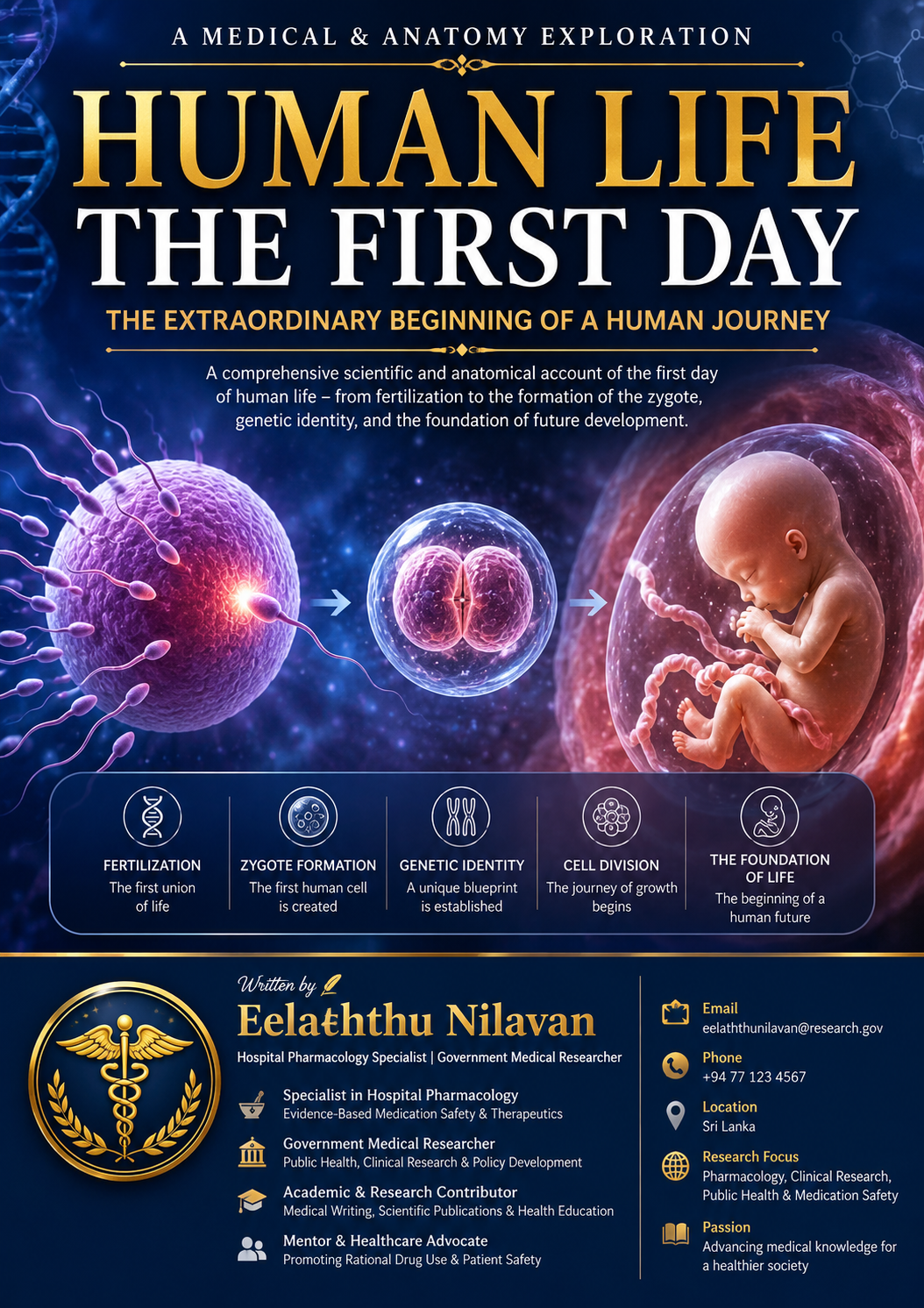
Human life begins long before a heartbeat is detected or a pregnancy becomes visible. The first day of human existence is one of the most remarkable biological events in nature. During this single day, two microscopic reproductive cells unite to create an entirely new human organism with its own unique genetic identity. Every physical characteristic—from eye colour and blood group to aspects of growth and development—is encoded at this very moment.
Although invisible to the naked eye, the first day of life represents an extraordinary sequence of molecular, cellular, and genetic events. Within hours of fertilisation, the newly formed cell begins preparing for rapid division, laying the foundation for every organ, tissue, and body system that will develop over the following months. Modern embryology, anatomy, genetics, and molecular biology have revealed that this earliest stage is highly organised and carefully regulated by thousands of biological signals.
𝐂𝐇𝐀𝐏𝐓𝐄𝐑 𝟏 — 𝐅𝐄𝐑𝐓𝐈𝐋𝐈𝐙𝐀𝐓𝐈𝐎𝐍: 𝐓𝐇𝐄 𝐅𝐈𝐑𝐒𝐓 𝐌𝐎𝐌𝐄𝐍𝐓 𝐎𝐅 𝐇𝐔𝐌𝐀𝐍 𝐋𝐈𝐅𝐄
Fertilisation is the biological event in which a single sperm cell successfully penetrates a mature egg cell. This usually occurs within the fallopian tube after ovulation. Out of hundreds of millions of sperm released during ejaculation, only a very small number reach the egg, and typically only one succeeds in fertilisation.
When the sperm enters the egg, specialised cellular mechanisms immediately prevent additional sperm from entering. This ensures that the embryo receives the correct number of chromosomes required for normal development.
The genetic material carried by the sperm and egg then merges. Each contributes 23 chromosomes, creating a complete set of 46 chromosomes. This newly formed cell is known as the zygote, representing the first cell of a new human being.
At this instant, the embryo possesses a unique genome unlike any other individual who has ever lived or will ever exist.
𝐂𝐇𝐀𝐏𝐓𝐄𝐑 𝟐 — 𝐓𝐇𝐄 𝐙𝐘𝐆𝐎𝐓𝐄: 𝐓𝐇𝐄 𝐅𝐈𝐑𝐒𝐓 𝐇𝐔𝐌𝐀𝐍 𝐂𝐄𝐋𝐋
The zygote measures only about one-tenth of a millimetre in diameter, yet it contains the complete genetic blueprint for the entire human body. Every future organ—including the brain, heart, lungs, liver, kidneys, bones, muscles, skin, and nervous system—originates from this single cell.
Inside the zygote, DNA molecules begin directing the production of proteins essential for growth and development. The cell carefully organises its chromosomes, repairs damaged DNA if necessary, and prepares for the first mitotic division.
Despite its microscopic size, the zygote already demonstrates the fundamental characteristics of life: metabolism, energy production, genetic regulation, cellular communication, and controlled growth.
𝐂𝐇𝐀𝐏𝐓𝐄𝐑 𝟑 — 𝐆𝐄𝐍𝐄𝐓𝐈𝐂 𝐈𝐃𝐄𝐍𝐓𝐈𝐓𝐘 𝐈𝐒 𝐄𝐒𝐓𝐀𝐁𝐋𝐈𝐒𝐇𝐄𝐃
The first day of life also establishes the individual’s genetic identity. Approximately 20,000 protein-coding genes, together with millions of regulatory DNA sequences, determine how the body develops throughout life.
These genes influence countless biological traits, including body structure, immune responses, metabolism, and susceptibility to certain inherited conditions. However, environmental factors, nutrition, and lifestyle throughout life also play important roles in shaping health and development.
From the very first day, sophisticated molecular mechanisms regulate gene expression, ensuring that future organs develop in the correct place and at the correct time.
Written by


𝐄𝐞𝐥𝐚𝐭𝐡𝐭𝐡𝐮 𝐍𝐢𝐥𝐚𝐯𝐚𝐧
Hospital Pharmacology Specialist | Government Medical Researcher