


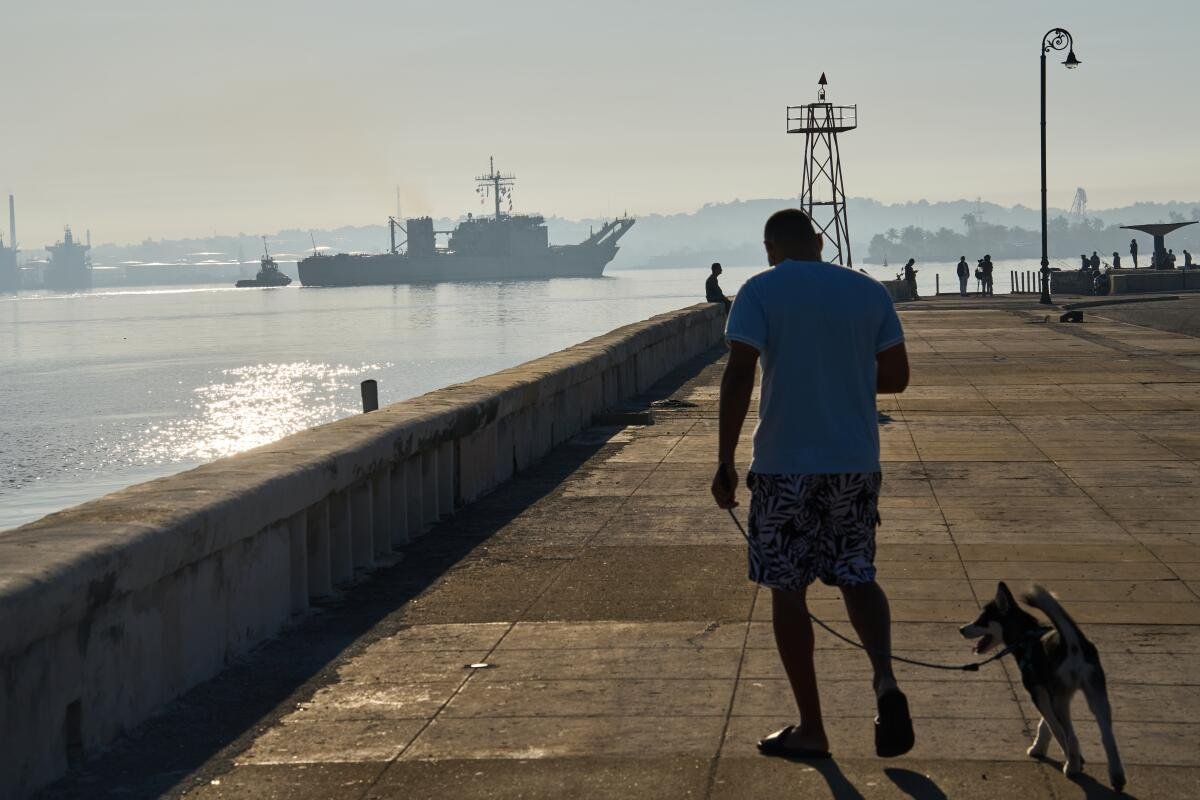
Mexican Navy vessels carrying hundreds of tonnes of humanitarian aid arrived in Cuba this week, marking one of the most significant regional support missions to the island in recent years as it grapples with a worsening energy crisis intensified by long‑standing U.S. sanctions.

The ships — part of a coordinated relief effort ordered by the Mexican government — docked at the port of Havana to deliver food supplies, medical materials, and essential goods aimed at easing shortages that have strained daily life for millions of Cubans. Local authorities confirmed that the aid will be distributed to priority sectors, including hospitals, community food programs, and emergency services.
A Crisis Years in the Making
Cuba has faced recurring energy shortages for more than a decade, but officials say the situation has deteriorated sharply in recent months. Fuel deficits have triggered prolonged blackouts, disrupted public transportation, and forced temporary shutdowns of factories and public institutions.
Economists and regional analysts point to a combination of factors: aging infrastructure, reduced oil shipments from traditional allies, and the enduring impact of the U.S. economic embargo — which restricts Cuba’s access to global financial systems, shipping routes, and energy markets.
Cuban authorities have repeatedly argued that the embargo, tightened further in recent years, has severely limited the island’s ability to purchase fuel and spare parts. Washington maintains that the sanctions are aimed at pressuring political reforms.
Mexico Steps Forward
Mexico’s decision to dispatch naval vessels underscores its growing role as a humanitarian partner in the region. President Andrés Manuel López Obrador has previously criticized the U.S. embargo as “inhumane” and has called for its end at multiple international forums.
In a brief statement, Mexico’s Secretariat of the Navy said the mission reflects the country’s commitment to “solidarity, cooperation, and humanitarian support” for nations facing acute hardship. Cuban officials publicly thanked Mexico for what they described as a “timely and generous gesture.”
Crowds gathered near the port as the ships arrived, with some residents expressing relief and cautious optimism. “Any help is welcome right now,” said one Havana resident, noting that food prices and power outages have become increasingly difficult to manage.
Regional and International Reactions
The aid delivery has drawn attention across Latin America, where several governments have urged the United States to reconsider its decades‑old blockade. Humanitarian organizations have also warned that Cuba’s energy crisis could escalate into a broader social emergency without immediate international assistance.
U.S. officials have not commented directly on Mexico’s shipment but have reiterated that humanitarian aid to Cuba is not restricted under current sanctions — though shipping companies and financial institutions often avoid transactions involving the island due to compliance risks.
Looking Ahead
Cuba’s government has announced new rationing measures and energy‑saving initiatives as it works to stabilize the national grid. However, experts caution that without structural reforms and improved access to international markets, the island’s energy challenges are likely to persist.
For now, the arrival of Mexico’s naval convoy offers a temporary lifeline — and a reminder of the geopolitical tensions that continue to shape the daily realities of the Cuban people.
