
A Life Dedicated to Public Service, Political Struggle and the Rights of the Tamil People
A man may pass away, but the struggles he undertook, the principles he upheld and the historical footprints he leaves behind will never disappear.
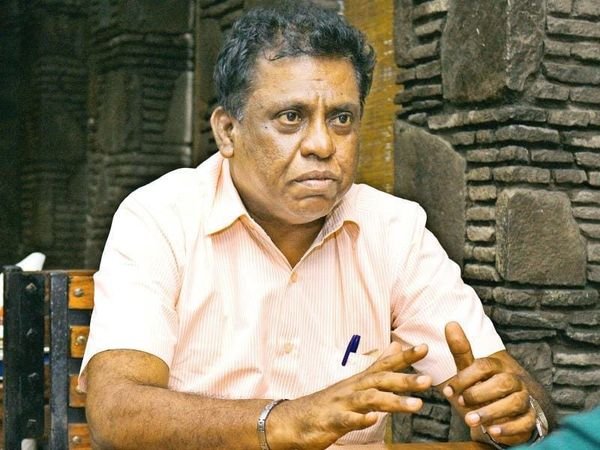
The passing of the late Mahalingam Kanagalingam Shivajilingam, widely known as M.K. Shivajilingam, is a profound loss to the Tamil political community.
A veteran Tamil political figure, former Member of Parliament, former member of the Northern Provincial Council and former Chairman of the Valvettithurai Urban Council, he dedicated much of his life to Tamil national politics, the political aspirations of the Tamil people and the struggle for their rights.
His life journey came to an end, but the political history he helped shape will remain.
I had the opportunity to stand alongside him at several protest sites during the later years of his life. Through those personal experiences, I witnessed his commitment to public service and his willingness to stand with people in difficult political circumstances.
In my view, there can be little disagreement that he was a selfless individual who devoted a considerable part of his life to public causes.
His political journey may have included disagreements, controversies and decisions that attracted criticism. However, those differences should not erase the record of his long public life, his participation in political struggles and his determination to continue raising Tamil concerns.
From Valvettithurai to the Tamil National Political Arena
Mahalingam Kanagalingam Shivajilingam was born on 15 August 1957 in Valvettithurai, Jaffna.
Growing up in a region deeply connected to the political history of the Tamil people, he became involved in Tamil political activism during a period of significant political and military upheaval.
He was associated with the early activities of the Tamil Eelam Liberation Organisation (TELO), joining the movement during the early period of the armed struggle for Tamil political liberation.
His political journey subsequently moved from the armed struggle environment into parliamentary and electoral politics.
He became part of a generation of Tamil political figures whose lives were shaped by the conflict, the demand for political rights and the changing political circumstances of the Tamil people.
Throughout his life, he remained involved in Tamil national political activities, navigating several political transformations and challenges.
Entering Parliament: The 2001 and 2004 Elections
In the December 2001 parliamentary election, Shivajilingam contested in the Jaffna Electoral District as a candidate representing the Tamil National Alliance (TNA).
He won the election and entered Parliament for the first time.
During the election campaign, on 28 November 2001, an attack took place in Kayts, Jaffna, targeting Tamil National Alliance political figures, including Mavai Senathirajah and M.K. Shivajilingam.
They narrowly escaped with injuries. The incident remains part of the political history surrounding the election campaign.
In the April 2004 parliamentary election, Shivajilingam contested again and secured another electoral victory, continuing his role as a representative of the Tamil people in Parliament.
His political activities were not limited to parliamentary debates. He also participated in public demonstrations and political campaigns addressing Tamil national concerns.
The 2010 Presidential Election and an Independent Political Path
In the 2010 Sri Lankan presidential election, Shivajilingam contested as an independent candidate.
He received 9,662 votes and finished in ninth place.
During this period, disagreements emerged over the Tamil National Alliance’s candidate selection process. Following these developments, he moved away from the TNA and the Tamil Eelam Liberation Organisation.
He subsequently established a new political formation known as the Tamil National Liberation Alliance.
He contested the 2010 parliamentary election under this political formation but was unsuccessful.
In June 2011, he dissolved the organisation and rejoined TELO, returning to political activities within the Tamil National Alliance.
These developments reflected the internal political disagreements and changing alliances that characterised Tamil politics during that period.
His Contribution to Local and Provincial Politics
In the 2011 local government elections, Shivajilingam contested as a Tamil National Alliance candidate for the Valvettithurai Urban Council and was elected as a council member.
In the 2013 Northern Provincial Council election, he contested in the Jaffna District and was elected as a member of the Northern Provincial Council.
One particularly significant moment in his political career was his decision to take his oath as a provincial councillor in Mullivaikkal, before a Justice of the Peace.
Mullivaikkal is not simply a geographical location. It occupies a deeply significant place in the collective historical memory of the Tamil people, particularly in relation to the final stages of the war in 2009.
His decision to take his oath there gave that political moment a particular historical and symbolic significance.
In the 2019 presidential election, he again contested as an independent candidate, receiving 12,256 votes.
In May 2025, following the Valvettithurai Urban Council election, he was elected Chairman of the council.
Even towards the final stage of his political career, he remained involved in public administration in the town where he was born.
His Historic Role in the Funerals of the National Leader’s Parents
One of the most significant aspects of Shivajilingam’s public life was his involvement in organising the funerals of the parents of Velupillai Prabhakaran, the leader of the Liberation Tigers of Tamil Eelam (LTTE).
On 6 January 2010, Velupillai, the father of Prabhakaran, died while in the custody of the Sri Lankan military at the Panagoda Army Camp.
Shivajilingam played a central role in arranging for his body to be taken to his hometown of Valvettithurai, where the funeral and cremation ceremonies took place at the Oorani Hindu Cemetery.
Similarly, when Parvathi Amma, the mother of Prabhakaran, died at Valvettithurai Hospital on 20 February 2011, Shivajilingam personally took the lead in organising her final rites.
These were not ordinary funeral arrangements.
They took place during an exceptionally sensitive post-war period, when political tensions, security concerns and public uncertainty created considerable difficulties.
At a time when many people were reluctant to become involved, he assumed responsibility for ensuring that the parents of the Tamil national leader received their final respects in their own hometown.
For many Tamils, these events carried considerable emotional and historical significance.
In the aftermath of the war, when the Tamil community was experiencing profound grief, uncertainty and a sense of collective loss, his involvement in these ceremonies became an important part of the community’s historical memory.
Whatever political differences may exist, his contribution in these circumstances deserves to be recorded.
Shivajilingam’s Role in Tamil National Politics After 18 May 2009
It is impossible to fully understand Shivajilingam’s political significance without examining the political environment that emerged after 18 May 2009.
The end of the armed conflict brought an enormous transformation to Tamil national politics.
Thousands of people had lost their lives. Families had been separated. Questions surrounding missing persons, accountability, political representation, national identity and the future of Tamil political aspirations became central concerns.
The Tamil political landscape entered a period of uncertainty.
The community faced immense challenges in rebuilding its political voice and determining how its demands should be pursued in the post-war environment.
It was during this difficult period that Shivajilingam became increasingly visible in protest politics.
He participated in demonstrations, hunger strikes, public campaigns and protests concerning missing persons, human rights and the political aspirations of the Tamil people.
He was not simply a politician who delivered speeches from political platforms. He frequently appeared at protest sites and participated directly in public demonstrations.
He was willing to raise his voice in public, challenge political decisions and participate in protests despite the difficulties associated with the post-war political environment.
Among the political figures who helped bring protest-based resistance back into the public sphere after May 2009, Shivajilingam occupied a significant position.
He sought to challenge the hesitation and political uncertainty that had developed within sections of the Tamil community following the end of the war.
His political methods and positions were not universally accepted. Nevertheless, his sustained participation in public protest and political resistance cannot be overlooked.
That determination became one of the defining characteristics of his political identity.
The Shivajilingam I Witnessed at Protest Sites
A political figure should not be judged solely by the positions he held or the elections he contested.
His relationship with ordinary people, his willingness to stand alongside them during difficult circumstances and his readiness to speak out when necessary are equally important in understanding his public life.
During the later years of his life, I had the opportunity to stand alongside Shivajilingam at several protest locations.
I personally witnessed his commitment, his involvement with people and his willingness to participate in public demonstrations.
He did not regard politics merely as a matter of holding office or participating in elections.
For him, standing alongside people at protest sites and raising their concerns was also part of political responsibility.
Even those who disagreed with his political positions should acknowledge his sustained participation in public campaigns and his contribution to protest-based political activity.
In my personal assessment, he was a selfless individual.
His public life demonstrated that politics is not simply about winning elections or occupying positions of authority. It is also about standing with people and raising their concerns when they face difficult circumstances.
Beyond Political Criticism: A Historical Assessment
Shivajilingam’s political career was not without criticism.
His party affiliations, political alliances, electoral decisions and independent political initiatives attracted differing opinions.
Political disagreements are a natural part of democratic life. A historical assessment of any political figure must recognise both achievements and shortcomings.
However, focusing exclusively on political disagreements while ignoring an individual’s wider public contribution would be an incomplete assessment of history.
Shivajilingam experienced political successes and setbacks. Yet, despite changing political circumstances, he continued to participate in Tamil national political activities.
His sustained involvement in public life deserves to be recognised as an important part of his historical record.
His passing should also encourage future generations to document the political experiences, struggles and contributions of those who shaped Tamil politics during this turbulent period.
A Political Figure Who Will Remain in the Memory of a Generation
The death of a public figure is not only a loss for the immediate family. It is also deeply felt by friends, political colleagues, activists and members of the public who shared different stages of that person’s life.
For those who stood alongside Shivajilingam at various protest sites, his passing leaves a significant void.
His speeches, his participation in demonstrations, his willingness to stand with people and the responsibilities he accepted during politically sensitive periods will remain in the memories of those who knew him.
His life cannot be understood simply as the story of an individual politician.
It was closely connected to the experiences of a generation that witnessed the transformation of Tamil national politics, the armed conflict, the end of the war and the difficult political realities that followed.
His political journey reflected many of the challenges, contradictions and aspirations that shaped that generation.
Final Farewell
M.K. Shivajilingam was born on 15 August 1957 and passed away on 14 November 2026, at the age of 69.
His final funeral rites are scheduled for Monday, 16 November 2026.
The funeral ceremonies will take place at his residence on Kal Road, Nediyakaadu, Valvettithurai. At approximately 10.00 a.m., his remains will be taken to Valvettithurai Junction for public tributes and commemorative speeches before the cremation ceremony at the Oorani Hindu Cemetery.
I extend my deepest condolences to his family, relatives, friends, political colleagues and everyone who worked alongside him throughout his public life.
M.K. Shivajilingam may have passed away, but the memories of a man who dedicated his life to public service will never disappear.
Political positions may change. Political parties may rise and fall. Alliances may shift, and political circumstances may transform. But the contributions a person makes to public life cannot simply be erased by the passage of time.
Beyond the political disagreements and criticisms surrounding his career, future generations should remember his courage at protest sites, his contribution to Tamil national politics and the commitment he demonstrated throughout his public life.
He will be remembered as one of the political figures whose life was intertwined with the struggles and historical experiences of the Tamil people.
His passing represents an irreplaceable loss in the political history of the Eelam Tamil people.
May his soul rest in peace.
My deepest condolences to his family, relatives, political colleagues and all those who stood alongside him in the struggles and political campaigns of his lifetime.
Eternal Respect.
Eternal Tribute.
Rest in Peace, M.K. Shivajilingam.
Written by  Eelaththu Nilavan
Tamil National Historian | Analyst of Global Politics, Economics, Intelligence & Military Affairs
15/11/2026