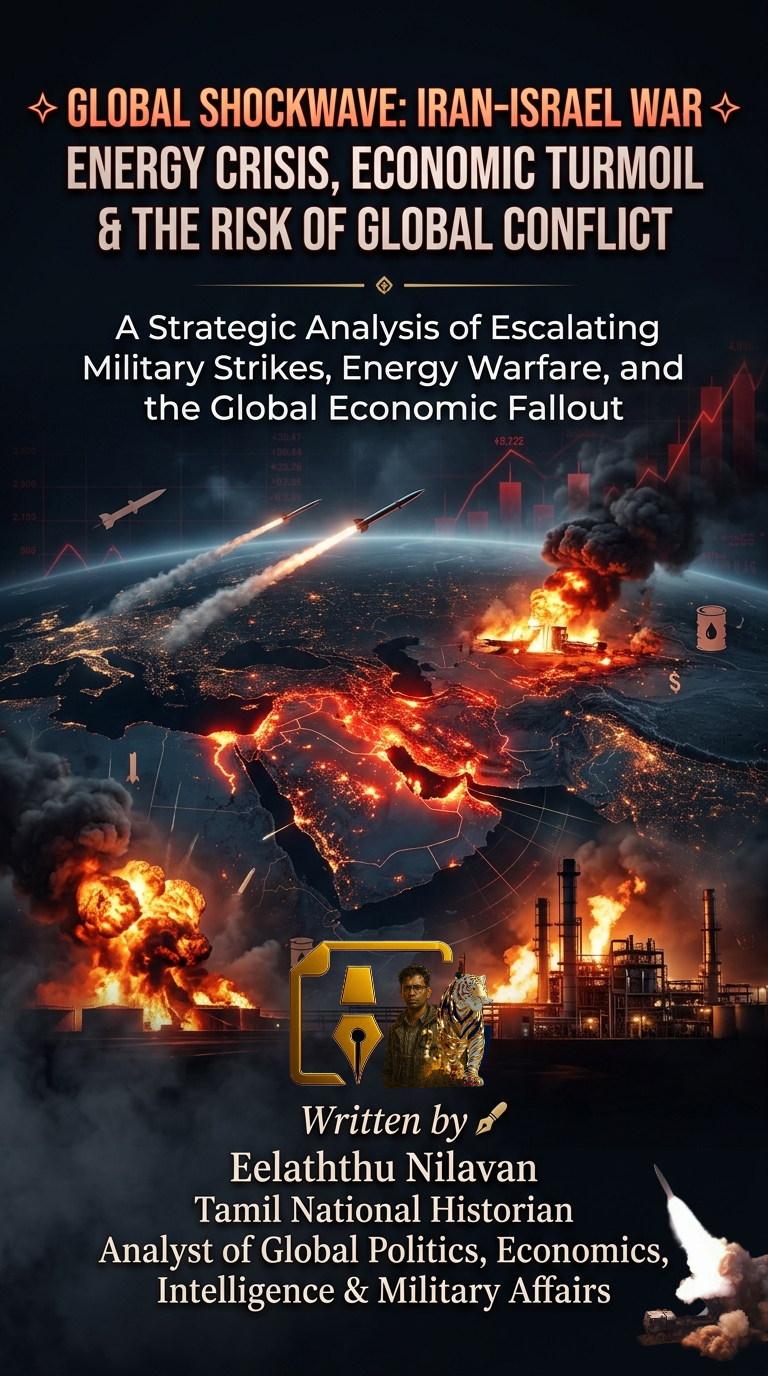

⟁ A New Phase of Conflict Reshaping the Global Order
The escalating confrontation between Iran, Israel, and the United States has entered a dangerous and transformative phase—one that is no longer confined to military engagement but has expanded into a full-spectrum geopolitical and economic crisis. What began as targeted strikes has evolved into a synchronized, multi-front conflict affecting global energy systems, financial stability, and regional alliances.
✦. OPERATION “PROMISE OF TRUTH 4”: A MASSIVE COORDINATED ASSAULT
⟁ Scale, Strategy, and Shock Impact
Iran’s elite force, the Islamic Revolutionary Guard Corps (IRGC), launched one of the most extensive attacks in its history under Operation Promise of Truth 4.
• 80+ targets struck across Israel
• Six coordinated waves within one hour
• Use of precision-guided missiles, multi-warhead systems, and attack drones
Major urban and strategic zones including Tel Aviv, Haifa, Nahariya, and Eilat were hit, exposing vulnerabilities in even the most advanced air defense systems.
Simultaneously, Hezbollah opened a northern front, targeting Israeli troop positions near border regions, signaling a coordinated regional escalation.
✦. ENERGY WARFARE: THE GLOBAL ECONOMY UNDER SIEGE
⟁ Oil, Gas, and Strategic Infrastructure Targeted
In a critical escalation, Iran expanded its strikes beyond military targets to include energy infrastructure, marking the beginning of a new era of economic warfare.
Key targets included:
• LNG facilities in Qatar (Ras Laffan Industrial City)
• Oil and gas sites in Saudi Arabia and the United Arab Emirates
• Strategic hubs like South Pars gas field
These strikes disrupted infrastructure responsible for nearly 20% of global gas supply, sending Brent crude prices above $112 per barrel.

. GLOBAL ECONOMIC FALLOUT: INFLATION, RATIONING & FISCAL STRESS
⟁ Europe and Asia Feel the Shock
Countries across the world are already experiencing severe economic consequences:
• In United Kingdom, Germany, and Greece → Rising fuel costs and renewed inflation pressures
• In Japan and South Korea → Energy conservation measures and subsidies
• In Bangladesh and Philippines → Rationing and emergency energy vouchers
Emerging economies such as Pakistan face mounting fiscal pressure, while small island nations risk economic destabilization due to import dependency.

. STRATEGIC STRIKES: BASES, RADARS & MILITARY INFRASTRUCTURE
⟁ Precision Attacks on Western Capabilities
Satellite imagery reveals significant damage to key installations:
• Al Dhafra Air Base suffered heavy destruction to hangars and logistics zones
• Radar systems supporting THAAD and Patriot platforms were targeted
• Estimated $2.7 billion in high-value defense equipment damaged
These strikes highlight a growing imbalance:
Low-cost drones vs high-cost interception systems
✦. STRAIT OF HORMUZ: THE WORLD’S MOST DANGEROUS CHOKEPOINT
⟁ A Critical Flashpoint for Global Supply Chains
The strategic Strait of Hormuz—through which nearly 20% of global oil supply flows—is now under severe threat.
Any disruption could trigger:
• Global oil shortages
• Surge in shipping and insurance costs
• Supply chain breakdowns affecting food, fertilizer, and industrial goods

. U.S. ESCALATION: $200 BILLION WAR CALCULATION
⟁ Washington Weighs a Larger Conflict
The Pentagon is reportedly seeking over $200 billion to expand military operations.
Under proposals linked to Operation Epic Fury, the U.S. could:
• Deploy troops across the Gulf
• Secure maritime routes
• Target Iran’s nuclear and oil infrastructure
Led by Donald Trump, discussions include direct intervention scenarios—raising fears of a prolonged and large-scale war.
✦. FRACTURING ALLIANCES & GLOBAL DIPLOMATIC STRAIN
⟁ A New Geopolitical Realignment
The crisis has exposed fractures within traditional alliances:
• U.S.–Israel tensions surfaced after disagreements over energy strikes
• European leaders, including Emmanuel Macron, call for restraint
• Pedro Sánchez labeled the conflict “illegal” and warned of global consequences
Meanwhile, a bloc including Saudi Arabia, UAE, Turkey, and Pakistan is moving toward independent security coordination—potentially reshaping regional power structures.

HUMAN COST & INTERNAL STRAINS
⟁ Casualties, Displacement, and Military Pressure
The human toll continues to rise:
• Thousands killed across Iran, Lebanon, and Israel
• Millions displaced, particularly within Iran and Lebanon
• Internal tensions within Israeli forces due to inadequate protection
The war is no longer just strategic—it is deeply humanitarian.
✦. CONCLUSION: A WORLD ON THE EDGE OF SYSTEMIC CRISIS
⟁ From Regional War to Global Disruption
This conflict represents more than a regional escalation—it is a systemic global crisis affecting:
• Energy security
• Economic stability
• Military balance
• International alliances
If hostilities continue, the world may face:
• A prolonged energy shock
• Global recession risks
• Expanded multi-front warfare
The coming weeks will determine whether diplomacy can contain the crisis—or whether the world is entering a new era of sustained geopolitical confrontation.

Written by Eelaththu Nilavan
Tamil National Historian | Analyst of Global Politics, Economics, Intelligence & Military Affairs
19/03/2026