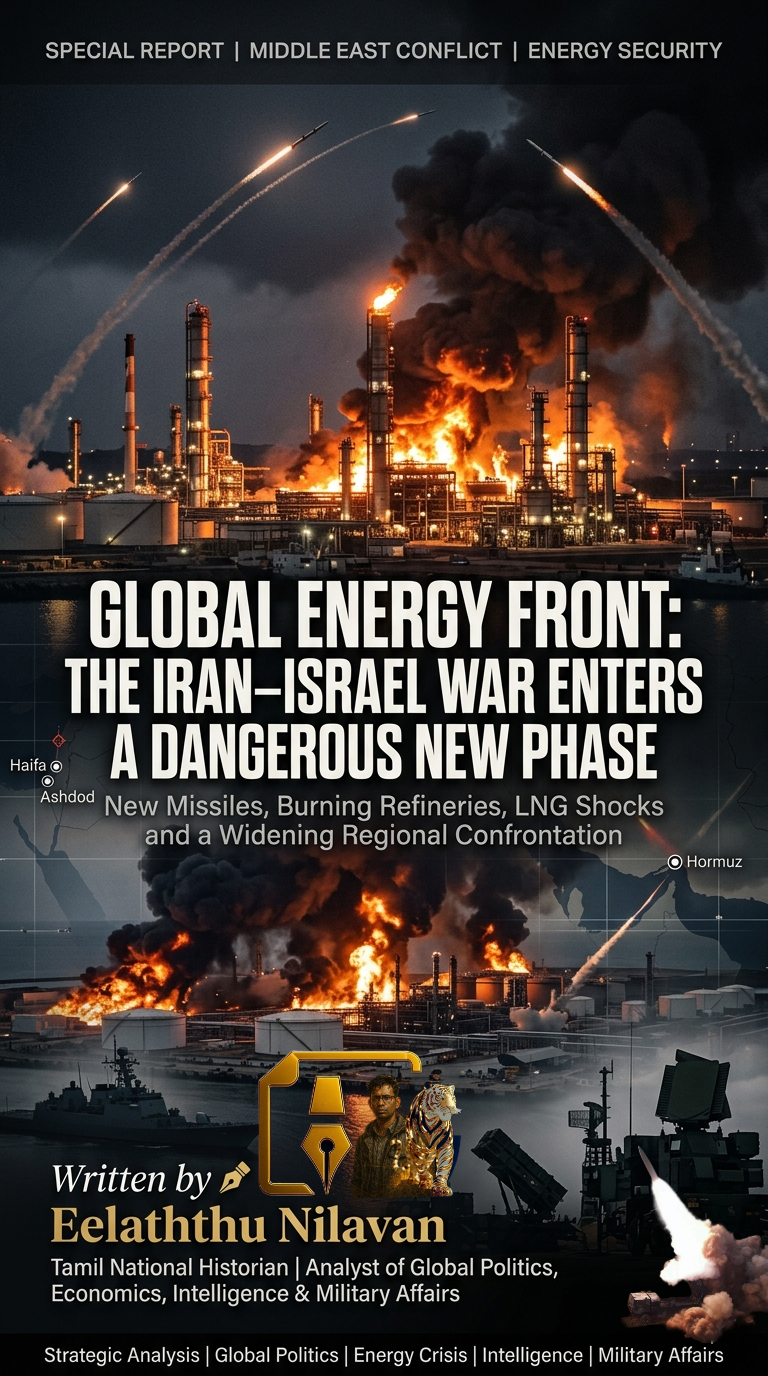

𝑵𝒆𝒘 𝑴𝒊𝒔𝒔𝒊𝒍𝒆𝒔, 𝑩𝒖𝒓𝒏𝒊𝒏𝒈 𝑹𝒆𝒇𝒊𝒏𝒆𝒓𝒊𝒆𝒔, 𝑳𝑵𝑮 𝑺𝒉𝒐𝒄𝒌𝒔 𝒂𝒏𝒅 𝒂 𝑾𝒊𝒅𝒆𝒏𝒊𝒏𝒈 𝑹𝒆𝒈𝒊𝒐𝒏𝒂𝒍 𝑪𝒐𝒏𝒇𝒓𝒐𝒏𝒕𝒂𝒕𝒊𝒐𝒏
𝑻𝒉𝒆 𝑾𝒂𝒓 𝑯𝒂𝒔 𝑴𝒐𝒗𝒆𝒅 𝑩𝒆𝒚𝒐𝒏𝒅 𝑴𝒊𝒔𝒔𝒊𝒍𝒆𝒔 𝒂𝒏𝒅 𝑴𝒂𝒑𝒔
The Iran–Israel war has entered a far more dangerous stage: the battlefield is no longer limited to military compounds, border zones, or symbolic retaliatory strikes. It is now centered on strategic energy infrastructure, the lifeblood of modern economies and one of the most sensitive pressure points in the global system.
On March 19, 2026, Iranian strikes were linked to damage at Israel’s oil refining infrastructure in Haifa, with the IRGC also claiming it targeted Ashdod. Israeli authorities said the Haifa incident caused localized damage, a brief power disruption, and contained fires, while the extent of any damage in Ashdod remained unclear.
That shift matters. Once refineries, LNG trains, export terminals, and power transmission links become regular targets, the war stops being a regional security crisis and becomes a global economic shock generator.
𝑻𝒉𝒆 ‘𝑵𝒂𝒔𝒓𝒂𝒍𝒍𝒂𝒉’ 𝑴𝒊𝒔𝒔𝒊𝒍𝒆: 𝑨 𝑺𝒚𝒎𝒃𝒐𝒍 𝒐𝒇 𝑬𝒔𝒄𝒂𝒍𝒂𝒕𝒊𝒐𝒏
Based on the material you provided, Tehran is presenting the reported “Nasrallah” missile system as a new-generation precision strike capability intended to overwhelm layered missile defenses and deliver concentrated damage against hardened, high-value targets.
I could not verify the full technical description of a missile formally designated “Nasrallah” from strong primary reporting in the sources I checked, so that specific label should be treated cautiously for now. What is verified is the broader operational shift: Iran is openly claiming attacks on Israeli energy-related infrastructure and framing them as part of an expanded retaliatory campaign.
Whether this system is a truly new missile, a renamed variant, or an upgraded platform, the strategic message is clear: Iran wants to demonstrate that it can threaten the economic core of its adversaries, not just their military perimeter.
𝑯𝒂𝒊𝒇𝒂 𝒂𝒏𝒅 𝑨𝒔𝒉𝒅𝒐𝒅: 𝑻𝒉𝒆 𝑾𝒂𝒓 𝑻𝒂𝒓𝒈𝒆𝒕𝒔 𝑰𝒔𝒓𝒂𝒆𝒍’𝒔 𝑬𝒏𝒆𝒓𝒈𝒚 𝑵𝒆𝒓𝒗𝒆 𝑪𝒆𝒏𝒕𝒓𝒆𝒔
The strike on Haifa is important not only because of the damage itself, but because of what Haifa represents. It is one of Israel’s central industrial and refining hubs. Even when physical destruction is limited, repeated attacks force shutdowns, emergency inspections, insurance repricing, supply interruptions, and investor anxiety.
Reuters reported that missile debris or shrapnel damaged the Haifa refinery area, triggered two fires, and briefly disrupted power in northern Israel. Officials said the immediate damage was limited, and no casualties were reported, but the symbolism is huge: Iran has crossed further into energy warfare.
That is the real headline here. The purpose of such attacks is not always to destroy an entire refinery in one blow. Sometimes the point is to prove vulnerability, shake confidence, and impose a constant economic penalty.
𝑸𝒂𝒕𝒂𝒓’𝒔 𝑹𝒂𝒔 𝑳𝒂𝒇𝒇𝒂𝒏 𝑺𝒉𝒐𝒄𝒌: 𝑻𝒉𝒆 𝑮𝒂𝒔 𝑴𝒂𝒓𝒌𝒆𝒕 𝑮𝒆𝒕𝒔 𝑯𝒊𝒕
The biggest confirmed energy shock in the current escalation is not in Israel but in Qatar.
Reuters reported that Iranian attacks damaged two of Qatar’s 14 LNG trains and one gas-to-liquids facility at Ras Laffan, knocking out about 17% of Qatar’s LNG export capacity. QatarEnergy chief Saad al-Kaabi said the disruption could last three to five years and cost about $20 billion a year in lost revenue. The company is preparing a force majeure on some long-term supply contracts affecting buyers in Italy, Belgium, South Korea, and China.
Other reporting says the damage also hits condensate, LPG, and helium output, widening the effect beyond LNG alone.
That is massive. Qatar is not just another exporter; it is one of the pillars of global LNG trade. When Ras Laffan takes a serious hit, the consequences travel fast:
• Europe faces renewed supply stress.
• Asian importers face tighter competition for cargoes.
• Global gas prices become more volatile.
• Inflation risks return through fuel, shipping, and industrial input costs.
This is how a Middle East war starts showing up in household bills and factory planning half a world away.
𝑬𝒏𝒆𝒓𝒈𝒚 𝑾𝒂𝒓𝒇𝒂𝒓𝒆 𝑰𝒔 𝑵𝒐𝒘 𝒕𝒉𝒆 𝑪𝒆𝒏𝒕𝒓𝒂𝒍 𝑭𝒓𝒐𝒏𝒕
A core feature of this phase is the move from classic retaliation to economic coercion by infrastructure strike.
The recent cycle appears to have intensified after attacks on Iran’s South Pars gas infrastructure, followed by Iranian retaliation against Gulf energy sites, especially Ras Laffan. Analysts quoted in major coverage describe this as a major escalation precisely because upstream and export infrastructure is harder to repair, harder to replace, and more consequential for the world economy than isolated storage depots or temporary military installations.
In plain terms:
The war is no longer just about deterrence; it is about endurance, economic pain, and strategic leverage.
𝑻𝒉𝒆 𝑭-35 𝑰𝒏𝒄𝒊𝒅𝒆𝒏𝒕: 𝑨 𝑺𝒉𝒂𝒅𝒐𝒘 𝒐𝒗𝒆𝒓 𝑨𝒎𝒆𝒓𝒊𝒄𝒂𝒏 𝑨𝒊𝒓 𝑺𝒖𝒑𝒆𝒓𝒊𝒐𝒓𝒊𝒕𝒚
Another deeply significant development is the emergency landing of a U.S. F-35 after a combat mission over Iran.
Business Insider, citing U.S. Central Command, reported that the aircraft landed safely and the pilot was stable, while the cause remained under investigation. Reports suggest the aircraft may have been hit by Iranian fire, though that has not been conclusively established in official public detail.
That distinction matters. Iran’s claim that it struck the aircraft is still not independently confirmed in full. But even the possibility is strategically potent. The F-35 is one of the most advanced and expensive combat aircraft in the U.S. arsenal. If Iranian air defenses managed to damage one during operations, the psychological and doctrinal consequences would be serious.
Even without a confirmed shoot-down, the message is uncomfortable for Washington: air dominance is not the same thing as invulnerability.
𝑺𝒕𝒓𝒂𝒊𝒕 𝒐𝒇 𝑯𝒐𝒓𝒎𝒖𝒛: 𝑻𝒉𝒆 𝑾𝒐𝒓𝒍𝒅’𝒔 𝑴𝒐𝒔𝒕 𝑫𝒂𝒏𝒈𝒆𝒓𝒐𝒖𝒔 𝑪𝒉𝒐𝒌𝒆𝒑𝒐𝒊𝒏𝒕
The wider crisis around the Strait of Hormuz remains one of the most dangerous dimensions of the war. Nearly a fifth of global oil flows through that corridor, and any perception that it is becoming unusable or militarily contested immediately rattles markets.
Recent coverage points to intense diplomatic concern from the U.S., European states, and Asian importers over maritime security and safe passage, with France and others pushing de-escalation while resisting being pulled into an open-ended offensive campaign.
That caution reflects a brutal reality: a forced reopening of Hormuz or direct multinational naval confrontation with Iran could widen the war dramatically.
𝑴𝒂𝒓𝒌𝒆𝒕𝒔 𝑨𝒓𝒆 𝑨𝒍𝒓𝒆𝒂𝒅𝒚 𝑷𝒓𝒊𝒄𝒊𝒏𝒈 𝒊𝒏 𝑻𝒉𝒆 𝑹𝒊𝒔𝒌
The economic effect is no longer theoretical. Oil and gas prices have already surged as the market digests the scale of damage and the possibility of repeat attacks. Reporting on March 19 showed Brent crude jumping sharply, with LNG and European gas prices also rising hard as traders responded to the Ras Laffan damage and the broader threat to Gulf supply routes.
Markets are reacting to three overlapping fears:
• Physical supply loss from damaged infrastructure.
• Shipping risk through Hormuz and the wider Gulf.
• Political uncertainty over whether Washington, Tehran, and Tel Aviv still have any real off-ramp.
That trio is toxic for energy stability.
𝑾𝒂𝒔𝒉𝒊𝒏𝒈𝒕𝒐𝒏’𝒔 𝑫𝒊𝒍𝒆𝒎𝒎𝒂: 𝑺𝒖𝒑𝒑𝒐𝒓𝒕, 𝑫𝒆𝒕𝒆𝒓𝒓𝒆𝒏𝒄𝒆, 𝒐𝒓 𝑬𝒙𝒊𝒕?
The United States now faces a problem that is military, economic, and political all at once.
If it escalates further, it risks deeper regional entanglement, higher oil prices, more attacks on partner infrastructure, and greater strain on U.S. assets. If it restrains Israel too visibly, it risks appearing divided. If it does too little, it invites further Iranian pressure on energy nodes and maritime routes.
Reporting suggests President Donald Trump has publicly sought to limit the spiral in some areas even while warning Iran against continued attacks on Gulf energy infrastructure. At the same time, the broader conflict is already imposing real military and financial costs on the United States.
So yes, talk of an American “exit strategy” is no longer fringe analysis. It is becoming part of the mainstream policy question.
𝑨 𝑺𝒕𝒓𝒂𝒕𝒆𝒈𝒊𝒄 𝑶𝒑𝒆𝒏𝒊𝒏𝒈 𝒇𝒐𝒓 𝑪𝒉𝒊𝒏𝒂 𝒂𝒏𝒅 𝑹𝒖𝒔𝒔𝒊𝒂
Every prolonged U.S. military crisis in the Middle East creates second-order gains for rival powers.
China benefits when American attention, missiles, naval capacity, and strategic planning are pulled away from the Indo-Pacific. Russia benefits from higher hydrocarbon prices, NATO distraction, and a global narrative of Western overstretch. Even when Beijing and Moscow are not firing missiles, they can still gain from the geometry of the war.
That does not mean either power controls events. It means both have reason to view this conflict as an opportunity to study U.S. vulnerabilities, weaken Western focus, and expand room for maneuver elsewhere.
𝑬𝒖𝒓𝒐𝒑𝒆 𝒂𝒏𝒅 𝑨𝒔𝒊𝒂 𝑾𝒊𝒍𝒍 𝑭𝒆𝒆𝒍 𝒕𝒉𝒆 𝑷𝒂𝒊𝒏
The countries most exposed are not only those under direct attack. LNG disruptions from Qatar matter intensely to European importers and to major Asian buyers who depend on long-term contract reliability.
If force majeure spreads and replacement cargoes become scarce, governments will face tough choices: pay more, burn dirtier fuels, dip further into reserves, or ration industrial demand. That is why this conflict is not just a Middle Eastern crisis. It is an energy-security crisis for Europe and Asia.
𝑻𝒉𝒆 𝑩𝒊𝒈𝒈𝒆𝒓 𝑴𝒆𝒂𝒏𝒊𝒏𝒈 𝒐𝒇 𝑻𝒉𝒊𝒔 𝑴𝒐𝒎𝒆𝒏𝒕
The events of March 19, 2026, suggest that the war has crossed from coercive signaling into something more systemic and dangerous. The reported debut of new Iranian missile capabilities, the targeting of Israeli refining infrastructure, the crippling hit to Qatar’s LNG system, and the possible damage to a U.S. F-35 together point to one conclusion:
The conflict is becoming a contest over resilience, infrastructure, and economic survival, not just battlefield attrition.
And that is the kind of war that is much harder to contain.
𝑪𝒐𝒏𝒄𝒍𝒖𝒔𝒊𝒐𝒏: 𝑨 𝑹𝒆𝒈𝒊𝒐𝒏𝒂𝒍 𝑾𝒂𝒓 𝒘𝒊𝒕𝒉 𝑮𝒍𝒐𝒃𝒂𝒍 𝑪𝒐𝒔𝒕𝒔
Iran’s latest moves show a deliberate attempt to change the terms of confrontation. By threatening refineries, LNG hubs and strategic transport arteries, Tehran is signaling that any campaign against it will carry consequences far beyond the battlefield. Israel, the United States and their partners now face a harsh equation: every strike may invite a counterstrike against the economic foundations of the region.
That is why this moment matters so much. The issue is no longer merely who can hit harder. The issue is who can absorb the shock, who can keep markets functioning, who can protect energy flows, and who can prevent a regional war from becoming a prolonged global economic crisis.
Right now, that answer looks dangerously uncertain.

Written by Eelaththu Nilavan
Tamil National Historian | Analyst of Global Politics, Economics, Intelligence & Military Affairs
20/03/2026