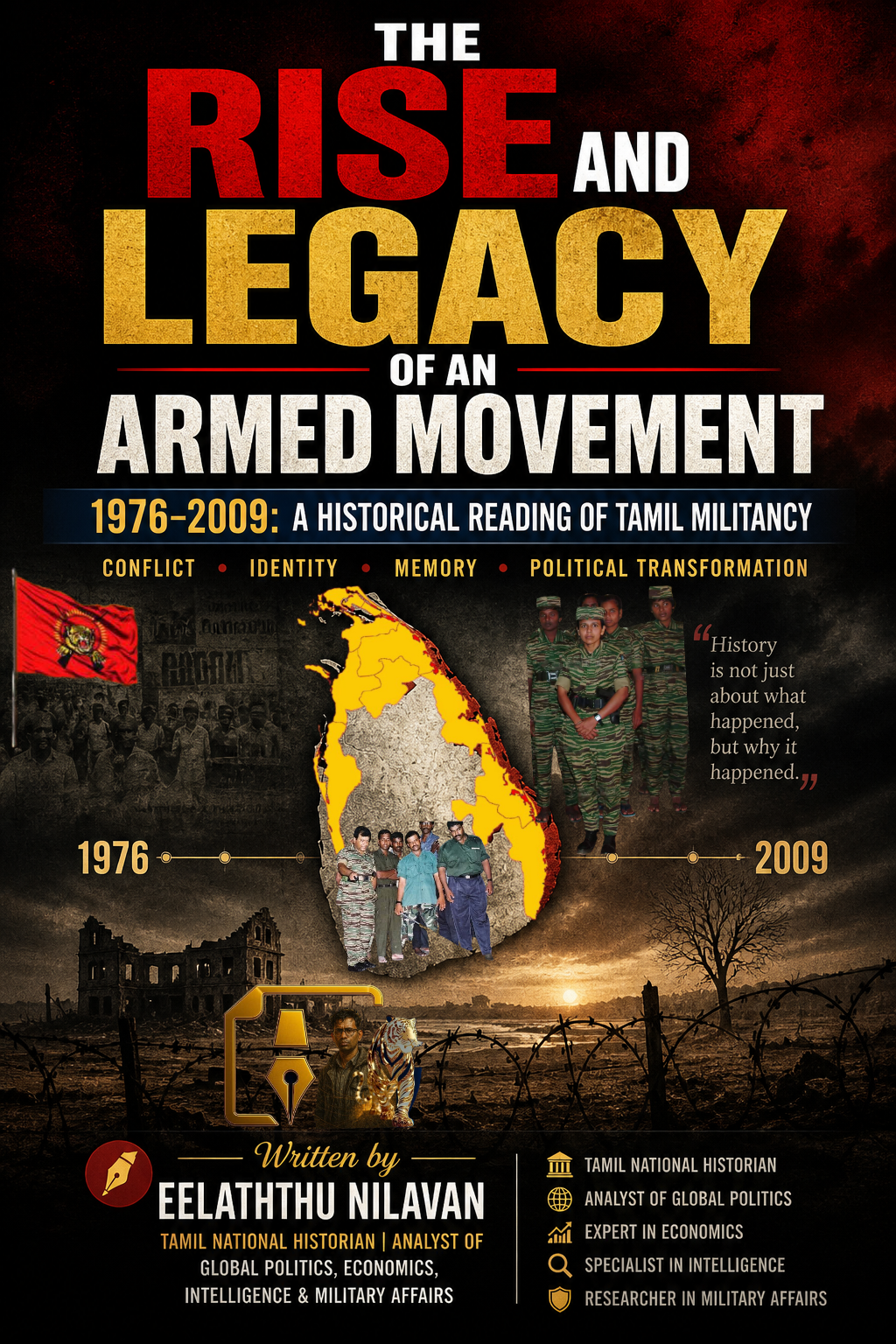
𝗢𝗥𝗜𝗚𝗜𝗡𝗦 𝗢𝗙 𝗖𝗢𝗡𝗙𝗟𝗜𝗖𝗧: 𝗥𝗢𝗢𝗧𝗦 𝗢𝗙 𝗗𝗜𝗦𝗖𝗢𝗡𝗧𝗘𝗡𝗧
The emergence of armed Tamil militancy in Sri Lanka was shaped by decades of political imbalance, ethnic tension, and failed negotiations. Post-independence policies created structural inequalities that affected education, language rights, and political representation.
Over time, frustration deepened among sections of Tamil youth, who began to view constitutional methods as ineffective. This environment gradually transformed political dissatisfaction into a more radical and militant outlook.
𝗙𝗢𝗥𝗠𝗔𝗧𝗜𝗢𝗡 𝗜𝗡 1976: 𝗔 𝗗𝗘𝗖𝗜𝗦𝗜𝗩𝗘 𝗧𝗨𝗥𝗡𝗜𝗡𝗚 𝗣𝗢𝗜𝗡𝗧
The formal establishment of the Liberation Tigers of Tamil Eelam in 1976 marked a significant shift toward organized armed resistance.
In its early phase, the movement operated with limited resources but strong ideological commitment. What began as a small, determined effort gradually evolved into a structured organization with defined leadership and strategy.
𝗘𝗫𝗣𝗔𝗡𝗦𝗜𝗢𝗡 & 𝗠𝗜𝗟𝗜𝗧𝗔𝗥𝗜𝗭𝗔𝗧𝗜𝗢𝗡: 𝗙𝗥𝗢𝗠 𝗚𝗨𝗘𝗥𝗥𝗜𝗟𝗟𝗔 𝗧𝗢 𝗖𝗢𝗡𝗩𝗘𝗡𝗧𝗜𝗢𝗡𝗔𝗟 𝗙𝗢𝗥𝗖𝗘
Over the years, the movement developed into a sophisticated military structure. It expanded its operations across land and sea, and even introduced limited air capabilities.
This transformation drew global attention, as few non-state actors had achieved such a level of organization. At its peak, the group controlled significant territory, establishing administrative systems in those regions.
However, this period was also marked by intense conflict, humanitarian challenges, and internal power consolidation.
𝗜𝗡𝗧𝗘𝗥𝗡𝗔𝗧𝗜𝗢𝗡𝗔𝗟 𝗗𝗜𝗠𝗘𝗡𝗦𝗜𝗢𝗡: 𝗖𝗢𝗡𝗧𝗥𝗢𝗩𝗘𝗥𝗦𝗬 𝗔𝗡𝗗 𝗣𝗘𝗥𝗖𝗘𝗣𝗧𝗜𝗢𝗡𝗦
As the conflict escalated, it attracted global attention. Different countries and institutions viewed the movement through contrasting lenses—ranging from a resistance force to a designated terrorist organization.
The role of diaspora networks, international diplomacy, and geopolitical interests further complicated the narrative. This dual perception remains central to ongoing debates about the movement’s legacy.
𝗧𝗛𝗘 𝗙𝗜𝗡𝗔𝗟 𝗣𝗛𝗔𝗦𝗘 (2006–2009): 𝗔 𝗗𝗘𝗖𝗜𝗦𝗜𝗩𝗘 𝗘𝗡𝗗
The final years of the conflict witnessed an intense military campaign that ultimately led to the defeat of the armed movement in 2009.
This phase remains deeply contested due to humanitarian concerns, civilian casualties, and unresolved political grievances. The conclusion of the war did not fully address the underlying issues that had driven the conflict.
𝗠𝗘𝗠𝗢𝗥𝗬, 𝗜𝗗𝗘𝗡𝗧𝗜𝗧𝗬 & 𝗢𝗡𝗚𝗢𝗜𝗡𝗚 𝗗𝗘𝗕𝗔𝗧𝗘
The legacy of the conflict continues to influence political thought, identity, and historical memory. For some, it represents resistance under extreme conditions; for others, it serves as a reminder of the devastating cost of prolonged violence.
These differing interpretations ensure that the subject remains active in academic, political, and social discussions.
𝗖𝗢𝗡𝗖𝗟𝗨𝗦𝗜𝗢𝗡: 𝗕𝗘𝗧𝗪𝗘𝗘𝗡 𝗛𝗜𝗦𝗧𝗢𝗥𝗬 𝗔𝗡𝗗 𝗜𝗡𝗧𝗘𝗥𝗣𝗥𝗘𝗧𝗔𝗧𝗜𝗢𝗡
The history of Tamil militancy is layered, complex, and deeply contested. It reflects a convergence of political failure, identity struggles, armed escalation, and global influence.
Understanding it requires careful, balanced analysis—one that acknowledges both the historical grievances and the human consequences of conflict.

𝐖𝐫𝐢𝐭𝐭𝐞𝐧 𝐛𝐲: 𝐄𝐞𝐥𝐚𝐭𝐡𝐭𝐡𝐮 𝐍𝐢𝐥𝐚𝐯𝐚𝐧
Tamil National Historian | Analyst of Global Politics, Economics, Intelligence & Military Affairs
05/05/2026