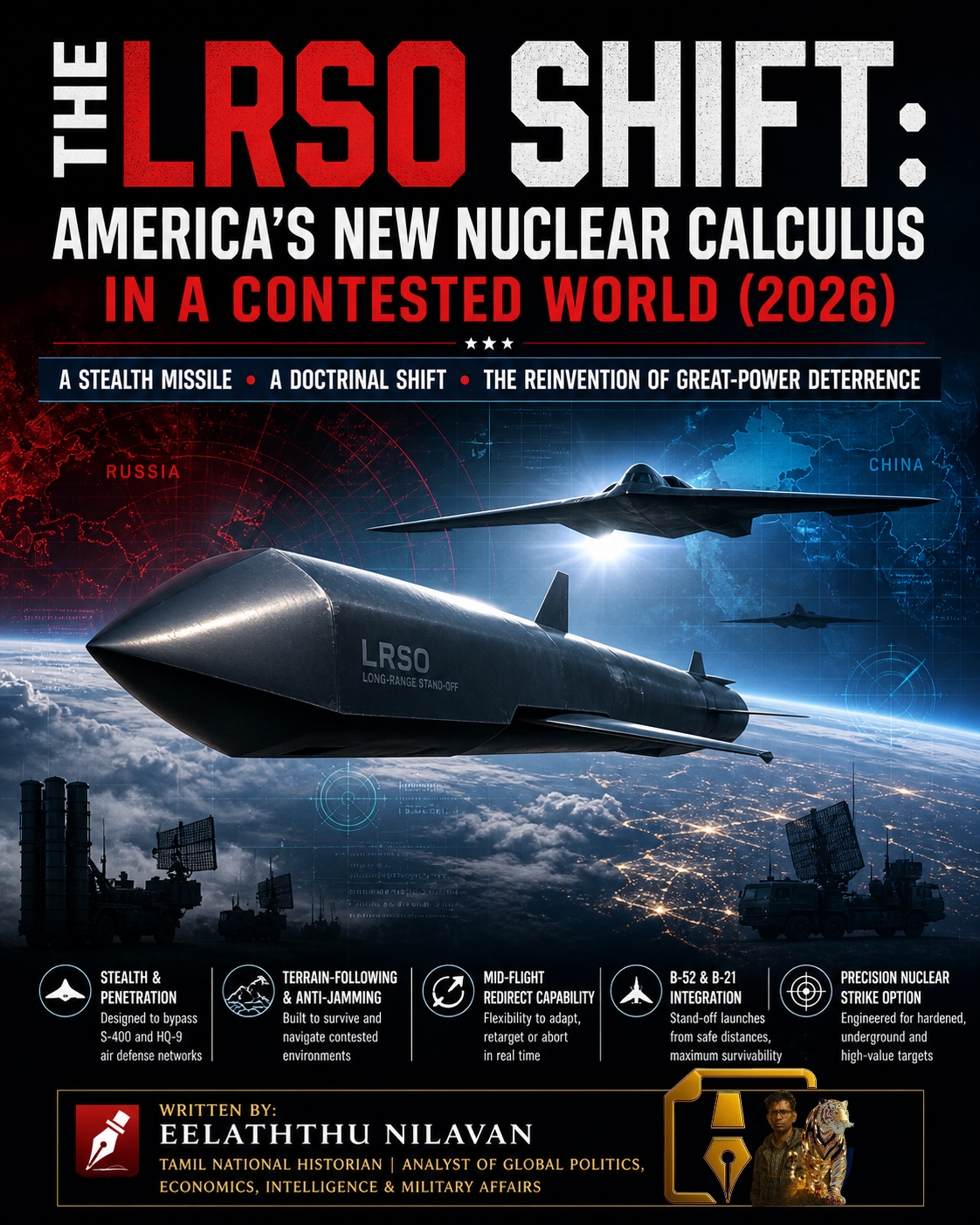

𝐀 𝐒𝐭𝐞𝐚𝐥𝐭𝐡 𝐌𝐢𝐬𝐬𝐢𝐥𝐞 • 𝐀 𝐂𝐡𝐚𝐧𝐠𝐢𝐧𝐠 𝐃𝐨𝐜𝐭𝐫𝐢𝐧𝐞 • 𝐓𝐡𝐞 𝐑𝐞𝐭𝐮𝐫𝐧 𝐨𝐟 𝐆𝐫𝐞𝐚𝐭-𝐏𝐨𝐰𝐞𝐫 𝐃𝐞𝐭𝐞𝐫𝐫𝐞𝐧𝐜𝐞
𝐀 𝐍𝐞𝐰 𝐄𝐫𝐚 𝐨𝐟 𝐍𝐮𝐜𝐥𝐞𝐚𝐫 𝐌𝐨𝐝𝐞𝐫𝐧𝐢𝐳𝐚𝐭𝐢𝐨𝐧
The acceleration of the Long-Range Stand-Off (LRSO) missile program by the Pentagon marks a decisive turning point in the evolution of American nuclear strategy. No longer anchored in Cold War assumptions of predictable escalation and static defense systems, Washington is rapidly adapting to a far more complex and contested global security environment. The LRSO is not merely a replacement for the aging AGM-86B cruise missile; it represents a fundamental rethinking of how nuclear deterrence must function in the 21st century.
At its core, the program reflects a recognition that future conflicts—especially those involving near-peer adversaries—will unfold in heavily defended, electronically contested battlespaces. Traditional delivery systems, once considered reliable, are increasingly vulnerable to sophisticated air defense networks and electronic warfare capabilities developed by rival powers.
𝐓𝐡𝐞 𝐓𝐞𝐜𝐡𝐧𝐨𝐥𝐨𝐠𝐢𝐜𝐚𝐥 𝐄𝐝𝐠𝐞: 𝐒𝐭𝐞𝐚𝐥𝐭𝐡, 𝐑𝐚𝐧𝐠𝐞, 𝐚𝐧𝐝 𝐏𝐫𝐞𝐜𝐢𝐬𝐢𝐨𝐧
The LRSO missile embodies a new generation of advanced military technology designed to overcome precisely these challenges. Its stealth architecture significantly reduces radar visibility, allowing it to slip through even the most sophisticated integrated air defense systems such as Russia’s S-400 and China’s HQ-9. Coupled with terrain-following capabilities, the missile can navigate low-altitude flight paths that exploit geographical features to evade detection.
Equally important is its resistance to electronic warfare. Modern battlefields are saturated with jamming systems designed to disrupt guidance and communication. The LRSO is engineered with anti-jamming technologies and resilient navigation systems, ensuring that it can maintain course even in highly degraded signal environments.
Unlike ballistic missiles, which follow fixed trajectories once launched, the LRSO introduces a crucial element of flexibility. Its ability to be redirected or aborted mid-flight provides decision-makers with unprecedented control during high-stakes scenarios, reducing the risk of unintended escalation while preserving credible strike options.
𝐀𝐢𝐫𝐜𝐫𝐚𝐟𝐭 𝐈𝐧𝐭𝐞𝐠𝐫𝐚𝐭𝐢𝐨𝐧: 𝐓𝐡𝐞 𝐑𝐨𝐥𝐞 𝐨𝐟 𝐁-𝟓𝟐 𝐚𝐧𝐝 𝐁-𝟐𝟏
A defining strength of the LRSO lies in its integration with the United States’ strategic bomber fleet, particularly the B-52 Stratofortress and the next-generation B-21 Raider. These aircraft serve as the airborne leg of the nuclear triad, offering visible and recallable deterrence options.
With the LRSO, these bombers can operate from well outside the engagement range of advanced enemy defenses, launching precision strikes without penetrating heavily defended airspace. This “stand-off” capability significantly enhances survivability, ensuring that U.S. bombers remain effective even against adversaries equipped with cutting-edge air defense systems.
The pairing of legacy platforms like the B-52 with advanced weapons such as the LRSO also highlights a cost-effective modernization approach—extending the relevance of existing assets while integrating next-generation capabilities.
𝐓𝐡𝐞 𝐒𝐡𝐢𝐟𝐭 𝐢𝐧 𝐍𝐮𝐜𝐥𝐞𝐚𝐫 𝐃𝐨𝐜𝐭𝐫𝐢𝐧𝐞
Behind the technical advancements lies a deeper doctrinal transformation. The United States is increasingly emphasizing the concept of operating in “contested environments”—scenarios where adversaries actively attempt to deny access through layered defenses, cyber operations, and electronic warfare.
This shift reflects growing concerns about the survivability of nuclear forces in a conflict with technologically advanced states. The LRSO is designed to ensure that the U.S. retains credible second-strike and limited-strike options, even under conditions where traditional systems might be neutralized.
Furthermore, the missile’s flexibility supports a more nuanced approach to deterrence. By offering a range of response options—from signaling to precision targeting—it enables policymakers to tailor their actions to specific crises, potentially avoiding the all-or-nothing dynamics of earlier nuclear strategies.
𝐆𝐥𝐨𝐛𝐚𝐥 𝐒𝐞𝐜𝐮𝐫𝐢𝐭𝐲 𝐈𝐦𝐩𝐥𝐢𝐜𝐚𝐭𝐢𝐨𝐧𝐬
The rapid advancement of the LRSO program is likely to have significant implications for global security. For Russia and China, the deployment of such a system may be perceived as a direct challenge to their defensive capabilities, potentially prompting further investments in countermeasures and next-generation air defense technologies.
This dynamic risks fueling a new phase of strategic competition, characterized not only by the expansion of offensive capabilities but also by an ongoing cycle of defense and counter-defense innovation. As each side seeks to outmaneuver the other, the margin for miscalculation may narrow, increasing the complexity of crisis management.
At the same time, U.S. officials argue that maintaining a credible and modern nuclear deterrent is essential for stability. In their view, the LRSO strengthens deterrence by ensuring that no adversary can confidently neutralize American strike capabilities.
𝐂𝐨𝐧𝐜𝐥𝐮𝐬𝐢𝐨𝐧: 𝐃𝐞𝐭𝐞𝐫𝐫𝐞𝐧𝐜𝐞 𝐢𝐧 𝐚 𝐍𝐞𝐰 𝐀𝐠𝐞
The LRSO missile program encapsulates the broader transformation of global military strategy in an era defined by technological competition and geopolitical uncertainty. It is not simply a weapon but a symbol of how deterrence itself is evolving—becoming more flexible, more survivable, and more adaptable to complex conflict environments.
As great-power rivalries intensify, systems like the LRSO will play a central role in shaping the balance between deterrence and escalation. Whether they ultimately enhance stability or contribute to a more volatile security landscape will depend not only on their capabilities but also on how they are integrated into broader strategic frameworks.
𝐖𝐫𝐢𝐭𝐭𝐞𝐧 𝐛𝐲:


𝐄𝐞𝐥𝐚𝐭𝐡𝐭𝐡𝐮 𝐍𝐢𝐥𝐚𝐯𝐚𝐧
Tamil National Historian | Analyst of Global Politics, Economics, Intelligence & Military Affairs
05/05/2026
The views expressed in this article are the author’s own and do not necessarily reflect Amizhthu’s editorial stance.