
TEHRAN, March 7, 2026
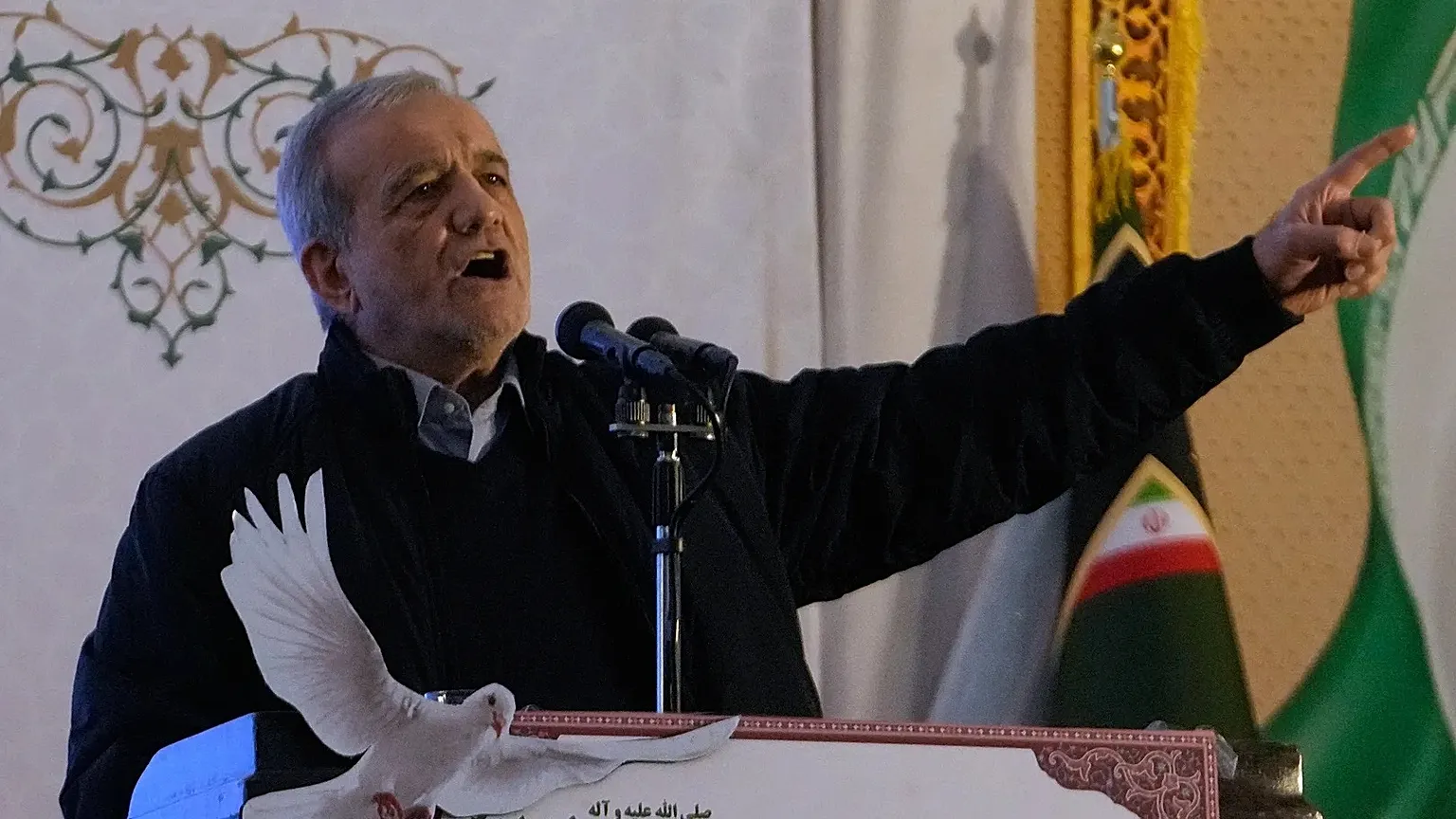
In a striking and unprecedented televised address, Iran’s President Masoud Pezeshkian publicly apologised to Gulf nations after Iranian missiles and drones struck multiple countries across the region during a rapidly escalating conflict. The apology, broadcast on state television, marked the first direct acknowledgment from Tehran’s political leadership that its armed forces had targeted neighbouring states amid a breakdown in military command following the killing of Supreme Leader Ayatollah Ali Khamenei.
A Public Apology Amid Chaos
Speaking in a pre‑recorded message, Pezeshkian expressed regret for the attacks, stating: “I should apologise to the neighbouring countries that were attacked by Iran, on my own behalf.” He added that Iran’s armed forces had acted “at will” after senior commanders were killed in earlier US‑Israeli strikes, contributing to what he described as miscommunication and loss of control within the military hierarchy.
The president stressed that Iran would no longer fire missiles at neighbouring countries unless Iran itself came under attack, signalling an attempt to de‑escalate tensions that have rattled regional governments and global energy markets.
Strikes Continue Despite Presidential Pledge
Despite Pezeshkian’s conciliatory tone, Iranian missiles and drones continued to target Gulf states within hours of his address. Bahrain, Saudi Arabia, the United Arab Emirates, and Qatar all reported incoming projectiles early Saturday. Qatar confirmed it intercepted an Iranian ballistic missile, while Saudi Arabia said it stopped multiple drones aimed at the Shaybah oil field. Dubai International Airport was struck several times, forcing the temporary suspension of departures.
The Iranian Revolutionary Guard Corps (IRGC), which traditionally answers directly to the supreme leader rather than the presidency, issued its own statement contradicting Pezeshkian’s assurances. The IRGC declared that all US and Israeli assets in the region would remain “primary targets” if attacks on Iran continued, underscoring the widening disconnect between Iran’s political leadership and its powerful paramilitary forces.
Regional and International Fallout
The attacks come amid a week of intense cross‑border strikes following the death of Ayatollah Khamenei in a US‑Israeli operation on February 28. The resulting power vacuum has left Iran under the temporary authority of a three‑member leadership council, with Pezeshkian serving alongside judiciary chief Gholamhossein Mohseni Ejei and senior cleric Alireza Arafi.
Meanwhile, the United States has rejected any negotiations short of Iran’s “unconditional surrender,” with President Donald Trump approving a new $151 million arms sale to Israel as the conflict intensifies. US officials have warned that the “biggest bombing campaign” of the war is still ahead.
Israel has continued its own wave of strikes, targeting Iranian military infrastructure and nuclear‑linked facilities in Tehran and Isfahan. Explosions were seen across western Tehran as air raid sirens sounded throughout the capital.
A Region on Edge
The Gulf states—many of which host major US military bases—have been on high alert as the conflict widens. Bahrain issued public safety warnings urging residents to seek shelter, while Qatar and the UAE activated emergency defence systems. The continuing strikes have heightened fears of a broader regional war, with diplomatic channels struggling to keep pace with the rapidly evolving situation.
Pezeshkian’s apology, though significant, has done little to stem concerns that Iran’s political leadership may not have full control over its armed forces. As missiles continue to fly and international pressure mounts, the Gulf region remains braced for further instability.
