
Islamabad — March 7, 2026
Escalating Middle East Conflict Sends Shockwaves Through Pakistan
The intensifying war involving Iran, the United States, and Israel has begun to severely impact Pakistan’s energy security. With the Strait of Hormuz effectively blocked, nearly 20% of global crude oil supply is at risk, directly affecting Pakistan, which relies heavily on oil imports routed through this strategic waterway.
As global oil prices surged overnight, Pakistan’s government announced a record-breaking fuel price hike of 55 PKR per litre, the largest in the nation’s history. Petrol now stands at 321.17 PKR per litre, and high-speed diesel at 335.86 PKR per litre, triggering widespread public alarm.
Long Queues, Station Closures, and Public Anxiety
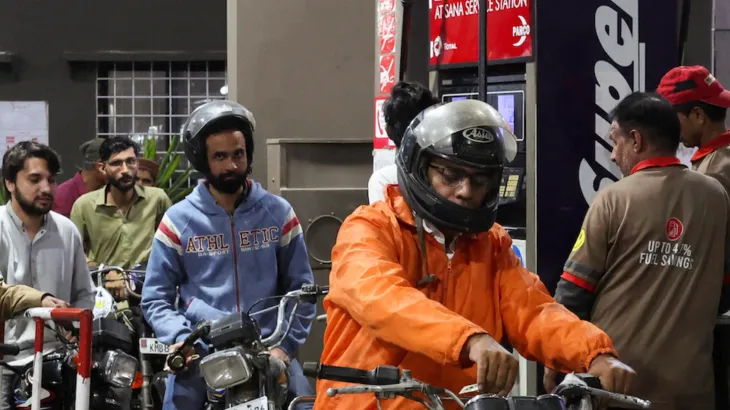
Across major cities—including Karachi, Lahore, Islamabad, Peshawar, and Quetta—fuel stations witnessed:
- Massive queues stretching for kilometres
- Stations shutting down early due to depleted supplies
- Rationing of petrol and diesel by station owners
- Traffic gridlocks near the few operational pumps
In Karachi, many pumps closed despite government assurances of “adequate national reserves,” as dealers reported up to 50% cuts in supply from oil marketing companies.
Al Jazeera also reported nationwide queues forming hours before the government’s price announcement, as citizens rushed to fill tanks before the midnight increase.
Tensions Rise as Shortages Spread
The crisis has escalated beyond inconvenience:
- In Sialkot, gunfire reportedly broke out after a station ran out of fuel, reflecting rising public frustration.
- In several regions, including Balochistan, Khyber Pakhtunkhwa, Punjab, and Sindh, pumps have run completely dry.
- Economic analysts warn of an “inflationary tsunami”, with transport, food, and manufacturing sectors expected to face immediate cost surges.
Why Pakistan Is Especially Vulnerable
Pakistan’s energy system is deeply exposed to Middle Eastern instability:
- Nearly all crude imports come from Saudi Arabia and the UAE.
- Most shipments pass through the now-blocked Strait of Hormuz.
- Rising insurance premiums and shipping risks have further strained supply chains.
- The government’s emergency meetings with top economic officials signal the severity of the crisis.
Government Response and Public Reassurances
Officials continue to urge calm, insisting that national reserves remain “sufficient.” However, petroleum dealers argue that on-ground supply cuts contradict official claims, and demand immediate restoration of full allocations to prevent further chaos.
Authorities expect the situation to “stabilise” once the new prices take effect, though experts caution that ongoing regional conflict may prolong volatility.
A Nation on Edge
The fuel panic reflects broader fears as Pakistan braces for the economic fallout of a widening Middle East war. With supply chains disrupted, prices soaring, and public anxiety rising, the country faces a critical test of resilience in the days ahead.
As the conflict continues to reshape global energy flows, Pakistan’s fuel crisis stands as a stark reminder of how geopolitical tensions can ripple across borders—reaching ordinary citizens at the petrol pump.
