
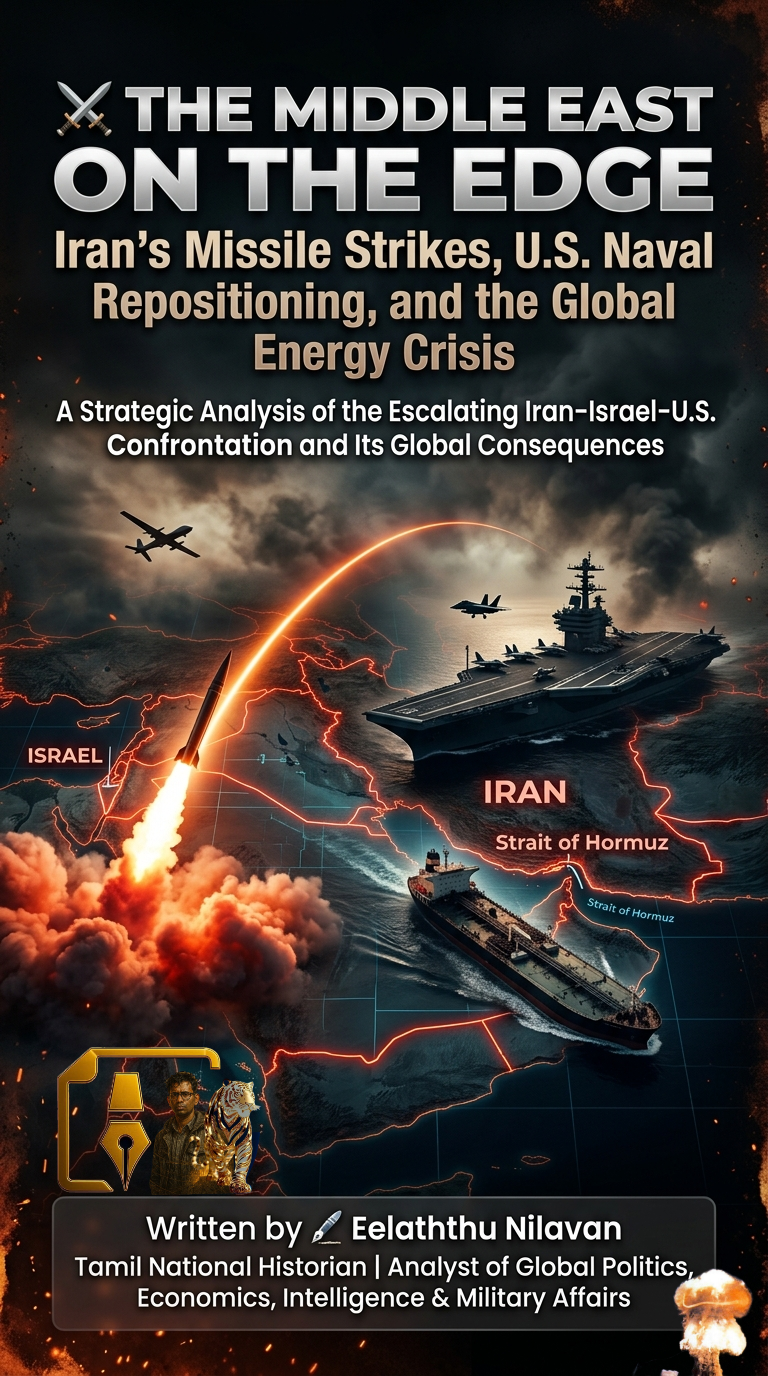
𝗜𝗿𝗮𝗻’𝘀 𝗠𝗶𝘀𝘀𝗶𝗹𝗲 𝗦𝘁𝗿𝗶𝗸𝗲𝘀 𝗦𝗵𝗮𝗸𝗲 𝗜𝘀𝗿𝗮𝗲𝗹 𝗮𝗻𝗱 𝗨.𝗦. 𝗠𝗶𝗹𝗶𝘁𝗮𝗿𝘆 𝗣𝗿𝗲𝘀𝗲𝗻𝗰𝗲 𝗶𝗻 𝘁𝗵𝗲 𝗥𝗲𝗴𝗶𝗼𝗻
The Middle East has entered one of its most volatile military phases in recent decades after Iran’s elite military force, the Islamic Revolutionary Guard Corps (IRGC), launched a large-scale missile assault targeting Israeli military infrastructure and U.S. military facilities across the Gulf.
According to Iranian statements, the attacks specifically targeted Israeli aerospace weapons production facilities and aerial fuel support centres, strategic components of Israel’s advanced military capabilities. The strike reportedly involved some of Iran’s most advanced missile systems, including:
• Fattah hypersonic ballistic missiles
• Emad long-range ballistic missiles
• Qadr ballistic missiles
The use of the Fattah hypersonic missile, which Iran claims can travel at speeds exceeding Mach 13 while maneuvering during flight, represents a significant technological escalation. Hypersonic missiles are extremely difficult to intercept because they travel faster and change trajectory mid-flight, challenging existing air-defence systems.
Air-raid sirens sounded across northern Israel and the Jerusalem region as the Israeli military attempted to intercept incoming projectiles. Despite defensive interceptions, debris and missile fragments caused damage in several urban areas near Tel Aviv, including Rishon LeZion and Lod.
Israel’s health authorities reported that more than 3,300 people have been injured since the conflict began, including 142 casualties within the previous 24 hours alone, highlighting the intensity of the confrontation.
𝗔𝘁𝘁𝗮𝗰𝗸𝘀 𝗼𝗻 𝗨.𝗦. 𝗕𝗮𝘀𝗲𝘀 𝗔𝗰𝗿𝗼𝘀𝘀 𝘁𝗵𝗲 𝗚𝘂𝗹𝗳
The confrontation quickly expanded beyond Israel as Iran’s regional allies and affiliated militant groups targeted U.S. military positions across the Middle East.
Iranian forces reportedly launched ballistic missiles such as:
• Fateh
• Dezful
• Zolfaghar
These missiles struck areas near key U.S. installations including:
• Al Dhafra Air Base
• Naval Support Activity Bahrain
• Sheikh Isa Air Base
Meanwhile in Iraq, drone warfare has intensified dramatically. The Kata’ib Hezbollah militia released video footage showing First-Person View (FPV) drones successfully striking structures inside Camp Victory, located near Baghdad International Airport.
The attack resulted in fires and at least five reported injuries, demonstrating a new tactical threat facing U.S. forces in the region.
𝗧𝗵𝗲 𝗥𝗶𝘀𝗲 𝗼𝗳 𝗙𝗣𝗩 “𝗞𝗮𝗺𝗶𝗸𝗮𝘇𝗲” 𝗗𝗿𝗼𝗻𝗲 𝗪𝗮𝗿𝗳𝗮𝗿𝗲
One of the most alarming developments in the conflict is the increasing use of FPV (First-Person View) kamikaze drones.
These drones are:
• extremely cheap (often only a few hundred dollars)
• manually guided by operators
• capable of precision strikes
Unlike traditional drones, FPV systems can fly extremely low and maneuver unpredictably, allowing them to evade many radar-based air defence systems.
Military analysts warn that these weapons could fundamentally change the nature of warfare in the Middle East, allowing non-state groups to threaten advanced military installations at very low cost.
𝗜𝘀𝗿𝗮𝗲𝗹’𝘀 𝗥𝗲𝘁𝗮𝗹𝗶𝗮𝘁𝗶𝗼𝗻: 𝗦𝘁𝗿𝗶𝗸𝗲𝘀 𝗗𝗲𝗲𝗽 𝗜𝗻𝘀𝗶𝗱𝗲 𝗜𝗿𝗮𝗻
Israel responded swiftly with a new wave of air strikes targeting infrastructure deep inside Iran. Israeli aircraft reportedly struck targets in:
• Tehran
• Shiraz
• Tabriz
Additionally, an airstrike targeted the headquarters of Popular Mobilization Forces south of Baghdad, a powerful Iranian-aligned militia coalition in Iraq.
Iraqi Prime Minister Mohammed Shia al‑Sudani condemned the strike, warning that continued escalation could destabilize the region and disrupt global supply chains.
𝗨.𝗦. 𝗔𝗶𝗿𝗰𝗿𝗮𝗳𝘁 𝗖𝗮𝗿𝗿𝗶𝗲𝗿𝘀 𝗠𝗼𝘃𝗲 𝗔𝘄𝗮𝘆 𝗳𝗿𝗼𝗺 𝗜𝗿𝗮𝗻
Satellite imagery has revealed a major shift in U.S. naval deployments as tensions increase.
Two major aircraft carriers have repositioned:
• USS Abraham Lincoln
• USS Gerald R. Ford
The USS Abraham Lincoln moved toward waters near Salalah in Oman, increasing its distance from Iran from approximately 350 km to over 1,100 km.
Meanwhile, the USS Gerald R. Ford repositioned further south in the Red Sea near Jeddah, a move analysts believe places the carrier outside the operational range of Houthi anti-ship missiles.
The repositioning followed a tense naval encounter between Iranian gunboats and a U.S. escort vessel.
Tehran has warned that logistical facilities supporting the Ford carrier group could be considered legitimate military targets.
𝗧𝗵𝗲 𝗦𝘁𝗿𝗮𝗶𝘁 𝗼𝗳 𝗛𝗼𝗿𝗺𝘂𝘇: 𝗔 𝗚𝗹𝗼𝗯𝗮𝗹 𝗘𝗻𝗲𝗿𝗴𝘆 𝗖𝗵𝗼𝗸𝗲𝗽𝗼𝗶𝗻𝘁
The conflict has now centered around the strategically vital Strait of Hormuz, one of the most important maritime chokepoints in the world.
Nearly 20% of global oil shipments pass through this narrow waterway.
Iranian leadership has warned that the strait could be closed to U.S. military vessels if the war escalates further.
Any disruption to shipping through this route would have massive global consequences.
Already, oil prices have surged to over $104 per barrel, triggering fears of a global energy crisis.
𝗗𝗶𝘃𝗶𝘀𝗶𝗼𝗻𝘀 𝗘𝗺𝗲𝗿𝗴𝗲 𝗪𝗶𝘁𝗵𝗶𝗻 𝗡𝗔𝗧𝗢
Amid rising tensions, political fractures are appearing within the Western alliance.
U.S. President Donald Trump has urged NATO allies to deploy naval forces to secure the Strait of Hormuz.
However, several key allies have resisted.
Prime Minister Keir Starmer stated that United Kingdom will work with allies to reopen shipping lanes but emphasized that Britain will not be drawn into a wider war.
Other nations have taken similar positions:
• Japan – No plan to send warships
• Australia – No immediate naval deployment
• Germany – Military involvement ruled out for now
• France – Taking a cautious diplomatic stance
The reluctance highlights growing divisions within NATO.
𝗛𝗼𝘀𝘁𝗮𝗴𝗲 𝗗𝗶𝗽𝗹𝗼𝗺𝗮𝗰𝘆: 𝗔𝗺𝗲𝗿𝗶𝗰𝗮𝗻𝘀 𝗶𝗻 𝗘𝘃𝗶𝗻 𝗣𝗿𝗶𝘀𝗼𝗻
Another alarming development involves American detainees held inside Evin Prison.
Iranian Foreign Minister Abbas Araghchi warned that the safety of these prisoners could depend on whether U.S. or Israeli forces strike Iranian prison facilities.
At least four American citizens are believed to be held in the prison.
The statement suggests that Tehran may now be using detainees as diplomatic leverage amid the escalating confrontation.
𝗚𝗹𝗼𝗯𝗮𝗹 𝗜𝗺𝗽𝗹𝗶𝗰𝗮𝘁𝗶𝗼𝗻𝘀: 𝗔 𝗖𝗿𝗶𝘀𝗶𝘀 𝗧𝗵𝗮𝘁 𝗖𝗼𝘂𝗹𝗱 𝗥𝗲𝘀𝗵𝗮𝗽𝗲 𝗪𝗼𝗿𝗹𝗱 𝗣𝗼𝗹𝗶𝘁𝗶𝗰𝘀
The unfolding crisis is not merely a regional conflict. It has the potential to reshape global geopolitics in several critical ways:
• Energy Markets – A closure of the Strait of Hormuz would trigger a worldwide energy shock.
• Military Technology – Hypersonic missiles and FPV drones are redefining modern warfare.
• Alliance Structures – NATO divisions reveal weakening Western unity.
• Global Security – Escalation could pull multiple powers into a broader regional war.
As tensions continue to rise, the Middle East stands at a dangerous crossroads where miscalculation could ignite a far larger conflict with global consequences.

Written by Eelaththu Nilavan
Tamil National Historian | Analyst of Global Politics, Economics, Intelligence & Military Affairs
17/03/2026
The views expressed in this article are the author’s own and do not necessarily reflect Amizhthu’s editorial stance.
