
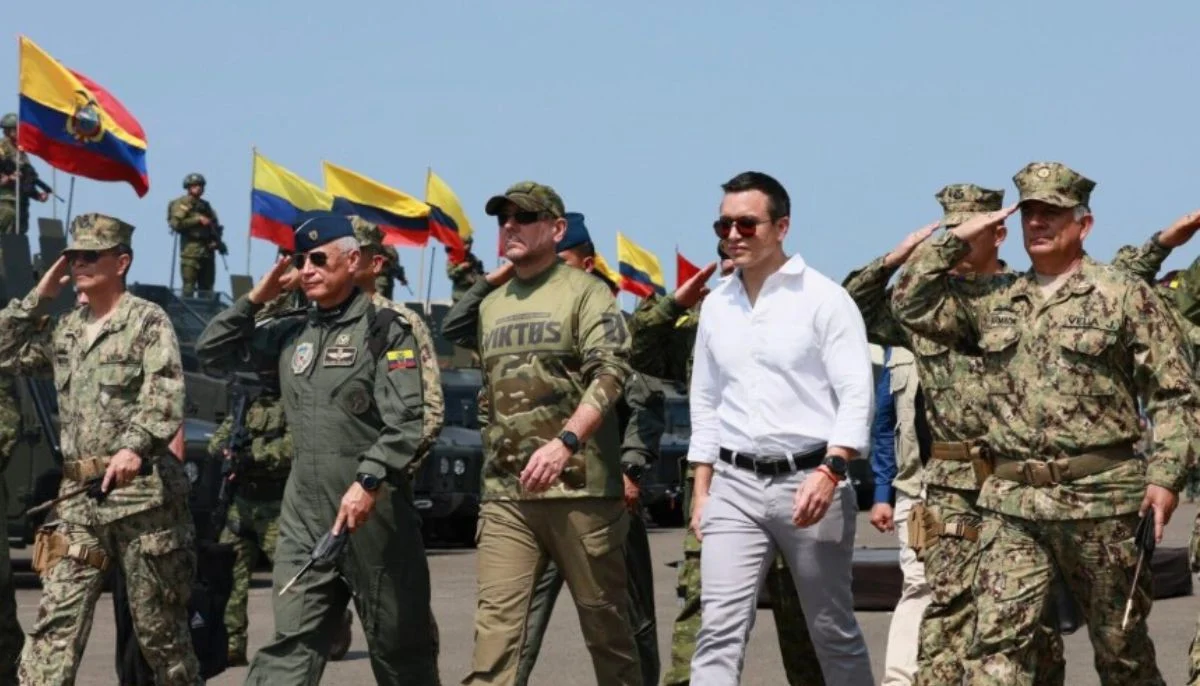
QUITO, Ecuador — March 17, 2026 — Ecuador’s government has launched one of its largest internal security operations in years, deploying more than 75,000 police officers and soldiers across four provinces struggling with severe criminal violence, Interior Minister Mónica Palencia said on Monday.
The deployment focuses on Guayas, Esmeraldas, Manabí, and Los Ríos — regions that have seen sustained clashes between criminal groups, rising homicide rates, and repeated attacks on public infrastructure. Officials say the surge aims to stabilize areas where local authorities have struggled to contain organized crime.
Palencia described the operation as a coordinated effort between the National Police and the Armed Forces, emphasizing that the government is responding to what she called “an extraordinary threat to public safety.” She noted that the security forces will conduct patrols, checkpoints, and targeted operations based on intelligence gathered over recent weeks.
Ecuador has faced a sharp increase in violence over the past three years, driven largely by rivalries between drug‑trafficking groups seeking control of coastal routes. Analysts say the country’s strategic location between major cocaine‑producing nations has made it a key transit point for international trafficking networks.
President Daniel Noboa’s administration has repeatedly pledged to confront the surge in criminal activity. Earlier this year, the government declared several states of emergency in high‑risk areas, allowing the military to support police operations and enabling temporary restrictions on movement.
Local residents in the affected provinces have expressed a mix of relief and caution. Some community leaders say the increased presence of security forces brings a sense of safety, while others worry that long‑term solutions will require deeper investment in social programs, judicial reforms, and anti‑corruption measures.
Human rights organizations have urged authorities to ensure that the expanded military role remains within constitutional limits and that operations prioritize civilian protection.
The Interior Ministry said the deployment will remain in place “as long as necessary” and will be adjusted based on security assessments in the coming weeks.
