

A Region on the Brink of Escalation
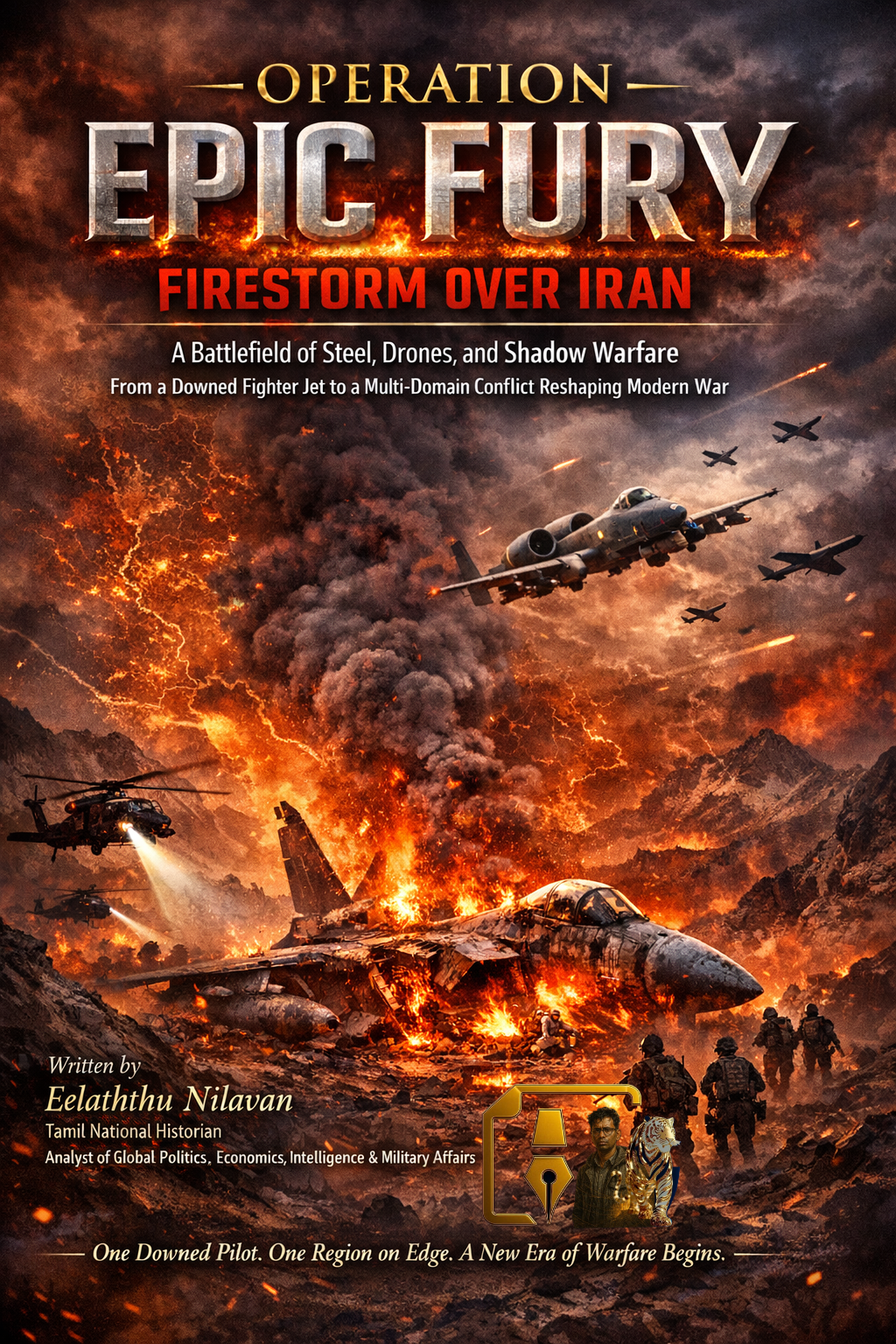
The reported downing of a U.S. fighter aircraft over southwestern Iran has triggered one of the most dangerous military flashpoints in recent years. What began as a single aerial incident has rapidly evolved into a complex, multi-domain confrontation involving airpower, ground forces, drones, naval assets, and information warfare.
At the center of this crisis is a high-risk combat search and rescue (CSAR) mission, as U.S. forces attempt to locate and extract a pilot who ejected into hostile territory. With Iranian forces, local militias, and even civilian groups reportedly mobilized to capture the pilot, the situation has become a race against time with global implications.
The Incident: A Crash in Hostile Territory
According to multiple reports, a U.S. F-15E Strike Eagle was downed near the city of Izeh in southwestern Iran, crashing into the rugged Zagros mountain range. While Iranian state media initially claimed the destruction of a more advanced stealth aircraft, open-source intelligence analysts identified the jet as a Strike Eagle operating from a U.S. squadron based in the United Kingdom.
The pilot successfully ejected but landed in one of the most dangerous environments possible:
• Remote and mountainous terrain
• Active patrol zones controlled by Iranian forces
• Areas where local tribal groups have been encouraged to assist in capture efforts
Iranian media reports indicate that a reward has been offered for the pilot’s capture, further escalating the urgency of the rescue mission.
Combat Search and Rescue: A Mission Under Extreme Threat
Combat Search and Rescue operations are among the most complex and dangerous missions in modern warfare. In this case, the challenge is amplified by the fact that the operation is taking place deep inside hostile territory.
U.S. forces are believed to have deployed:
• A-10 Thunderbolt II aircraft for low-altitude patrols
• UH-60 Black Hawk helicopters for insertion and extraction
• MQ-9 Reaper drones for surveillance and reconnaissance
• Additional support aircraft for coordination and logistics
The mission involves several critical phases:
• Locating the pilot using signals and surveillance
• Confirming identity securely
• Preventing enemy forces from reaching the location
• Extracting the pilot safely
• Returning them for medical care and debriefing
Each phase is now under severe pressure due to electronic warfare interference, rapid ground mobilization, and the unpredictable involvement of civilians.
The Changing Nature of Air Warfare
This incident highlights a deeper transformation in modern warfare: the erosion of traditional air superiority.
Advanced fighter jets like the F-15E are designed for high-speed, high-altitude combat against sophisticated systems. However, they face increasing difficulty against:
• Slow-moving drones
• Low-altitude threats
• Targets with minimal radar signatures
One of the most notable challenges comes from kamikaze drones such as the Shahed-136:
• Built using inexpensive materials
• Difficult to detect with radar
• Too slow for some missile systems to effectively engage
This creates a strategic paradox where extremely expensive aircraft struggle to neutralize low-cost threats.
Return of the A-10: Adapting to a New Battlefield
In response to these challenges, the U.S. has deployed the A-10 Thunderbolt II, a platform originally designed for close air support.
The A-10 offers several advantages in this environment:
• Ability to fly at low speeds for extended periods
• Precision engagement using its 30mm cannon
• Effectiveness against light vehicles and drone targets
In a battlefield increasingly dominated by small, slow, and dispersed threats, the A-10 has proven to be unexpectedly relevant.
Iran’s Resilient Military Capabilities
Despite weeks of reported airstrikes, intelligence assessments suggest that approximately 50% of Iran’s missile and drone arsenal remains operational.
Key capabilities include:
• Underground missile systems protected from airstrikes
• Mobile drone launch platforms that are difficult to track
• Integrated air defense systems capable of creating localized denial zones
These systems allow Iran to absorb damage while maintaining the ability to retaliate across the region.
The Maritime Dimension: Threats to Global Energy
The crisis extends beyond land and air into the maritime domain, particularly the Strait of Hormuz—one of the world’s most critical energy chokepoints.
Iran retains the ability to threaten shipping through:
• Anti-ship cruise missiles
• Fast attack craft and swarm tactics
• Naval mines and drone surveillance
Any disruption in this area could have immediate global consequences, including rising oil prices and interruptions to international trade.
Regional Escalation and Proxy Warfare
The conflict is not confined to Iran alone. It is part of a broader regional confrontation involving multiple actors.
Iran-aligned groups are actively engaged in:
• Lebanon, where Hezbollah is increasing pressure on Israel
• Yemen, where Houthi forces are targeting maritime routes
• Iraq and Syria, where militias are attacking U.S. positions
This network of allied forces allows Iran to project power across multiple fronts without direct large-scale confrontation.
Information Warfare: Competing Narratives
A critical aspect of the crisis is the battle over information.
Iranian sources have claimed:
• The downing of advanced U.S. aircraft
• Successful disruption of rescue operations
• Major strikes against regional targets
Meanwhile, U.S. officials have:
• Denied aircraft losses
• Stated that all assets are accounted for
• Provided limited operational details
This divergence highlights how modern warfare is shaped not only by physical events but also by perception and narrative control.
Potential Escalation Scenarios
The situation remains highly volatile, with several possible outcomes:
Pilot Captured
• Significant propaganda victory
• Diplomatic crisis and increased tensions
Rescue Operation Fails
• Questions over military effectiveness
• Increased pressure for escalation
Direct Military Confrontation
• Expansion into broader U.S.–Iran conflict
• Increased risk to regional bases and assets
Disruption of Global Energy Routes
• Immediate economic impact worldwide
• Potential involvement of additional global powers
Conclusion: A Defining Moment
“Operation Epic Fury” represents more than a single military incident—it is a defining example of how warfare is changing.
Today’s conflicts are shaped by:
• Asymmetric technologies like drones
• Complex terrain and decentralized battlefields
• The fusion of military operations with information warfare
The outcome of this crisis—particularly the fate of the downed pilot—could influence not only U.S.–Iran relations but the stability of the entire Middle East.
As events continue to unfold, the world is watching closely. What happens next may determine whether this remains a contained incident—or becomes the beginning of a much larger conflict.

Written by 𝐸𝑒𝓁𝒶𝓉𝒽𝓉𝒽𝓊 𝒩𝒾𝓁𝒶𝓋𝒶𝓃
Tamil National Historian | Analyst of Global Politics, Economics, Intelligence & Military Affairs
03/04/2026
The views expressed in this article are the author’s own and do not necessarily reflect Amizhthu’s editorial stance.
