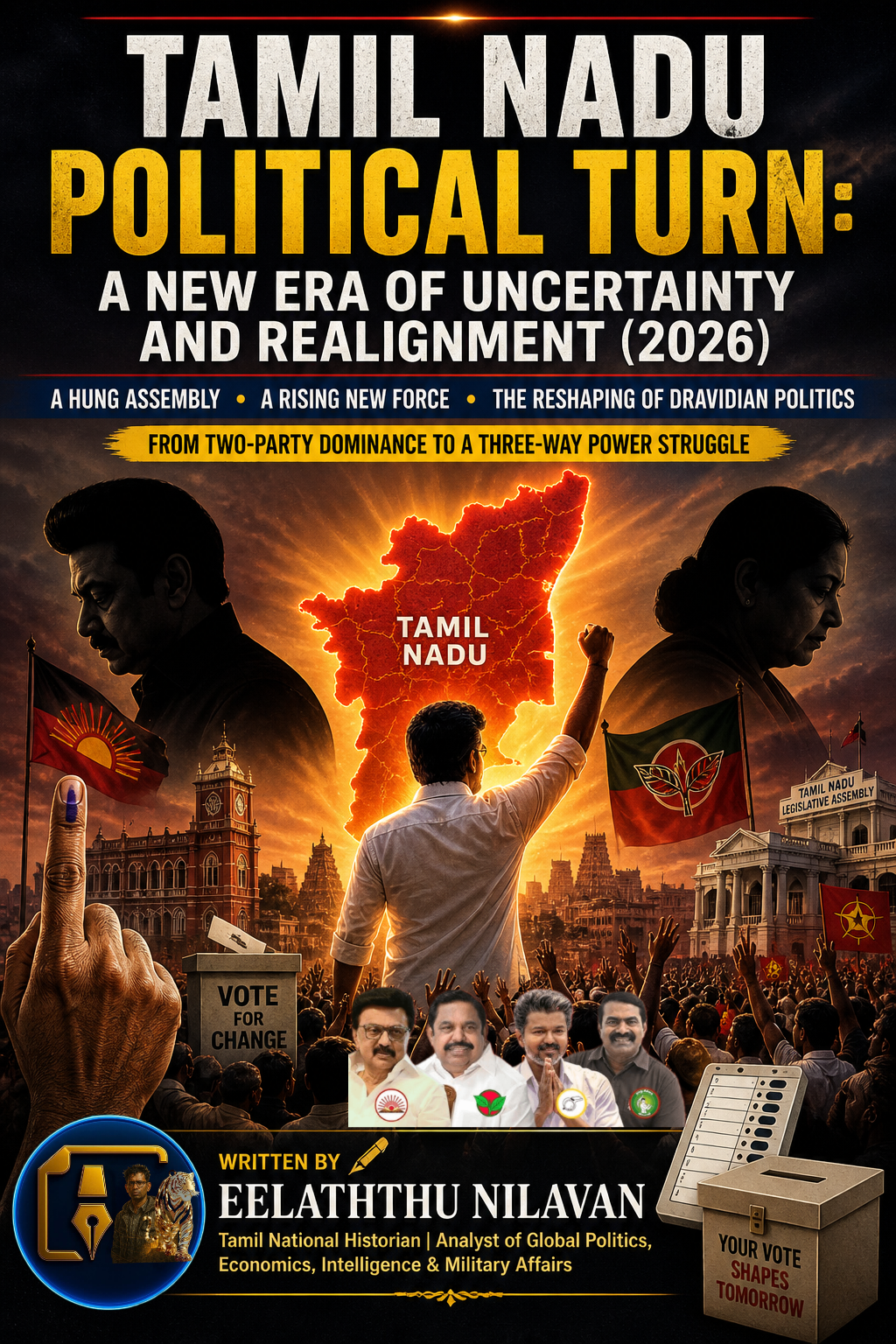
𝑨 𝑯𝒖𝒏𝒈 𝑴𝒂𝒏𝒅𝒂𝒕𝒆, 𝑨 𝑹𝒊𝒔𝒊𝒏𝒈 𝑭𝒐𝒓𝒄𝒆, 𝑨𝒏𝒅 𝑻𝒉𝒆 𝑹𝒆𝒔𝒉𝒂𝒑𝒊𝒏𝒈 𝒐𝒇 𝑫𝒓𝒂𝒗𝒊𝒅𝒊𝒂𝒏 𝑷𝒐𝒍𝒊𝒕𝒊𝒄𝒔
𝑰𝒏𝒕𝒓𝒐𝒅𝒖𝒄𝒕𝒊𝒐𝒏: 𝑻𝒉𝒆 𝑬𝒏𝒅 𝒐𝒇 𝑪𝒆𝒓𝒕𝒂𝒊𝒏𝒕𝒚
The 2026 Tamil Nadu Assembly Election represents a dramatic rupture in the state’s long-standing political order. For decades, governance alternated between two dominant Dravidian parties, creating a predictable electoral rhythm. However, the emergence of a powerful third force—the Tamilaga Vettri Kazhagam (TVK)—has disrupted this equilibrium, introducing a phase of uncertainty, negotiation, and structural political transformation.
The election outcome, marked by a hung assembly, signals not merely a fragmented mandate but a deeper shift in voter psychology. It suggests that the electorate is no longer content with traditional binaries and is actively exploring alternatives that promise change, even if those alternatives are relatively new and untested.
𝑬𝒍𝒆𝒄𝒕𝒊𝒐𝒏 𝑴𝒂𝒕𝒉: 𝑨 𝑭𝒓𝒂𝒈𝒎𝒆𝒏𝒕𝒆𝒅 𝑴𝒂𝒏𝒅𝒂𝒕𝒆
The numerical landscape of the election defines the current political tension. With the majority mark set at 118 seats, no single party has achieved a clear mandate. TVK’s lead—hovering around the 107 to 117 seat range—places it tantalizingly close to power, yet still dependent on alliances.
The DMK, with around 75 seats, and the AIADMK, with approximately 53 seats, remain significant but diminished players. This distribution reflects a three-cornered contest rather than a bipolar one, fundamentally altering how governments must now be formed.
In such a scenario, coalition politics becomes inevitable. Parties like Congress, VCK, and PMK suddenly gain disproportionate importance, as their support could determine who ultimately forms the government.
𝑻𝑽𝑲’𝒔 𝑹𝒊𝒔𝒆: 𝑻𝒉𝒆 “𝑯𝒆𝒓𝒐” 𝑭𝒂𝒄𝒕𝒐𝒓 𝒂𝒏𝒅 𝑩𝒆𝒚𝒐𝒏𝒅
The most striking feature of this election is the meteoric rise of TVK under Vijay. The commentary attributes much of this success to the “hero factor”—a phenomenon rooted in Tamil Nadu’s long tradition of cinema-politics overlap. However, reducing the victory solely to celebrity appeal would oversimplify a more complex reality.
Voters appear to have projected their aspirations for change onto a figure perceived as untainted by traditional political baggage. Vijay’s campaign strategy—limited yet highly targeted public appearances—helped maintain a sense of exclusivity and impact. Each rally became an event, amplifying visibility without overexposure.
At a deeper level, TVK’s rise reflects a convergence of emotional appeal and strategic positioning. It capitalized on dissatisfaction while presenting itself as a viable alternative, rather than merely a protest vote.
𝑫𝑴𝑲’𝒔 𝑺𝒆𝒕𝒃𝒂𝒄𝒌: 𝑨𝒏𝒕𝒊-𝑰𝒏𝒄𝒖𝒎𝒃𝒆𝒏𝒄𝒚 𝒂𝒏𝒅 𝑮𝒐𝒗𝒆𝒓𝒏𝒂𝒏𝒄𝒆 𝑸𝒖𝒆𝒔𝒕𝒊𝒐𝒏𝒔
The DMK’s performance, significantly below its own expectations, highlights the enduring power of anti-incumbency in Indian politics. Allegations of unfulfilled promises, governance gaps, and corruption—particularly issues like illegal sand mining—appear to have eroded public trust.
The reported struggles of high-profile leaders in their own constituencies symbolize a broader erosion of political strongholds. Even urban bastions like Chennai, once considered secure, seem to have witnessed a breach.
This shift indicates that electoral loyalty is becoming increasingly conditional. Performance, perception, and accountability are beginning to outweigh legacy and party identity.
𝑨𝑰𝑨𝑫𝑴𝑲 𝒂𝒏𝒅 𝑶𝒕𝒉𝒆𝒓𝒔: 𝑻𝒉𝒆 𝑺𝒉𝒓𝒊𝒏𝒌𝒊𝒏𝒈 𝑺𝒑𝒂𝒄𝒆
The AIADMK’s position reflects a party in transition. While it retains pockets of strength, it has not emerged as the primary beneficiary of DMK’s decline. Instead, much of the anti-incumbent vote appears to have shifted toward TVK.
Similarly, parties like Naam Tamilar Katchi (NTK), despite maintaining ideological consistency and a loyal base, struggled to convert support into electoral victories. This suggests that in a highly polarized and momentum-driven election, narrative and timing can outweigh organizational depth.
𝑻𝒉𝒆 𝑷𝒐𝒍𝒊𝒕𝒊𝒄𝒔 𝒐𝒇 𝑪𝒉𝒂𝒏𝒈𝒆: 𝑽𝒐𝒕𝒆𝒓 𝑩𝒆𝒉𝒂𝒗𝒊𝒐𝒖𝒓 𝑹𝒆𝒅𝒆𝒇𝒊𝒏𝒆𝒅
One of the most important takeaways from the analysis is the apparent shift in voter behavior. The commentary suggests a decline in the effectiveness of traditional tactics such as “money for votes.” Whether fully accurate or not, this perception itself is politically significant.
The electorate seems to be increasingly driven by broader narratives—change, governance, and credibility—rather than immediate incentives. This marks a potential evolution in democratic participation within the state.
𝑪𝒐𝒂𝒍𝒊𝒕𝒊𝒐𝒏 𝑫𝒚𝒏𝒂𝒎𝒊𝒄𝒔: 𝑻𝒉𝒆 𝑵𝒆𝒙𝒕 𝑩𝒂𝒕𝒕𝒍𝒆𝒈𝒓𝒐𝒖𝒏𝒅
With no party holding a clear majority, the focus now shifts from campaigning to negotiation. Coalition-building will define the immediate future of Tamil Nadu politics.
For TVK, the challenge lies in transforming electoral momentum into stable governance. Aligning with parties like Congress or regional allies could secure the numbers needed—but such alliances come with ideological compromises and governance complexities.
For other parties, the situation presents both risk and opportunity. They can either support a new order or attempt to reconfigure alliances to retain influence.
𝑩𝒆𝒚𝒐𝒏𝒅 𝑻𝒂𝒎𝒊𝒍 𝑵𝒂𝒅𝒖: 𝑨 𝑩𝒓𝒐𝒂𝒅𝒆𝒓 𝑷𝒐𝒍𝒊𝒕𝒊𝒄𝒂𝒍 𝑪𝒐𝒏𝒕𝒆𝒙𝒕
The brief references to other states suggest that Tamil Nadu’s transformation is part of a wider pattern of political fluidity across India. Electoral surprises, shifting alliances, and regional realignments appear to be becoming the norm rather than the exception.
However, Tamil Nadu’s case remains unique due to the scale of disruption within a historically stable two-party ecosystem.
𝑪𝒐𝒏𝒄𝒍𝒖𝒔𝒊𝒐𝒏: 𝑻𝒉𝒆 𝑩𝒆𝒈𝒊𝒏𝒏𝒊𝒏𝒈 𝒐𝒇 “𝑹𝒆𝒂𝒍 𝑷𝒐𝒍𝒊𝒕𝒊𝒄𝒔”
The 2026 election marks the beginning of what can be described as “real politics”—an era where governance performance will be scrutinized more intensely than ever before. Electoral success alone will not guarantee long-term legitimacy.
If TVK forms the government, it will face the critical test of transitioning from a movement of expectation to an administration of delivery. For the opposition, the challenge will be to adapt, rebuild, and remain relevant in a rapidly changing landscape.
Ultimately, this election may be remembered not just for who won or lost, but for redefining how politics is practiced, perceived, and contested in Tamil Nadu.

Written by 𝐄𝐞𝐥𝐚𝐭𝐡𝐭𝐡𝐮 𝐍𝐢𝐥𝐚𝐯𝐚𝐧
Tamil National Historian | Analyst of Global Politics, Economics, Intelligence & Military Affairs
04/05/2026
The views expressed in this article are the author’s own and do not necessarily reflect Amizhthu’s editorial stance.